

A Strategic Shift by Israel's Cabinet: Paving the Path to Peace in Gaza
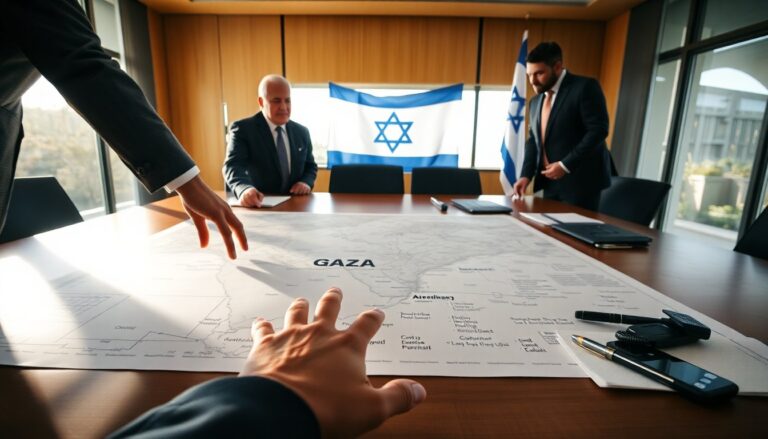
After a prolonged period of conflict that has wreaked havoc in the Gaza Strip, Israel’s cabinet has endorsed a ceasefire initiative proposed by President Donald Trump. This agreement is perceived as a crucial advancement in efforts
According to an announcement from Prime Minister Benjamin Netanyahu’s office, the cabinet has ratified the preliminary framework of the proposed deal, which specifically focuses on the release of hostages held by Hamas.
However, the statement did not elaborate on other critical components of the plan.
Immediate actions and conditions of the ceasefire
An anonymous Israeli official indicated that the ceasefire is expected to commence immediately following governmental approval. The Israeli military has been instructed to withdraw its forces within a 24-hour period to a designated boundary, marking a significant shift in the ongoing military engagement.
Unresolved questions regarding Gaza’s future
While the initial phase of the ceasefire plan has been accepted, numerous essential questions remain unanswered. Among these are the future of Hamas’s disarmament and the governance of Gaza post-conflict. The approval signals hope for the return of all hostages and is viewed as a diplomatic triumph and a moral victory for Israel.
Prime Minister Netanyahu articulated his commitment, stating, “From the outset, I have made it clear: we will not rest until our hostages are returned and all of our objectives are achieved.”
Humanitarian crisis and toll of the conflict
The war, which ignited following a deadly Hamas offensive on October 7, 2023, has resulted in catastrophic consequences, including the deaths of tens of thousands of Palestinians and extensive destruction across Gaza. The conflict has left parts of the territory facing severe famine and has created a dire humanitarian situation, with many hostages remaining unaccounted for.
Initial reports indicated that approximately 1,200 individuals died during the Hamas assault, while subsequent Israeli military operations have resulted in over 67,000 Palestinian fatalities and nearly 170,000 injuries, according to data from Gaza’s Health Ministry. This organization has not distinguished between civilians and combatants, yet claims that a substantial portion of the deceased are women and children.
Continued military actions before the vote
In the lead-up to the cabinet’s vote, Israeli airstrikes persisted, with explosions reported in northern Gaza. A particularly destructive strike in Gaza City resulted in at least two casualties and left over 40 individuals trapped under the debris, as noted by the Palestinian Civil Defence.
Negotiations for a comprehensive ceasefire agreement
A senior Hamas official, who also serves as the lead negotiator, outlined the fundamental aspects of the ceasefire proposal. This includes the release of approximately 2,000 Palestinian prisoners, the reopening of the border crossing with Egypt, the facilitation of humanitarian aid delivery, and the withdrawal of Israeli forces from Gaza.
Khalil al-Hayya stressed that the agreement entails the liberation of all women and children currently imprisoned by Israel, although he did not specify the extent of the military withdrawal.
International involvement and future implications
According to an announcement from Prime Minister Benjamin Netanyahu’s office, the cabinet has ratified the preliminary framework of the proposed deal, which specifically focuses on the release of hostages held by Hamas. However, the statement did not elaborate on other critical components of the plan.0
According to an announcement from Prime Minister Benjamin Netanyahu’s office, the cabinet has ratified the preliminary framework of the proposed deal, which specifically focuses on the release of hostages held by Hamas. However, the statement did not elaborate on other critical components of the plan.1
According to an announcement from Prime Minister Benjamin Netanyahu’s office, the cabinet has ratified the preliminary framework of the proposed deal, which specifically focuses on the release of hostages held by Hamas. However, the statement did not elaborate on other critical components of the plan.2
According to an announcement from Prime Minister Benjamin Netanyahu’s office, the cabinet has ratified the preliminary framework of the proposed deal, which specifically focuses on the release of hostages held by Hamas. However, the statement did not elaborate on other critical components of the plan.3
According to an announcement from Prime Minister Benjamin Netanyahu’s office, the cabinet has ratified the preliminary framework of the proposed deal, which specifically focuses on the release of hostages held by Hamas. However, the statement did not elaborate on other critical components of the plan.4
