

A mutiny‑filled past, a castle‑set game and a record‑breaking host – the making of The Traitors.
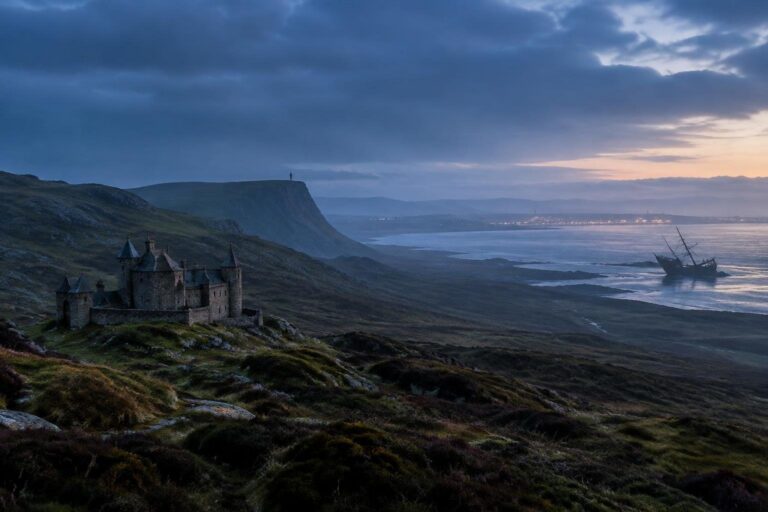
The television format known today as The Traitors hides a surprising origin story that stretches back to a 17th-century disaster at sea. In 1628, the Dutch East India Company vessel Batavia left Amsterdam for the Indies, only to founder on a reef off Western Australia.
Survivors were marooned on a tiny island, where greed for the ship’s silver turned friends into foes. Roughly 100 people lost their lives in what historians call one of the most violent mutinies in maritime history.
From a spark in 2015 to De Verraders in 2021
Fast-forward nearly four centuries to 2015, when Dutch entrepreneur Marc Pos read a detailed account of the Batavia tragedy. The brutal power struggle sparked his imagination for a new kind of reality TV—a game of trust, betrayal and hidden agendas.
He teamed up with fellow creator Jasper Hoogendoorn, and together they drafted an early version called The Mutineers. After enduring 20 rejections, they re-engineered the concept, discarding the original boat-based set for a more atmospheric, land-locked stage.
Pos recalled that his childhood experiences as a choirboy in a 14th-century cathedral, with its shadowy arches and flickering torches, provided the visual blueprint. The final design featured cloaked figures gliding through torch-lit corridors toward a secret tower, echoing the gloom of medieval stone halls. By 2021, the Dutch version—renamed De Verraders—had fully materialised, delivering a fresh blend of psychological intrigue and cinematic flair.
UK adaptation, budget and cultural impact
British production powerhouse Studio Lambert, already responsible for hits like Gogglebox and Race Across the World, spotted the format and immediately sensed its potential. Creative director Mike Cotton recalled watching the Dutch pilot in the office: “We watched it in the office and couldn’t stop talking about it.” The team travelled to the Netherlands, observed contestants debating a mock murder, and recognised a narrative that felt “totally different” from the dating-show wave of the moment.
Studio Lambert secured both UK and US rights, then “supersized” the production. The budget per episode rose to about £1 million—almost twice the cost of a typical reality instalment—allowing for cinematic set pieces such as exploding pirate ships and haunted cabins. Filming settled at the atmospheric Ardross Castle in the Scottish Highlands, near Inverness. Executive producer Sarah Fay and Cotton emphasized a “bubble” approach: the game runs in a self-contained environment with minimal producer interference, preserving the integrity of players’ suspicions.
Claudia Winkleman’s pivotal role
The search for a presenter landed on Claudia Winkleman. After a brief reluctance, BBC One controller Kate Phillips sent her the Dutch pilot. Winkleman watched two episodes, boarded the train to Inverness, and instantly bonded with the castle’s ambience. She described her involvement as “queen of the castle”, insisting on a wardrobe that blended elegance with gothic undertones. Her willingness to sit in the game’s “turret” and react to betrayals added a dramatic layer that Sarah Fay believes was essential for the show’s premium feel.
Game mechanics that kept audiences guessing
One of the format’s core principles, carried over from the Dutch original, is that the audience always knows who the Traitors are. Fay explained that this transparency lets viewers enjoy the double-edged tension of watching both the loyal and the deceitful navigate the same clues. An experiment in series four—concealing the “Secret Traitor”—was dropped because the hidden-identity twist reduced the comedic horror of seeing a celebrity like Alan Carr panic when his own treachery was revealed.
Since its UK debut in 2022, the series has amassed eye-popping figures: around 4 million viewers for the first run, rising to 7 million in the second, 9 million in the third, and 11.5 million** for the fourth. The inaugural celebrity edition, broadcast in autumn, peaked at 14.9 million viewers, making it the year’s most-watched programme. The show now airs in over 40 territories, has collected Bafta and Emmy accolades, and inspired board games, escape rooms, stage productions and even a school prom.
Industry commentator Jake Kanter summed up the phenomenon: “When word-of-mouth is strong, you don’t need to shout about ratings; everyone is already talking.” The success of The Traitors demonstrates how a centuries-old tale of mutiny can be re-imagined as a modern, high-budget reality competition that resonates across cultures.
