

Hearts relive a Turkish nightmare while Celtic’s demolition raises questions about the club’s future.
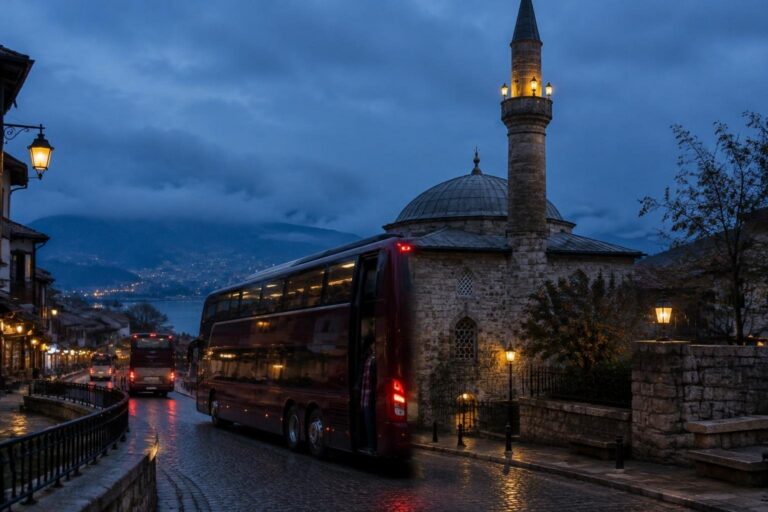
In late October 2026, a convoy of Heart of Midlothian supporters set out for the southeastern Black Sea city of Trabzon. It was the first time a Scottish side had toured the region in three decades, the previous expedition being the infamous 1997 UEFA Cup tie between Dundee United and Trabzonspor.
The atmosphere surrounding the trip was charged with nostalgia, because the 1997 match left a lingering legend involving goalkeeper Sieb Dykstra and an unexpected soundtrack from a nearby mosque.
The 1997 Turkish encounter that still haunts Scottish fans
On 26 August 1997, United travelled to the then-aging Avni Aker Stadium for the second leg of a first-round UEFA Cup tie.
The match is remembered not for the final score – a narrow 1-0 loss after a penalty by Hami Mandirali – but for Dykstra’s bewildered protest against a blaring audio source behind his goal. The keeper rushed to referee Helmut Krug claiming the stadium’s music was disrupting his concentration.
It later emerged that the “music” was the call to prayer emanating from a mosque situated directly behind the western goal line.
Dykstra’s outburst earned a spot in The Scotsman’s “excuse of the week” column, joining the ranks of Alex Ferguson’s grey-kit lament and Gordon Strachan’s genetics theory. The keeper eventually apologised, acknowledging that the religious chant was not a deliberate ploy by the home side. Today, Dykstra runs a goalkeeper academy across six Dutch locations, still chuckling about the episode while coaching youth teams and playing for the Roda JC veterans.
Hearts’ Conference League clash with Trabzonspor
The modern tie pits Hearts against a revitalised Trabzonspor that now calls the sleek Papara Park home, a stadium completed in 2017 after the demolition of Avni Aker. The Scottish press, reminded of the derelict stands of the old venue, painted the encounter as a pilgrimage into a “hellhole” – a sentiment that traces its roots to the bleak pictures of construction workers watching training through a wall breach back in 1997. Despite the upgraded facilities, the atmosphere in Trabzon remains intense, with the nearby mosque’s calls to prayer still audible to fans outside the arena.
Hearts entered the game with a mixture of excitement and trepidation. The club’s supporters, many of whom have never set foot in Turkey, hoped to rewrite the narrative of the 1997 scandal. Instead, they found themselves confronting a disciplined Turkish side eager to protect its home turf. While the match result itself is yet to be decided at the time of writing, the symbolic weight of the encounter rivals any tactical battle on the pitch.
Domestic disaster: Celtic’s 7-1 demolition of Hearts
Just weeks after the Trabzon journey, Hearts endured a nightmarish defeat at Celtic Park that will be remembered as one of the most lopsided results in recent Scottish football history. Celtic, under Martin O’Neill unleashed a relentless attack that left the Edinburgh club floundering. Statistics illustrate the scale of the collapse: Hearts registered more shots (20 vs 18), more attempts inside the box (16 vs 13), higher possession (52 % vs 48 %), and even more accurate passes (458 vs 423), yet they could not convert any of those advantages into goals.
The opening two goals came from quick-fire combinations involving Liam Scales’ header and Kieran Tierney’s finish, followed by Dane Murray’s contribution. Celtic’s forward line – Benjamin Nygren, Callum Osmand, Camilo Duran and Haissem Hassan – roamed the pitch with terrifying efficiency, each adding to the tally. Defensive lapses were glaring: a mis-placed pass by Sabri Guendouz, a bewildering error from Jamie McCart, and an inability to mark Osmand resulted in seven goals by halftime.
Post-match, Hearts manager Wouter Vrancken admitted the team “lost its shape” and cited individual mistakes as the primary cause. Yet the broader picture points to deeper issues: a lack of mental resilience, poor in-game adjustments, and an over-reliance on raw statistics rather than decisive moments. The defeat leaves Hearts’ European ambitions in jeopardy and fuels speculation about possible changes in coaching strategy ahead of the league’s final stretch.
Both fixtures – the historic reminder in Trabzon and the recent domestic humiliation – underscore a season of stark contrasts for Hearts. While the Turkish adventure offers a chance to confront a lingering myth, the Celtic thrashing forces the club to reflect on its tactical identity and squad depth. Fans departing Trabzon may carry with them a renewed sense of purpose, hoping that the lessons from a 30-year-old saga and a modern-day drubbing can steer the club away from further setbacks.
