

Massive fish deaths on the River Wensum have become a stark symbol of how nations are struggling to deliver on the 2022 Montreal biodiversity commitments ahead of talks in Yerevan.
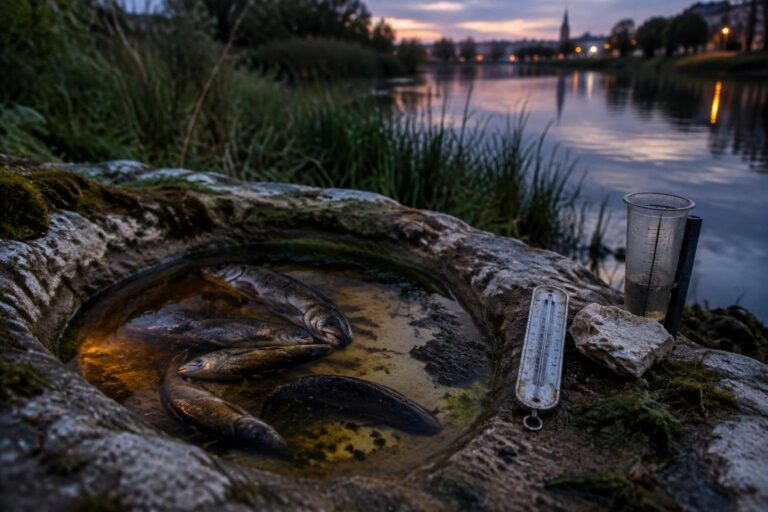
The smell of decay announced the scale of the incident before the eye could: in August more than 3,000 fish — including pike, roach, carp and rudd — were discovered dead along the River Wensum in Norwich. Observers reported some fish gasping for oxygen as heatwave conditions reduced dissolved oxygen; investigators link the die-off to heavy rainfall flushing concentrated pollutants into the chalk river when wildlife was already vulnerable.
The Wensum is one of roughly 250 chalk rivers in the UK, a habitat that forms where water rises from chalk aquifers. These watercourses are exceptionally rare globally and support species such as freshwater shrimp, otters and stoneflies while supplying drinking water for millions.
Despite that, only 11 have formal legal protection and many suffer from sewage pollution and overextraction. Even though the Norfolk river does have protection, its ecological state is poor. As Eliot Lyne, head of the Norfolk Wildlife Trust, put it: “We are a world away from the crystal clear, free flowing and mineral-rich waters they could, and should be.”
Montreal commitments and the global delivery gap
At the end of 2022 governments agreed on an ambitious global package to halt and reverse biodiversity loss at COP15 in Montreal. The agreement included targets such as protecting 30% of the planet for nature, restoring one third of the most degraded ecosystems, and reforming at least $500bn (about £375bn) of environmentally harmful subsidies. These measures were intended to respond to scientific warnings that many species face extinction and that biodiversity loss is a crisis on the scale of past mass extinctions.
Four years later, the outlook is bleak: governments now appear likely to miss nearly all of those commitments. The UK, which pushed for strong ambition in Montreal, is projected to meet only three of the 23 targets by the end of the decade. Delegations are gathering in Yerevan, Armenia for COP17 this month to review progress and press for action, but the evidence presented at the summit launch shows major shortfalls between pledges and delivery.
International warnings and financial tensions
United Nations secretary general António Guterres used the summit platform to warn that “the war on nature has not ended” and that “nature will not survive on good intentions.” He singled out subsidies as a core issue, saying: “Subsidising fossil fuels is subsidising suicide.” The UN leader urged redirecting those subsidies to benefit people and the planet instead.
Financial pledges have been inconsistent. Nations signed up to increase biodiversity finance to a threshold, yet many have reduced or restructured overseas aid and conservation spending. For its part, the UK government says it has backed nature recovery and resilience with £7bn of funding and enacted powers to tackle water pollution and support species recovery. The government also reinstated climate aid commitments after an earlier reversal this year, pledging around £6bn of international climate finance over the next three financial years, with roughly a quarter aimed at nature.
Conservation voices and transparency concerns
Conservation leaders praised some re-commitments but urged clear accountability. Jonathan Hall of Conservation International UK welcomed the reinstated international funding but called for increased transparency to ensure about £1.5bn reaches high-impact projects. Craig Bennett of The Wildlife Trusts warned that preaching targets abroad without clear domestic plans risks hypocrisy: “We’ve got to pull our socks up and get serious about delivery at home. We are the nation of Sir David Attenborough. We are animal and nature lovers.” Zac Goldsmith, a former UK minister involved in the 2022 deal, observed: “There’s a massive gap between countries agreeing to do something and actually doing it.”
Political friction and examples of mixed results
Nature protection has become entangled in political fights. In the Netherlands efforts to reduce nitrogen pollution sparked large farmer protests and fed fierce debate about the EU nature restoration law. The law was eventually passed but after significant watering down, illustrating how sensitive environmental measures can become in domestic politics. Similar tensions and funding cuts in other countries have undermined earlier conservation projects, and some high-profile international programmes lost resources when major donors retracted support.
Despite setbacks, not all outcomes are negative. Some nations have advanced important protections; the formalisation of Indigenous territories has increased in places, and large marine parks and rewilding initiatives have been established in several regions. These successes show what scaled-up action can look like, but observers note that the pace and financing remain insufficient to meet the scientific prerequisites for avoiding deeper ecological collapse.
The fish deaths on the River Wensum remain a local, painful reminder of that broader mismatch: ambitious global targets were set at COP15 but four years on the world faces a substantial implementation deficit. As delegates meet in Yerevan for COP17 the central challenge is clear: translate commitments into verifiable domestic actions and funding streams before more ecosystems reach breaking point.
