

Explore the rich layers of England's fascinating history and vibrant culture.
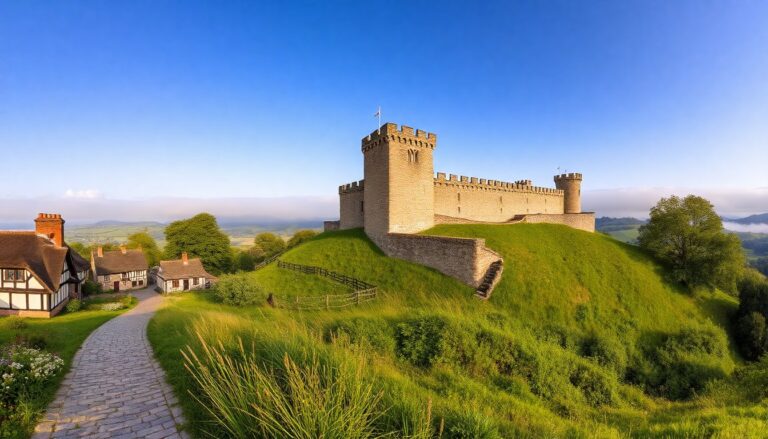
England, a country rich in history and culture, stands as a captivating focal point on the global stage. This island nation has experienced the rise and fall of empires, the birth of revolutionary ideas, and the emergence of remarkable art and literature.
This article examines the historical evolution of England, highlighting significant milestones and cultural achievements that have shaped its identity.
The historical journey of England
From ancient settlements to contemporary society, England’s historical journey features a series of transformative events.
The Roman invasion in 43 AD laid the groundwork for urban development, introducing advanced engineering and governance. The remnants of Roman influence are evident in structures like Hadrian’s Wall and various ruins scattered throughout the countryside.
The medieval period
The fall of the Roman Empire ushered in the medieval period, a time defined by feudalism and the rising authority of the Church. A pivotal moment was the signing of the Magna Carta in 1215, which fundamentally changed governance by establishing that everyone, including the king, is subject to the law. This era also witnessed the emergence of the Plantagenets and the Tudors, dynasties that profoundly influenced England’s political framework.
The cultural landscape of England
England’s vibrant cultural scene is a product of diverse influences, positioning it as a center of creativity. The Renaissance sparked a revival in the arts and sciences, highlighted by renowned figures like William Shakespeare and Christopher Marlowe. Their contributions not only enriched English literature but also left an indelible mark on the global literary tradition.
The Industrial Revolution
The Industrial Revolution of the 18th and 19th centuries represented a pivotal transformation, establishing England as the world’s first industrialized nation. This era introduced groundbreaking innovations in technology and manufacturing, which spurred urbanization and altered social structures significantly. The Victorian era reflected a unique blend of innovation and conservatism, fostering cultural advancements in literature, music, and art.
Modern England
Throughout the 20th century, England confronted numerous challenges, including the devastations of two World Wars and subsequent economic upheaval. These tumultuous events had a profound impact on the nation’s cultural identity, catalyzing movements that questioned and reshaped traditional norms. The Swinging Sixties marked a cultural revolution, welcoming fresh ideas in fashion, music, and social values. Iconic bands like The Beatles and The Rolling Stones emerged as powerful symbols of this transformative decade, influencing generations worldwide.
Diversity and multiculturalism
England serves as a prime example of diversity and multiculturalism. The arrival of immigrants from around the globe has enriched its cultural landscape, resulting in a vibrant mix of traditions, cuisines, and languages. Cities such as London illustrate this diversity, showcasing a harmonious coexistence of cultures that enhance the national identity.
Examining England’s history and culture reveals a nation in a state of continuous evolution. Its historical narrative shapes the present, while its cultural heritage lays the groundwork for future generations. Gaining an understanding of England’s journey provides valuable insights into its role on the global stage and its contribution to the ongoing story of human civilization.
