

Recent protests in Peru underscore escalating discontent among the youth, triggered by a tragic incident.
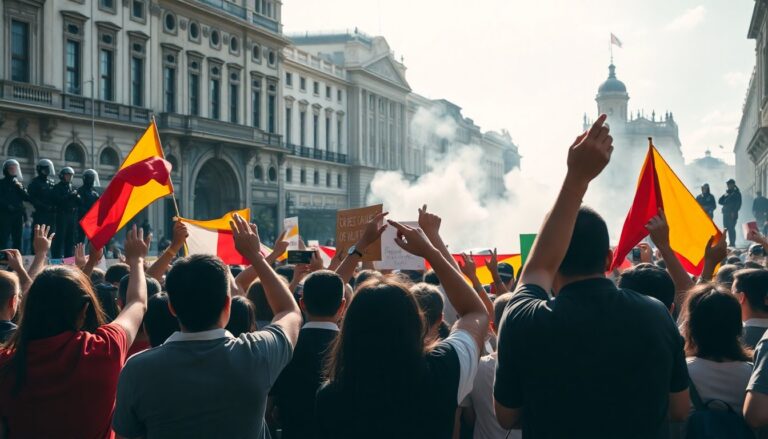
The political landscape in Peru is increasingly tumultuous as the nation faces intense protests following the death of a prominent rapper. Amid rising frustrations regarding crime and government accountability, President Jose Jeri finds himself in a precarious position, resisting calls for his resignation from a disillusioned public.
These protests, which have intensified recently, began with demands for improved wages and better pension plans for young Peruvians. However, they have since evolved into a broader outcry against rampant corruption and insecurity, culminating in the recent ousting of former President Dina Boluarte.
State of emergency declared in Lima
In response to the escalating unrest, authorities have declared a state of emergency in the capital city of Lima. This decision follows the tragic killing of 32-year-old Eduardo Ruiz, a protester and hip-hop artist, during a demonstration that mobilized thousands across the nation.
The Prosecutor’s Office is investigating the circumstances surrounding Ruiz’s death, which has sparked anger and despair among the populace.
The aftermath of Ruiz’s death
Reports indicate that a police officer, identified as Luis Magallanes, is believed to have fired the shot that killed Ruiz. Following the incident, Magallanes was taken into custody and dismissed from the police force. As details continue to emerge, he is currently receiving medical treatment after being physically assaulted by protesters.
Ruiz’s death represents a significant turning point in the ongoing protests, heightening the emotions of an already frustrated population. Activist Milagros Samillan encapsulated the sentiment of many when she stated, “He was peacefully hanging out with his friends. Unfortunately, the bullet hit his chest. We want justice for him.” The tragic nature of this event has intensified calls for accountability and reform within the government.
Government response to protests
President Jeri, who has recently taken office as the seventh leader in less than a decade, remains committed to restoring stability in the country. In a statement to local media, he emphasized, “My responsibility is to maintain the stability of the country; that is my responsibility and my commitment.” He expressed regret over Ruiz’s death and pledged to conduct a thorough investigation.
Combating violence and unrest
In light of the escalating violence, Jeri has announced plans to request additional powers from parliament to combat crime effectively. He attributed the violence that erupted during the protests to “delinquents who infiltrated a peaceful demonstration to sow chaos,” asserting that his administration will take decisive action against those responsible.
As the situation develops, Interior Minister Vicente Tiburcio provided additional context regarding the protests, indicating that at least 89 police officers and 22 civilians sustained injuries during the clashes. Furthermore, law enforcement has detained 11 individuals amid the unrest.
Public sentiment and future implications
The death of Ruiz has added urgency to the political crisis in Peru. Many citizens express frustration with the government’s failure to address rampant corruption and insecurity. Al Jazeera’s Mariana Sanchez reported that Ruiz’s tragic loss has ignited renewed passion for protest among the youth, who are desperately seeking change.
The sentiment across the nation is palpable, as citizens rally for justice and reform. The ongoing protests serve not only as a response to recent events but also as a testament to the growing discontent among Peruvians. The question remains: will the government heed calls for change, or will unrest continue to escalate?
