

Explore the complexities of the UK political landscape and its future implications.
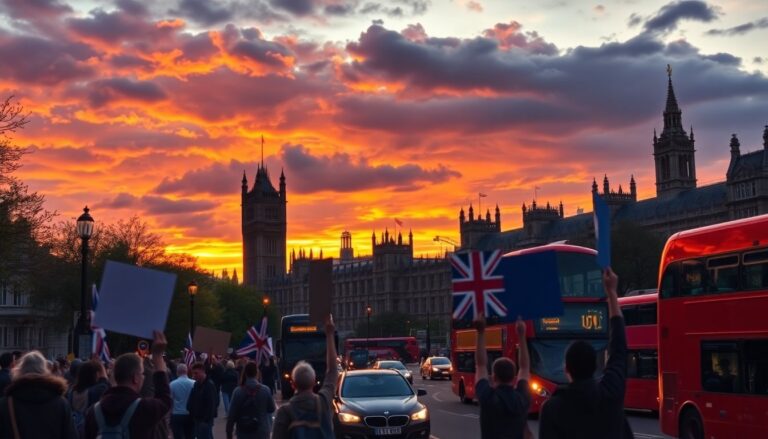
The United Kingdom has been a focal point of global political discourse, characterized by its unique constitutional monarchy and parliamentary democracy. The UK political landscape is shaped by a rich history, diverse political parties, and a populace that is often engaged and at times divided.
Understanding the factors that influence this landscape is crucial for grasping both UK politics and its global implications.
This analysis explores the major political parties, significant events that have shaped recent history, and socio-economic factors influencing the current political climate.
Major political parties
At the core of UK politics are the major political parties that play pivotal roles in shaping policies and governance. The two dominant parties are the Conservative Party and the Labour Party.
The Conservative Party
The Conservative Party, often referred to as the Tories, traditionally champions free-market policies and a strong national defense.
Recent leadership has focused on addressing issues such as Brexit, economic recovery, and public services. Brexit, the UK’s exit from the European Union, has defined the party’s agenda since the referendum in 2016. The Conservatives have faced criticism regarding their management of the transition but remain committed to a vision of a Global Britain.
The Labour Party
In contrast, the Labour Party has historically represented the working class, advocating for social justice, labor rights, and public ownership of key industries. The party has undergone significant transformations, particularly under the leadership of Jeremy Corbyn and now Keir Starmer. Starmer’s tenure has seen a shift toward a more centrist approach, aiming to broaden the party’s appeal in light of recent electoral challenges.
Besides these two major parties, smaller parties like the Liberal Democrats, Scottish National Party (SNP), and Green Party play important roles, especially in regional politics. The SNP has been particularly influential in Scotland, advocating for further devolution and independence.
Key events shaping the political landscape
Recent years have witnessed several key events that have significantly influenced the UK’s political landscape. In addition to Brexit, the COVID-19 pandemic has had profound implications.
Brexit
The Brexit referendum in 2016 marked a watershed moment in UK politics, leading to the decision to leave the EU. The ramifications of this decision continue to unfold, affecting trade, immigration, and international relations. Negotiations post-referendum have revealed deep divisions within the country, politically, socially, and economically. The Trade and Cooperation Agreement reached in 2020 initiated a new phase in UK-EU relations, yet challenges persist.
The COVID-19 pandemic
The COVID-19 pandemic further complicated the political landscape, as government responses faced scrutiny and public trust was tested. The crisis underscored the importance of the National Health Service (NHS) and raised pressing questions about funding, healthcare access, and government roles in public health. Debates around economic recovery strategies have emerged, including proposals for a green recovery to address climate change while revitalizing the economy.
Socio-economic factors influencing politics
The UK’s political landscape is also shaped by various socio-economic factors. Issues such as income inequality, regional disparities, and the impact of globalization have significant implications for political discourse.
Income inequality
This analysis explores the major political parties, significant events that have shaped recent history, and socio-economic factors influencing the current political climate.0
Regional disparities
This analysis explores the major political parties, significant events that have shaped recent history, and socio-economic factors influencing the current political climate.1
This analysis explores the major political parties, significant events that have shaped recent history, and socio-economic factors influencing the current political climate.2
