

Explore the Rich History and Vibrant Culture of England
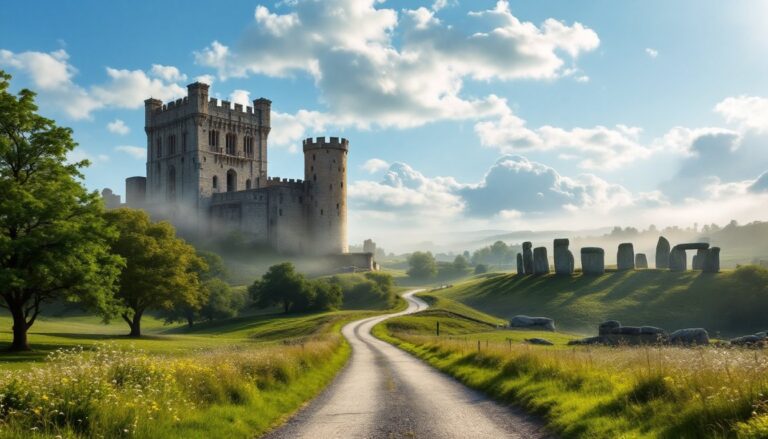
England, a country rich in history and tradition, captivates those eager to explore its past and present. From ancient Roman roads to medieval castles scattered across the landscape, England reveals a fascinating journey through the evolution of society, governance, and culture.
This article delves into notable historical events, cultural milestones, and the lasting legacy that England has contributed to the world stage.
The historical timeline of England
To fully appreciate the cultural richness of England, one must examine its extensive historical timeline.
The earliest known settlements trace back to the Stone Age, but it was during the Roman occupation from 43 AD to 410 AD that England began to emerge as a significant entity. The Romans introduced essential infrastructure, such as roads and cities, laying the groundwork for future developments.
The medieval period and the rise of monarchy
After the withdrawal of Roman forces, England entered a transformative medieval period. This era was marked by the emergence of feudalism and the consolidation of powerful monarchies. The Norman Conquest in 1066, led by William the Conqueror, significantly reshaped England’s political framework. Magnificent castles and cathedrals were constructed, symbolizing the strength of the monarchy and the Church’s influence. A crucial event of this period was the signing of the Magna Carta in 1215, which played a vital role in establishing the principles of modern democracy by placing limits on royal authority.
Cultural contributions through the ages
England’s history encompasses not only its political landscape but also its significant cultural contributions. The Renaissance, which began in the late 15th century, marked a period of remarkable creativity in art, literature, and science. This era produced influential figures such as William Shakespeare, whose works continue to resonate worldwide, shaping the craft of countless writers and playwrights.
The industrial revolution and its impact
The Industrial Revolution in England during the 18th and 19th centuries was a pivotal moment in cultural history. This transformation saw the nation shift from an agrarian society to an industrial powerhouse, fundamentally altering its social structure and economic theory. The era was marked by influential thinkers such as Charles Darwin, whose groundbreaking theory of evolution reshaped humanity’s understanding of its role in the natural world.
Modern England and global influence
In the 20th century, England played a significant role in shaping global culture, politics, and society. The influence of the British Empire is evident in the widespread use of the English language and the adoption of British customs around the world. Furthermore, England has been a leader in various fields, particularly in music, where iconic bands such as The Beatles and The Rolling Stones transformed the landscape of popular music.
Today, England embodies a vibrant fusion of its historical roots and modern influences. Cities like London act as cultural melting pots, where traditional practices coexist alongside contemporary trends. Festivals, art exhibitions, and theatre productions celebrate England’s rich heritage while embracing innovation and creativity.
The role of education and literature
Education has been instrumental in preserving England’s cultural legacy. Prestigious institutions like Oxford and Cambridge have nurtured some of history’s greatest minds, contributing significantly to fields such as literature, science, and politics. By prioritizing the humanities, we ensure that future generations will recognize and cherish the profound depth of England’s cultural heritage.
Cultural tapestry of England
England’s history is a rich tapestry woven from threads of political upheaval, cultural innovation, and social change. Its contributions to the world are vast, influencing the foundations of democracy, art, and science. Exploring England’s past provides valuable insights into the present and future, highlighting the significance of understanding and preserving our shared heritage.
