

The discussion surrounding the possibility of a burqa ban in the UK has gained significant momentum following recent remarks made by Robert Jenrick.
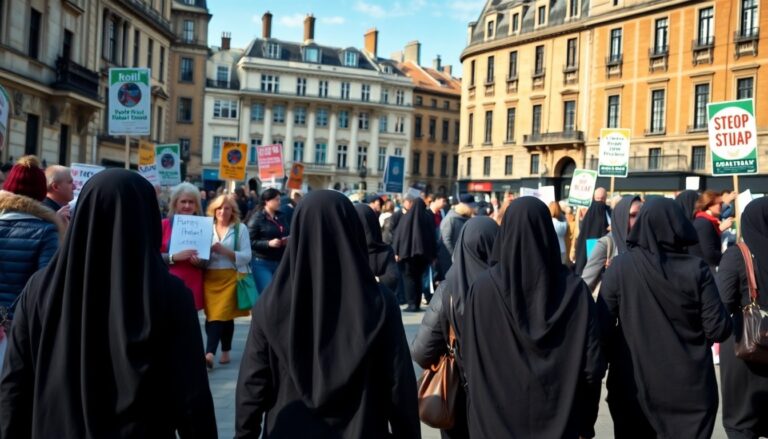
The discussion surrounding the burqa and its role in British society has intensified following remarks by Robert Jenrick, the shadow justice secretary. Jenrick has publicly supported a nationwide ban on the burqa, which is worn by some Muslim women. This stance puts him at odds with Conservative Party leader Kemi Badenoch.
This internal party conflict underscores a larger debate about cultural integration and the values that shape the United Kingdom.
Jenrick’s stance on burqa restrictions
In a radio interview on his program, Ring Rob, UK politician Robert Jenrick expressed his belief that the burqa should be banned.
He suggested that the UK could adopt similar measures to Italy’s recent proposals to restrict face coverings. Jenrick stated, “I probably would ban the burqa,” highlighting the need to uphold what he described as basic values of the nation.
His comments have sparked significant controversy, particularly in light of earlier statements by Kemi Badenoch, who argued that a blanket ban would not effectively address the underlying issues of cultural separation.
The implications of a ban
The burqa is a full-body garment that covers the face, typically allowing visibility only through a mesh screen. Its mandatory use in Taliban-governed regions, such as Afghanistan, has led to significant discussions in the UK regarding cultural identity and freedom of expression. According to official sources, UK Minister Robert Jenrick has noted that the visibility of such garments can challenge the social fabric of British society. He stated, “Where you’re seeing them fraying at the edges or frankly being completely destroyed—whether it’s Sharia courts or the wearing of the burqa—these are issues we’re going to have to confront if we want to build the kind of society that we want to hand on to our kids and grandkids.” His remarks illustrate a commitment to preserving what he considers fundamental British principles.
The consequences
The reaction to Jenrick’s statements has been immediate and polarized. Labour MP Sam Rushworth criticized the remarks as anti-British, claiming they undermine the nation’s core values. Conversely, Tory chairman Kevin Hollinrake sought to clarify the party’s position, describing Jenrick’s comments as a personal opinion rather than a reflection of official policy. He noted that while he may share similar views, the party’s formal stance on this divisive issue is yet to be determined.
Contrasting views within the Conservative Party
Here are the facts: Jenrick has publicly supported a burqa ban, while Kemi Badenoch advocates a different stance. Earlier this year, Badenoch expressed her opposition to a complete ban. Instead, she supports the right of employers to limit face coverings in their workplaces. She stated, “If you come into my constituency surgery, you have to remove your face covering, whether it’s a burqa or a balaclava.” This position highlights her commitment to balancing individual freedoms with the need for security and identification.
Badenoch highlighted that countries like France, which have enacted similar bans, continue to face significant challenges in integration. This suggests that such prohibitions do not address deeper societal issues. Her remarks indicate a nuanced understanding of the complexities surrounding cultural attire and the integration of diverse communities in the UK.
The facts
This ongoing debate is part of a broader discussion on how the UK addresses its multicultural landscape. Jenrick previously expressed discomfort over a perceived lack of diversity during a visit to Birmingham. His comments have faced criticism for potentially promoting a divisive narrative.
Consequences
Critics have labeled Jenrick’s remarks as reflective of Islamophobia, especially in light of his controversial statements regarding the policing of pro-Palestinian protests. This context underscores the tensions within the discourse on cultural integration in the UK.
The political landscape continues to evolve, particularly regarding cultural attire such as the burqa. Leaders within the Conservative Party face the challenge of reconciling differing viewpoints. They must address the significant implications these policies have on integration and community cohesion. Ongoing debates highlight the delicate balance between upholding national values and respecting cultural differences.
