

Explore the fascinating realm of college football and its significant impact on the evolution of sports in North America.
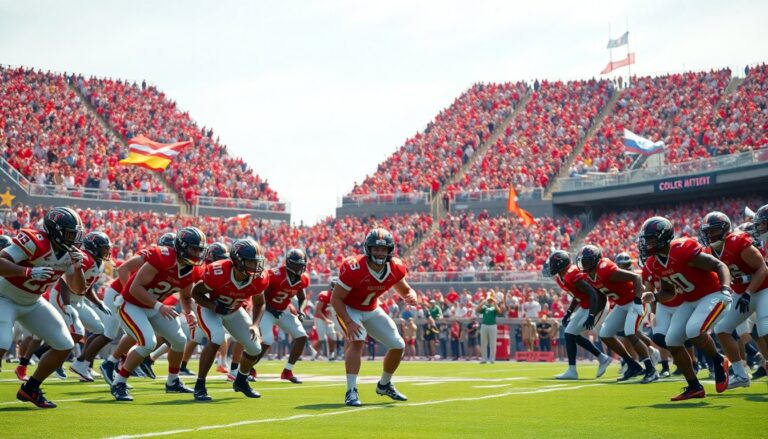
College football is a unique blend of athleticism and academic spirit, showcasing the talents of amateur student-athletes across universities and colleges in the United States and Canada. This sport has evolved into a cultural phenomenon, especially in regions where it draws massive crowds, fostering fervent fan bases and vibrant game-day atmospheres.
While governed by different organizations, the competitive spirit of college football transcends borders.
In the U.S., college football is primarily overseen by the National Collegiate Athletic Association (NCAA), which establishes the rules and regulations for member institutions. In Canada, the U Sports organization manages university-level competitions, while the Canadian Collegiate Athletic Association focuses on college sports, excluding football.
Various countries, including Mexico and South Korea, have also developed their own college football leagues, though with differing degrees of popularity.
The significance of college football in the sports hierarchy
Unlike many sports in North America, there are no official minor leagues for American football or Canadian football.
Consequently, college football occupies a crucial position, serving as a bridge between high school athletics and professional leagues. In certain regions, particularly in the South and Midwest, the passion for college football often surpasses that for professional football.
For much of the 20th century, college football held a higher status than its professional counterpart. This prestige is largely attributable to the number of talented athletes who transition to the National Football League (NFL) after their collegiate careers. Each spring, the NFL draft selects approximately 224 players, the majority of whom have honed their skills in NCAA programs. Additionally, other leagues, such as the Canadian Football League (CFL), primarily recruit talent from college football.
Stadium experiences and attendance
One hallmark of college football is its ability to draw enormous crowds. Many Division I programs feature stadiums capable of seating over 100,000 fans. These venues typically include bench-style seating that maximizes capacity, fostering a more communal game-day experience compared to the individual seating arrangements common in professional stadiums. This setup allows colleges to accommodate more supporters, creating an electric atmosphere that enhances the game.
While college athletes are not permitted to receive salaries, they can benefit from athletic scholarships that cover tuition and other educational expenses. Recent changes by the NCAA now allow athletes to engage in name, image, and likeness (NIL) deals, enabling them to secure sponsorships while still in college, marking a significant shift in the landscape of collegiate athletics.
The historical roots of college football
The origins of modern North American football can be traced back to various forms of football played in British public schools during the mid-19th century. The game began to evolve significantly when students at Rugby School developed a version that allowed players to carry the ball. British soldiers later introduced this form of football to Canada, where it quickly gained traction among college students.
The inaugural recorded game of gridiron football took place on November 9, 1861, at the University of Toronto. This match, involving students from the university, marked a historical milestone, laying the groundwork for future developments. The establishment of formal rules emerged in 1864 when F. Barlow Cumberland and Frederick A. Bethune at Trinity College developed regulations inspired by rugby.
The transition from informal to organized play
During the 19th century, football games at colleges often resembled the chaotic nature of traditional mob football, characterized by large groups of players vying for control of the ball. Each institution had its own style, leading to a lack of standardization. By the early 1870s, efforts began to formalize these games, culminating in a meeting on October 20, 1873, where representatives from Yale, Columbia, Princeton, and Rutgers convened to establish a unified set of rules for intercollegiate play.
The first intercollegiate match occurred on November 6, 1869, between Rutgers and Princeton, resembling soccer more than modern football. As the sport evolved, teams began to adopt standardized practices, significantly shaping the future of college football and paving the way for the rich traditions we see today.
In the U.S., college football is primarily overseen by the National Collegiate Athletic Association (NCAA), which establishes the rules and regulations for member institutions. In Canada, the U Sports organization manages university-level competitions, while the Canadian Collegiate Athletic Association focuses on college sports, excluding football. Various countries, including Mexico and South Korea, have also developed their own college football leagues, though with differing degrees of popularity.0
