

Explore the intricate realities of the Gaza conflict and its implications.
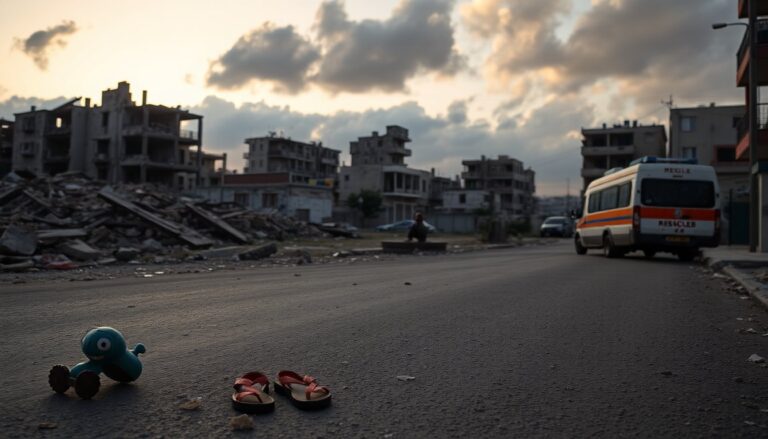
The situation in Gaza remains a focal point of international concern, marked by humanitarian crises and political tensions. As aid efforts struggle to meet the overwhelming needs of the population, the ongoing conflict reveals a deeply rooted complexity involving various factions and international players.
Hamas: Origins and Influence
Hamas, an acronym for Harakat al-Muqawama al-Islamiya or the Islamic Resistance Movement, has been the dominant political entity in the Gaza Strip since its rise to power in the late 2000s. Established in 1987 during the first intifada, the group was founded by Sheikh Ahmed Yassin as an offshoot of the Muslim Brotherhood.
Its inception was a reaction to the political landscape of the time, where it aimed to resist Israeli occupation through both social services and militant actions.
Over the years, Hamas has evolved into a significant force, rejecting Israel’s right to exist while simultaneously garnering support from regional allies like Iran and Turkey.
The group’s charter initially called for the annihilation of Israel, a stance that has been modified in recent years, yet it still refuses to recognize Israel’s legitimacy.
The October Attack and Its Aftermath
In October, Hamas launched a large-scale attack on southern Israel, resulting in the deaths of nearly 1,200 individuals and the capture of over 200 hostages. This incident prompted a fierce Israeli military response, which has led to devastating consequences for civilians in Gaza. As of September, the conflict’s toll has surpassed 64,000 lives, highlighting the dire humanitarian situation exacerbated by ongoing military operations.
International Reactions and Aid Efforts
The international community’s response to the Gaza conflict has been varied, with numerous countries, including the United States, designating Hamas as a terrorist organization. In light of the recent violence, the U.S. has committed substantial military aid to Israel, reinforcing its position as a key ally. However, the blockade imposed by Israel and Egypt since 2007 has severely restricted the flow of goods and humanitarian aid into Gaza, complicating relief efforts.
Despite these challenges, organizations like the United Nations Relief and Works Agency for Palestine Refugees in the Near East (UNRWA) have attempted to provide assistance. However, funding cuts and accusations of Hamas infiltrating these agencies have hampered their effectiveness. The U.N. has reported that prior to the current war, over one million people in Gaza were already in need of aid, a figure that has dramatically increased due to the ongoing conflict.
Humanitarian Crisis in Gaza
The consequences of the war have plunged Gaza into extreme poverty, with estimates indicating that around 90% of the population has been displaced. The blockade has left many reliant on limited international assistance, and the growing famine conditions pose a significant threat to the already vulnerable population. The situation raises urgent questions about accountability and the effectiveness of aid distribution in a territory beset by conflict.
Future Prospects and Political Dynamics
The internal dynamics within Palestinian leadership also add to the complexity of the situation. While Hamas has maintained its grip on power in Gaza, its rivalry with Fatah, which governs the West Bank, has led to a fragmented Palestinian political landscape. This division undermines the potential for a unified approach to peace negotiations and further complicates the prospects for stability in the region.
As Hamas continues to navigate its relationships with regional actors and adapt its strategies in response to Israeli military actions, the potential for a broader conflict looms. Observers remain concerned that the ongoing violence could spill over into neighboring countries, drawing in various militant groups aligned with Hamas.
The Call for Peace
Amidst the chaos, discussions about peace initiatives persist. A proposed plan from the Trump administration has been circulating, aiming to address the longstanding grievances between Palestinians and Israelis. However, the deep-rooted animosity and lack of trust between the factions present significant obstacles to any meaningful resolution.
The need for a comprehensive approach that includes humanitarian relief, political reconciliation, and international cooperation is more pressing than ever. As the world watches, the situation in Gaza continues to unfold, reflecting a complex interplay of history, politics, and human suffering.
