

The trial of Soldier F, accused of involvement in the Bloody Sunday shootings, is nearing a decision.
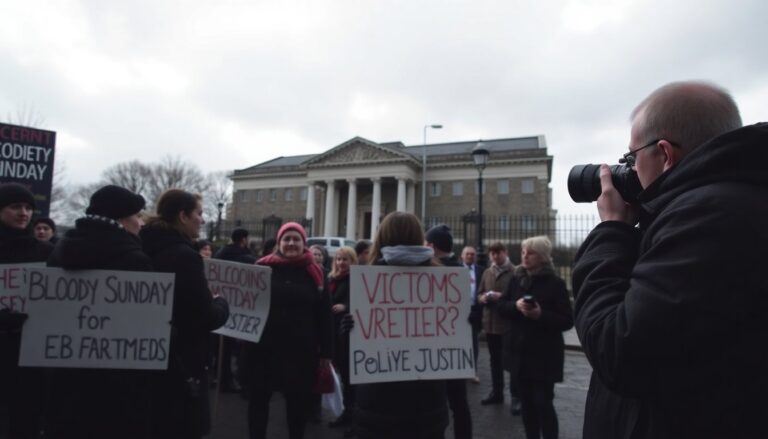
As the court awaits a significant verdict, a former British soldier, known only as Soldier F, is at the center of a high-profile trial concerning the events of Bloody Sunday in 1972. The soldier faces accusations of murdering two individuals during a civil rights protest in Derry, an incident that resulted in the deaths of 13 people on that fateful day.
The trial has captured the attention of many, as it addresses long-standing grievances from the victims’ families and the broader community.
The legal proceedings, which have unfolded over the past month, have seen extensive testimonies and evidence presented in Belfast Crown Court.
The former paratrooper, referred to as Soldier F for anonymity, has denied all charges, including two counts of murder and five counts of attempted murder. His identity remains concealed through a court order, emphasizing the sensitive nature of the case.
The Context of Bloody Sunday
On January 30, 1972, the Bogside area of Derry was the scene of a civil rights demonstration that quickly escalated into chaos. The Parachute Regiment opened fire on unarmed protesters, leading to tragic consequences. The aftermath of the shootings not only shaped public perception of the British Army’s role in Northern Ireland but also left an indelible mark on the lives of the victims’ relatives.
Impact on Families
Among those deeply affected by the events of Bloody Sunday is Caroline O’Donnell, whose father, Patsy, survived being shot in the shoulder during the protest. Caroline reflects on her family’s experience, sharing that while they were fortunate her father returned home after three weeks in the hospital, he was never the same. The emotional scars from that day lingered on as her father lived with the stigma of being associated with a violent event.
Caroline expresses her complex feelings about the event, stating, “I often feel guilty for the families who lost their loved ones. My father was lucky to come home, but he was forever changed.” Her poignant recollections highlight the lingering trauma faced by those who witnessed or were affected by the violence.
Legal Proceedings and Testimonies
The trial of Soldier F has progressed through a series of testimonies, including statements from former military colleagues. The prosecution emphasizes these accounts as critical evidence, asserting that they establish Soldier F’s presence and actions during the shooting in Glenfada Park North. However, the defense argues that these witnesses, designated as Soldiers G and H, are not reliable, raising questions about the validity of their testimonies.
As the trial unfolded over four weeks, the atmosphere in the courtroom was palpable, with many relatives of the deceased attending daily. Notably, Veterans’ Commissioner David Johnstone and members of the Northern Ireland Veterans Movement were also present, demonstrating the widespread interest in the proceedings.
Public Sentiment and Expectations
The anticipation surrounding the verdict reflects the broader public sentiment regarding justice for the victims of Bloody Sunday. Mickey McKinney, who lost his brother William during the events of that day, expressed hope that the judgement would favor those seeking justice. He articulated the profound impact his brother’s death had on their family, stating, “My parents were devastated. The loss changed our lives forever.”
McKinney’s remarks underscore the importance of acknowledging the human cost of the tragedy and the necessity for accountability. The community’s collective pain and demand for justice resonate strongly as the trial reaches its conclusion.
Looking Ahead
As the court prepares to announce its verdict, the implications of this trial extend far beyond the individual soldier. It represents a pivotal moment in the ongoing quest for truth and reconciliation in Northern Ireland. The decision will not only address the specific allegations against Soldier F but may also influence public perceptions of military conduct during the Troubles.
Ultimately, the outcome of this trial could serve as a significant step toward healing for the families affected by Bloody Sunday and a crucial chapter in the narrative of Northern Ireland’s complex history. The importance of this trial, both for those directly impacted and for future generations, cannot be overstated.
