

As Gaza faces intense destruction, the question arises: who will finance the rebuilding efforts?
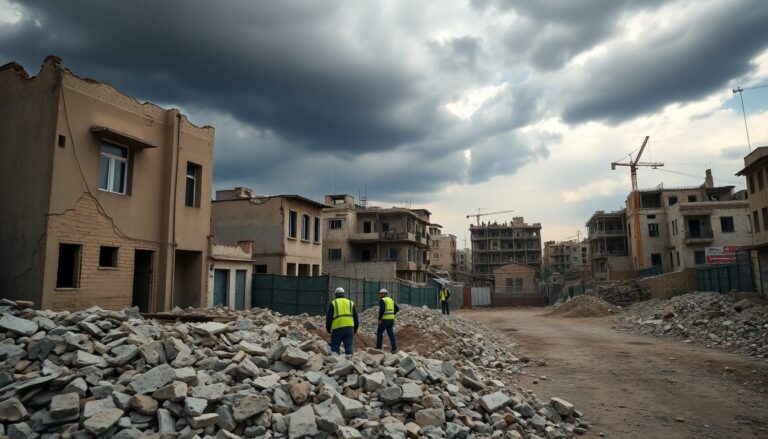
In the wake of the recent conflict in Gaza, the destruction left in its path raises a critical question: who will pay for the reconstruction? The war has devastated infrastructure, homes, and the economy, leaving many in dire need of assistance.
Understanding the financial responsibility for rebuilding is complex, involving multiple stakeholders, including international governments, NGOs, and local authorities.
Discussions around funding often reveal the geopolitical tensions that influence the situation. The reconstruction of Gaza is not merely an issue of immediate aid; it involves long-term stability and potential political ramifications.
As the world watches, the push for rebuilding will also be intertwined with the negotiations surrounding peace and security in the region.
The role of international aid
International aid plays a pivotal role in any reconstruction effort. Following the conflict, organizations such as the United Nations and various humanitarian groups have mobilized to assess the damage and provide immediate relief.
However, the financial aid necessary for long-term rebuilding remains uncertain.
Countries like the United States and European nations often lead the charge in providing financial assistance. Their contributions can be crucial in securing a stable environment for rebuilding efforts. Yet, the political landscape complicates these contributions. For instance, the U.S. has historically supported Israel, and any aid to Gaza is carefully scrutinized, ensuring it does not inadvertently support groups like Hamas, which is viewed as a terrorist organization by many.
Geopolitical influences on funding
The dynamics between nations significantly affect the funding of Gaza’s reconstruction. Political alliances and historical grievances can dictate the flow of aid and support. For example, countries in the Arab world, particularly those with close ties to Palestine, are more likely to contribute to rebuilding efforts. Their involvement brings not just financial resources but also political legitimacy to the Palestinian cause.
However, these contributions can also come with strings attached, potentially influencing the governance and political landscape in Gaza. The delicate balance of power among regional players often leads to a tug-of-war over the direction of aid and reconstruction efforts.
The importance of local governance
While international aid is essential, the effectiveness of reconstruction efforts hinges on strong local governance. The Palestinian Authority (PA) plays a critical role in managing resources and implementing rebuilding projects. Without a unified and stable local government, the distribution of resources can become chaotic, leading to corruption and inefficiencies.
Moreover, the PA’s relationship with Hamas complicates governance in Gaza. The two groups have historically been at odds, which can hinder cohesive rebuilding efforts. International donors often prefer to work with the PA, yet the reality on the ground is that Hamas controls much of Gaza, creating a challenging environment for reconstruction.
Challenges and opportunities in reconstruction
Rebuilding Gaza is fraught with challenges. The immediate need for housing, healthcare, and education must be addressed alongside the long-term requirements of infrastructure development. Following previous conflicts, rebuilding efforts have often fallen short due to lack of funding, political instability, and ongoing violence.
However, there is also an opportunity for positive change. The reconstruction phase can serve as a platform for fostering peace and cooperation among various factions. Engaging local communities in the rebuilding process can empower them, leading to sustainable development. Projects that promote economic growth and social cohesion can pave the way for a more stable Gaza.
International community’s responsibility
The international community bears a significant responsibility in the reconstruction of Gaza. Beyond providing financial aid, there is a need for a comprehensive approach that addresses the underlying issues contributing to the conflict. Diplomatic efforts must accompany financial support to ensure that the peace process is prioritized.
Engagement from global powers can help facilitate negotiations and encourage a unified effort towards rebuilding. The long-term success of Gaza’s reconstruction will depend on the commitment of the international community to not only provide assistance but also to advocate for a lasting peace that addresses the root causes of conflict.
