

The trial of Dahbia Benkired has incited widespread anger, with many calling for her execution after the tragic death of young Lola.
The horrific murder of a twelve-year-old girl in France has sparked intense public outrage, particularly during the trial of the accused, Dahbia Benkired. This case has not only captivated the nation but also raised fervent debates about justice and punishment.
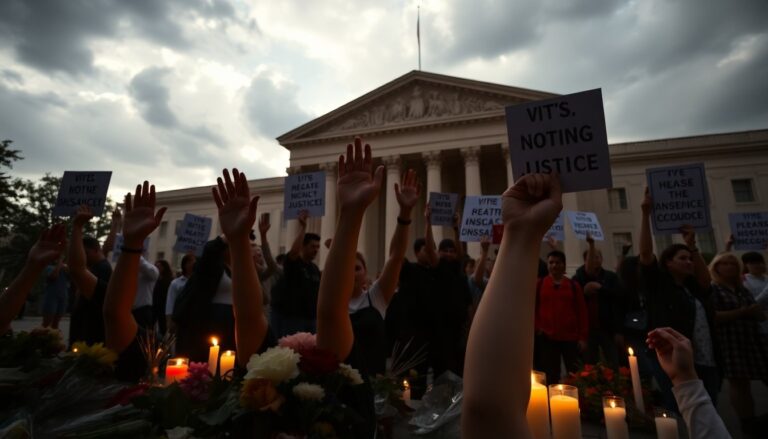
As the court convenes to deliver its verdict, crowds have gathered outside, demanding the harshest possible sentence for an act of violence that has left a community devastated.
On October 14, 2025, Lola Daviet was lured into Benkired’s apartment, where she allegedly faced brutal treatment leading to her untimely death.
As the trial unfolds, the chilling details of the crime have emerged, painting a grim picture of the events that transpired.
Details of the crime
During the proceedings, it was revealed that Benkired, a 27-year-old Algerian migrant residing in France, was accused of heinous acts against the young girl.
Allegations include rape, torture, and murder, with reports indicating that Lola was subjected to unimaginable suffering before her demise. The court has described the incident as not just a crime but a profound act of barbarity.
Witnesses and family members have expressed their horror as details of Lola’s last moments were recounted. Benkired reportedly engaged Lola in conversation, only to later betray her trust in the most appalling manner. As the trial continues, the case has become emblematic of a larger societal issue regarding violence against children.
Public response and protests
Outside the courthouse, demonstrators have made their voices heard, brandishing signs that call for the death penalty to be reinstated in France. Chants of “Let’s hang Dahbia, let’s save Lolas” reverberated through the air as supporters of Lola’s family rallied for justice. The emotional toll of the case has pushed many to demand not only life imprisonment but the ultimate punishment for the accused.
Supporters have taken to social media, amplifying their calls for justice and sharing their outrage over the crime. Videos have surfaced showing impassioned speeches made by family representatives, urging the court to consider the gravity of the situation and the need for a strong legal response.
The chilling testimony
In a disturbing turn of events, Benkired took the stand to recount her version of the tragic day. Her statements revealed a chaotic emotional state, stemming from a recent argument with her partner. She described how she encountered Lola while still simmering with rage, leading her to act on her darker impulses. “I saw her and thought to myself that I was going to hurt someone,” she testified, a statement that sent shivers through the courtroom.
While she initially claimed that her intent was not to harm the girl specifically, the details that followed painted a different reality. Lola’s pleas for mercy as she was led into the apartment echoed in the court, highlighting the innocence of a child who was betrayed in the most unimaginable way. Benkired’s chilling admission of what followed left many in disbelief as she detailed the acts committed against Lola.
Legal implications and societal impact
The case raises significant questions about the adequacy of current laws regarding severe crimes. As public sentiment swings heavily in favor of harsher penalties, discussions surrounding the death penalty have resurfaced in France, a country that abolished it in 1981. The emotional weight of this case has led to renewed debates about justice and its implications for society.
Legal experts have weighed in on the ramifications of this trial, suggesting that it could pave the way for changes in legislation. With so much at stake, the outcome of this trial may influence not only the lives of those involved but also the broader legal landscape regarding violent crimes in France.
Conclusion: A call for justice
As the court prepares to deliver its verdict, the atmosphere remains charged with emotion and anticipation. The call for justice in Lola’s name resonates deeply within a community that has been forever altered by this tragedy. Advocates for her family continue to push for the most stringent penalties, reflecting a collective desire not only for accountability but also for a future where such atrocities are prevented.
This case serves as a stark reminder of the vulnerabilities faced by children and the societal responsibility to protect them. It remains to be seen how the judiciary will respond to the cries for justice and what implications this case may hold for the future of similar legal matters in France.
