

Innovative Serum Developed to Potentially Reverse Hair Loss in Just Three Weeks Researchers have unveiled a groundbreaking serum designed to combat hair loss, showing promising results in as little as three weeks. This cutting-edge solution aims to restore hair growth and enhance overall hair health, offering hope to those experiencing hair thinning and loss.
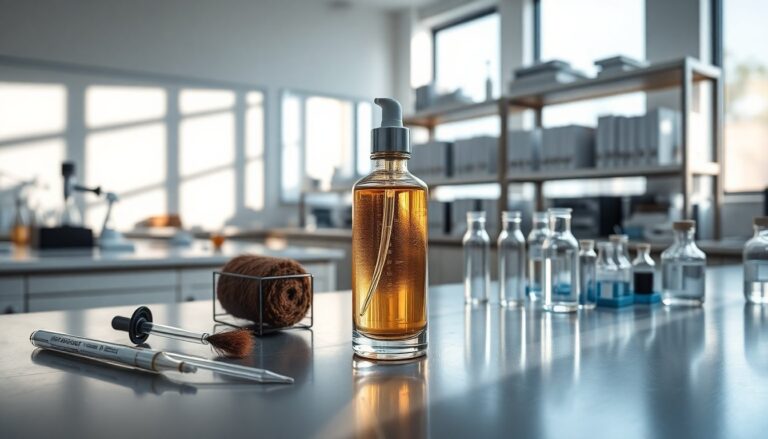
In a significant advancement for individuals experiencing hair loss, researchers from National Taiwan University have introduced a topical serum that shows promise in promoting hair growth. This treatment demonstrates visible effects within 20 days and was initially tested on mice in laboratory conditions.
The findings could pave the way for an over-the-counter solution for those facing hair thinning and baldness.
The serum functions by targeting specific fat cells in the skin, which are essential for hair follicle regeneration. Researchers identified that the serum contains naturally derived fatty acids, which are gentle on the skin and do not induce irritation—a common drawback of many existing hair loss treatments.
The mechanism behind hair regrowth
Professor Sung-Jan Lin, who led the research team, tested an earlier formulation of the product on his own legs. He noted that after three weeks of serum application, he observed significant hair regrowth. In laboratory trials, the serum was applied to shaved areas of mice previously treated with a mild irritant.
This irritant, identified as sodium dodecyl sulfate (SDS), initiated a response in the mice’s skin, stimulating hair follicles to produce new hair.
The role of skin irritation
The research team previously established that certain types of skin irritation can result in a condition known as hypertrichosis, characterized by excessive hair growth. Despite the evolutionary trend toward reduced body hair in humans, the researchers noted a retained capacity for hair regeneration. Following irritant application, the mice exhibited new hair growth approximately 10 to 11 days later, while untreated areas remained devoid of hair.
Interestingly, the irritant seems to attract immune cells to the fat layer beneath the skin. This immune response signals fat cells to release fatty acids, which are then absorbed by stem cells in hair follicles, thereby promoting hair growth. The study, published in Cell Metabolism, reveals that this mechanism works not only by inducing inflammation but also by enhancing tissue regeneration.
Transitioning to human applications
Following the promising results in mice, the research team aimed to determine if similar effects could be achieved without chemical irritants. They developed serums containing various fatty acids, including oleic acid and palmitoleic acid, dissolved in alcohol. Notably, these formulations also proved effective in stimulating hair regrowth on skin without irritants.
Future prospects and safety
The researchers have successfully patented their serum and are preparing for clinical trials to assess its effectiveness in human subjects. While the timeline and pricing for commercial availability remain uncertain, preliminary results are encouraging. According to Professor Lin, the fatty acids in the serum are not only abundant in human adipose tissue but also commonly found in various plant oils, indicating a favorable safety profile.
Although the team has observed positive results from applying the serum to human hair follicles in laboratory settings, they stress the necessity of validating these outcomes through comprehensive human trials. They emphasized that the presence of natural fatty acids in their formulation offers considerable promise for addressing hair loss in the future.
As hair loss affects over half of men by age 50, this new serum could provide hope for many. Current treatments range from medications to surgical options, each with distinct limitations and side effects. Unlike existing solutions, which may lead to issues such as depression or sexual dysfunction, the new serum appears to present a more favorable safety profile.
In addition to the innovative serum from Taiwan, other promising treatments are being developed globally. For example, researchers in Madrid are investigating the use of stem cells to generate new hair follicles. However, these treatments necessitate injections administered by healthcare professionals, underscoring the need for further advancements in accessibility and efficacy.
The serum functions by targeting specific fat cells in the skin, which are essential for hair follicle regeneration. Researchers identified that the serum contains naturally derived fatty acids, which are gentle on the skin and do not induce irritation—a common drawback of many existing hair loss treatments.0
