

Explore the profound connection between Queen Elizabeth II and renowned artist Arnold Friberg as they collaborate on the creation of an extraordinary portrait. Discover the intimate moments that defined this artistic journey and the impact it had on both the royal subject and the artist.
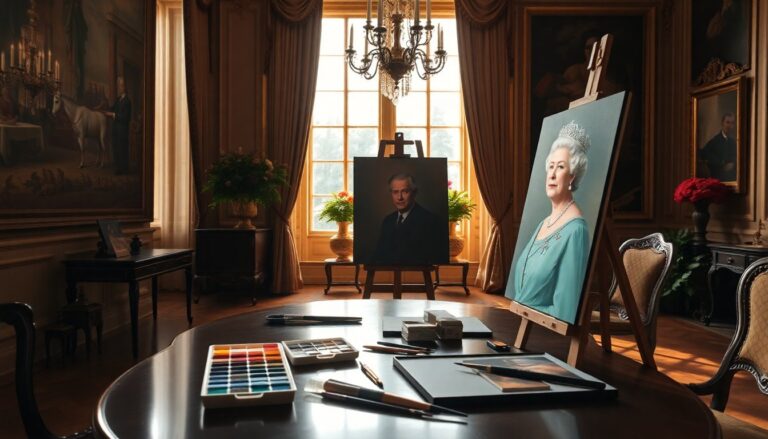
Behind the scenes of a unique portrait session with Queen Elizabeth II
As one of the most photographed individuals worldwide, Queen Elizabeth II has appeared in innumerable images throughout her reign. Yet, few have witnessed her in such a candid manner as during a portrait session with American artist Arnold Friberg.
This article delves into the intriguing moments that unfolded at Buckingham Palace during the creation of this remarkable artwork.
The artist’s journey to Buckingham Palace
Friberg, who died in 2010 at the age of 96 in Salt Lake City, was a renowned artist recognized for his horse studies and contributions to Hollywood films.
He received an Oscar nomination for his paintings in The Ten Commandments, directed by Cecil B. DeMille. His artistic career commenced in 1937 at the age of 24, when he was commissioned to portray the Royal Canadian Mounted Police. This project served as a pivotal foundation for his future royal portraits.
Previous royal connections
In 1978, Friberg received a commission to create a portrait of the then Prince of Wales, Charles, from a support group for the Mounties. This collaboration took him to England, where he established a studio at Buckingham Palace for six weeks. The success of this project resulted in a subsequent request for a portrait of the Queen, who eagerly accepted the opportunity to work with Friberg.
Creating the portrait
A letter from the Queen’s private secretary, Robert Fellowes, dated May 1990, extended a rare invitation for Friberg to participate in several two-hour sittings at the palace. With permission granted, Friberg and his wife, Heidi, returned to Buckingham Palace for another six-week duration, setting up a temporary studio in the Yellow Salon. The picturesque gardens of the palace served as the chosen backdrop for the portrait.
Friberg described his experience painting a royal portrait as surreal, reflecting on the honor it represented. He questioned, “Who am I to be at Buckingham Palace?” Despite his initial awe, the Queen, then 64 years old, found joy in their interactions. She often visited to observe the progress on her cherished horse, Centenial. This horse was a gift to her in 1972, commemorating the centenary of the Mounties, who regularly provide horses for royal ceremonies.
A special bond
The Queen chose a unique spelling for Centenial’s name, opting for one ‘n’ to set him apart from common names. Friberg affectionately referred to the horse as “a splendid, silky animal,” noting how comfortable the Queen was while riding him. As their time together continued, the artist and monarch developed a strong rapport.
During their last sitting on July 4, Friberg recalled a lighthearted moment when the Queen joked about her fatigue from a recent visit to Canada. The playful banter continued, with Friberg teasing her about working on a significant holiday. Their laughter reflected the enjoyable atmosphere they shared over the weeks.
Final touches and legacy
Friberg’s wife, Heidi, played a crucial role during the sessions, capturing photographs and establishing a connection with the Queen. Their discussions even touched on personal topics, such as Prince Charles’ shoulder injury from a polo accident. Heidi, who is a nurse, suggested that the treatment Charles received was inadequate. The Queen expressed her agreement, revealing her concern for her son’s well-being.
Queen’s portrait to be showcased in Parliament
As the final sitting approached, artist Friberg encountered technical difficulties with his camera. The pressure to capture the moment perfectly mounted. The Queen, ever observant, identified the issue and assisted him in resolving it, demonstrating her keen eye during a creative session.
Friberg later expressed pride in leaving behind a significant piece of art. He remarked on the Queen’s unique radiance and beauty, stating, “She walks into the room and it lights up.” This comment reflects her captivating presence that transcended the canvas.
The completed portrait was unveiled in August 1994 at the Governor’s House in Victoria, British Columbia. It remained in Friberg’s studio until his passing. In, the First Freedom Art Company acquired the collection from his family and plans to showcase the portrait privately at Parliament before a public exhibition in a subsequent year.
