

Impact of Funding Cuts on Social Housing Projects in Northern Ireland The reduction in funding presents substantial challenges to the development and sustainability of social housing initiatives across Northern Ireland. These financial constraints jeopardize ongoing projects and hinder the ability to meet the growing demand for affordable housing solutions. As a result, the stability of communities and the well-being of vulnerable populations are at risk, highlighting the urgent need for...
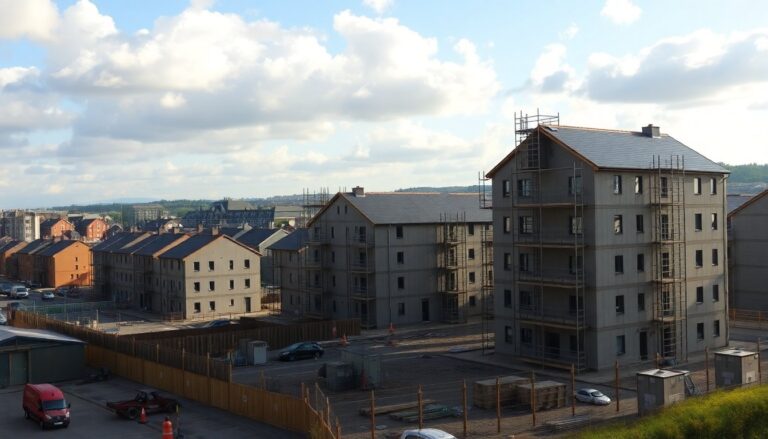
The landscape of social housing in Northern Ireland faces a significant challenge following the recent announcement by Communities Minister Gordon Lyons regarding a reduction in funding for housing associations. This decision could have serious implications for the construction of new homes, particularly as the demand for affordable housing reaches critical levels.
Currently, nearly 1,000 units are under construction, a stark contrast to the ambitious target of 5,800 new homes set by Stormont. The funding cuts may further delay these necessary projects, leaving many families in a precarious situation as they await suitable housing options.
Impact of funding reductions
In a significant policy change, the Department for Communities will reduce the percentage of grant funding allocated to housing associations. Effective December 1, the average grant will cover only 46% of total construction costs, down from 54%.
In specific areas struggling with housing shortages, such as parts of Belfast, this figure will decrease further to just 42%.
Consequences for housing developers
The impact of these changes is considerable. The Northern Ireland Federation for Housing Associations warns that rising construction costs may result in the cancellation or postponement of several social housing projects. This shift poses a risk not only to the creation of new homes but also to the maintenance of existing properties, raising concerns about potential deterioration.
Mark H Durkan, the opposition spokesperson on community affairs, has raised concerns regarding the long-term implications of recent funding cuts. He stated that it is difficult to see how these changes will lead to an increase in new housing. Durkan emphasized that insufficient funding could lead to a decline in the quality of existing social housing, putting further pressure on an already strained system.
Strategic responses to the crisis
Amid the challenging economic environment, Minister Lyons has underscored the necessity for innovative strategies to improve housing delivery. He pointed to the potential of utilizing government-owned land and exploring alternative financing methods as viable options to lessen the effects of reduced funding.
Long-term solutions and government negotiations
During a recent assembly meeting, Lyons reported that his discussions with the Treasury regarding borrowing powers for the Housing Executive have not produced results, referring to his experience as “hitting a brick wall.” A spokesperson for the UK government, however, stated that the latest spending review has allocated a record settlement to Northern Ireland. This includes a commitment to negotiate a comprehensive fiscal framework.
Despite these assurances, Lyons expressed frustration with the ongoing negotiations, highlighting the urgent need for more homes. He noted that nearly 50,000 individuals are currently on the waiting list for social housing. His commitment to developing a robust housing strategy is clear, but the path forward is fraught with challenges.
Future outlook for social housing
Funding cuts for social housing construction in Northern Ireland
The announcement by Minister Lyons regarding funding cuts for social housing construction marks a significant moment for the sector in Northern Ireland. With housing demand already on the rise, these reductions in funding could worsen an already critical situation. Innovative strategies and alternative financing will be essential for navigating these challenges.
As stakeholders in the housing sector respond to these changes, there is hope that collaborative efforts between the government and housing associations will lead to solutions prioritizing the needs of the most vulnerable members of society. The real challenge now is to translate these intentions into concrete outcomes that will positively impact the community.
