

Gaza faces a dire humanitarian crisis exacerbated by funding cuts and legal hurdles that impede aid delivery.
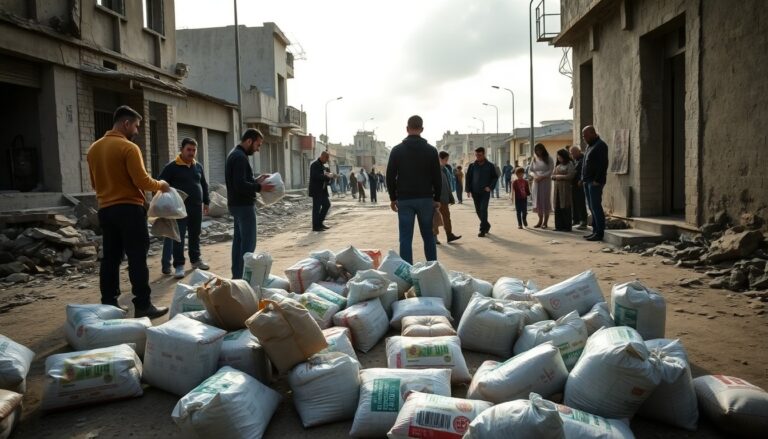
The humanitarian conditions in Gaza have become increasingly precarious, particularly following the fragile ceasefire between Israel and Hamas. As world leaders advocate for reconstruction efforts in the region, the reality on the ground is starkly different. Humanitarian organizations are struggling to provide relief due to severe funding cuts and restricted access to the enclave.
Since the onset of the ceasefire, which was initiated by the United States, there has been a concerted effort from the United Nations and various aid organizations to mobilize relief operations. Yet, the daunting challenges they face are compounded by a significant decline in public trust and financial support.
The impact of funding cuts on humanitarian efforts
According to Richard Brennan, former regional emergency director for the World Health Organization, humanitarian funding has seen a drastic reduction since. He noted, “This year we’re already at only half of what we received last year, and we’re nearing the end of October.” This alarming trend suggests that without a change in course, the consequences for those in need could be catastrophic.
Supporting this assertion, a study published in the Lancet journal estimates that around 40 million individuals could lose their lives by 2030 if current trends in humanitarian assistance continue. The dire situation in Gaza is representative of a broader crisis affecting many conflict zones worldwide.
Political challenges affecting aid delivery
The United States has played a significant role in hampering humanitarian responses by withholding funds from the UN Relief and Works Agency for Palestine Refugees in the Near East (UNRWA). Both the Biden and Trump administrations have been accused of stalling financial assistance, despite UNRWA’s critical infrastructure aimed at meeting the urgent needs of Gazans.
Israel has persistently claimed that UNRWA supports Hamas, a charge that has not been substantiated. Nevertheless, this narrative has led many nations to hesitate in their funding commitments, further jeopardizing the basic necessities for the Palestinian population. The result has been a systematic blockade of essential supplies to the region.
Legal rulings and their implications for Gaza
In a recent advisory opinion, the International Court of Justice (ICJ) ruled that Israel must permit UNRWA to deliver humanitarian aid to Gaza, emphasizing that it is the obligation of the occupying power to facilitate relief efforts. This ruling has arrived at a critical time, as the ongoing humanitarian crisis has reached alarming proportions.
Despite Israel’s claims that the ICJ’s proceedings are biased, the court’s president, Yuji Iwasawa, stated that Israel has not allowed UNRWA to deliver supplies since March. The court underscored the necessity for Israel to enable relief operations to address the dire humanitarian needs of the local population.
The response from the international community
The ruling from the ICJ has garnered mixed reactions. While it has been welcomed by humanitarian leaders, including UNRWA’s commissioner-general Philippe Lazzarini, Israeli officials have rejected the opinion, arguing that it fails to consider their security concerns. They maintain that they cannot cooperate with any organization allegedly involved in terrorist activities.
U.N. Secretary-General António Guterres characterized the court’s decision as a pivotal moment, hoping that it would facilitate the much-needed humanitarian efforts in Gaza. He emphasized the importance of this ruling as the international community seeks to enhance aid delivery amidst a crisis that has continued to escalate.
Conclusion: A call for action
The humanitarian situation in Gaza remains critical, with urgent calls for international cooperation to alleviate the immense suffering of its residents. As funding cuts continue to threaten aid efforts and legal disputes complicate the delivery of essential services, it is imperative for the global community to unite in support of a sustainable humanitarian response.
Without decisive action, the future for many in Gaza appears bleak, highlighting the urgent need for a renewed commitment to humanitarian principles and international law. The combination of political will and humanitarian action is essential to address the ongoing crisis and restore hope for the people of Gaza.
