

Veterans Honor Their Legacy at LGBT Memorial Dedication with Royal Presence
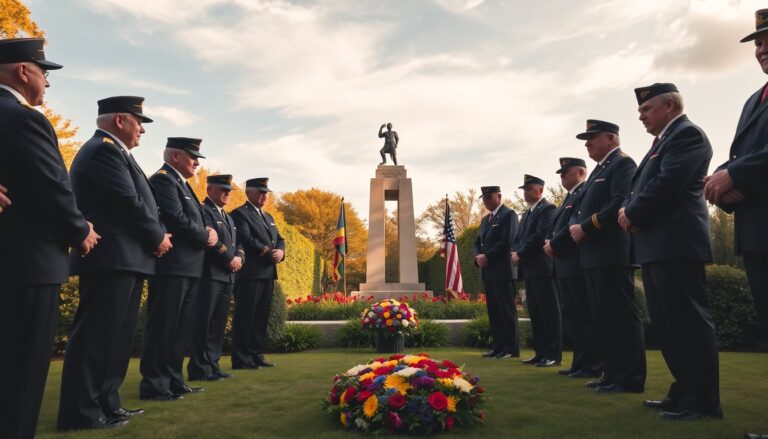
Military veterans expelled from the armed forces due to their sexual orientation convened at the National Memorial Arboretum. This significant gathering was marked by the presence of the King, underscoring a pivotal moment for those who have fought for their country and their right to exist openly.
Among the attendees was Carol Morgan from Surrey, a former soldier who enlisted in the late 1970s. After four years of service, she faced dismissal solely due to her identity. Reflecting on her traumatic experience, she stated, “I was interrogated for six and a half hours, and my room was turned upside down.
To think that my sexuality was deemed a mental illness is unfathomable.”
The emotional impact of exclusion
Ms. Morgan’s testimony resonated with many as she highlighted the enduring effects of such discrimination. “I spent over 36 years hiding who I am, and it took a toll on my life,” she noted.
“This memorial is not just stone; it symbolizes our existence and struggles. Future generations will know that we were here, and we weren’t just a hidden truth.”
Another veteran, Alison Smitham from Cumbria, shared her painful journey. Always dreaming of serving in the military, her aspirations were abruptly shattered when she was expelled from the Army after just 18 months in 1983. “To lose everything I worked for in a split second was devastating. It’s difficult for anyone who hasn’t experienced it to truly grasp the depth of that loss,” she said.
A step towards healing
Both Ms. Morgan and Ms. Smitham expressed gratitude towards the Women’s Royal Army Corps for their efforts in helping them reclaim their identities. Receiving their berets back was an emotional moment, symbolizing a sense of reinstatement in a community they once belonged to.
Former RAF firefighter Carl Austin-Behan, who joined the service at 19, shared a poignant memory from his military career. After his dismissal in 1997 for being gay, he felt a profound sense of loss. “The memorial is a powerful reminder of our past. It resonates with the letters I wrote in secrecy, filled with hidden words and identities,” he reflected on the years of concealment he endured.
Facing the past and looking to the future
Mr. Austin-Behan’s story also includes a heroic moment when he received a Royal Humane Society medal for bravery in an attempt to save a pilot from a crashed aircraft. However, his achievements were overshadowed by the devastating impact of his dismissal. “Being told I was ‘incompatible with service life’ changed everything. I lost my home and my sense of belonging,” he stated.
Claire Ashton, a veteran of the Royal Artillery, echoed similar sentiments. Expelled from the Army in 1972 at the age of 21, she felt her lifelong dream was stolen. “This memorial is a moment I never thought I would see. It’s filled with meaning and pride,” she said, emphasizing the psychological scars that linger from her forced departure.
A shared journey toward acceptance
Ms. Ashton described witnessing the creation of the LGBT memorial as therapeutic. “Seeing the final sculpture, ‘Opened Letter,’ evokes deep emotions. It’s comforting to be among others who have endured similar hardships. We are slowly finding peace with our pasts,” she remarked, also expressing her admiration for current armed forces members who can now serve openly.
Sharon Pickering, a former Royal Navy service member, shared her appreciation for the memorial, stating it felt like a homecoming. “It’s a chance to stand tall again, knowing my service and sacrifices are finally acknowledged,” she noted. The memorial has become a beacon of hope for many, symbolizing acceptance and recognition.
Among the attendees was Carol Morgan from Surrey, a former soldier who enlisted in the late 1970s. After four years of service, she faced dismissal solely due to her identity. Reflecting on her traumatic experience, she stated, “I was interrogated for six and a half hours, and my room was turned upside down. To think that my sexuality was deemed a mental illness is unfathomable.”0
