

Lebanon's President Orders Military Response to Increased Israeli Border Incursions Following Fatal Attack on Municipal Worker In response to the rising tensions and escalating Israeli incursions into Lebanese territory, the President of Lebanon has directed the national army to take decisive action. This directive comes after a tragic incident in which a municipal worker lost their life during a border raid, highlighting the urgent need for enhanced security measures and military...
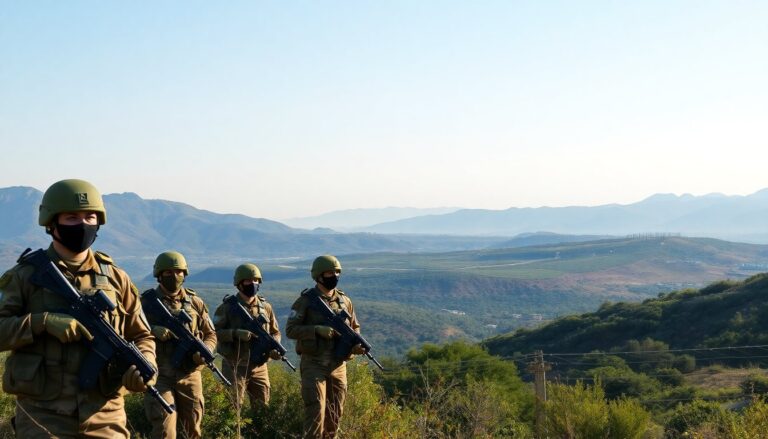
In a decisive move, Lebanese President Joseph Aoun has instructed the nation’s armed forces to stand against any further incursions by Israeli troops into southern Lebanon. This announcement follows a tragic incident in which Israeli soldiers conducted an overnight raid in the border town of Blida, resulting in the death of a local municipal worker.
The heightened military tensions indicate a significant shift in Lebanon’s approach to ongoing Israeli violations of territorial sovereignty.
This escalation marks a continuation of Israeli military operations in Lebanon, which have persisted since a ceasefire agreement was established nearly a year ago.
President Aoun’s directive emphasizes the necessity for the Lebanese army to protect its citizens and territorial integrity amid growing frustrations with the status quo.
Context of the Israeli raid
The raid in Blida involved Israeli forces crossing the border and entering a municipal building, where they fatally shot Ibrahim Salameh, a municipal worker who was reportedly sleeping in the facility.
This aggressive action drew widespread condemnation from Lebanese officials and local residents, who viewed it as a blatant violation of national sovereignty.
Details of the incident
Reports from the National News Agency (NNA) indicate that the Israeli troops remained in the building for approximately two hours, firing multiple rounds that ultimately led to Salameh’s death. Witness accounts highlighted the duration and intensity of the raid, leaving a profound impact on a community already enduring considerable strife. The Israeli military confirmed the operation, alleging that they were targeting infrastructure linked to Hezbollah, although no specific evidence was provided to substantiate this claim.
In the wake of this tragedy, President Aoun condemned the raid as part of a broader pattern of Israeli aggression. He called for a reevaluation of the ceasefire monitoring committee’s role, urging it to take more decisive action against Israel’s continued violations.
Lebanon’s military readiness
Following the Blida incident, the Lebanese army has begun deploying additional forces to the affected region. Traditionally, the Lebanese military has maintained a more passive stance in the face of Israeli incursions, but Aoun’s recent orders signal a potential shift towards a more confrontational posture. Hezbollah, the primary resistance group in Lebanon, has publicly supported the president’s decision, asserting the necessity of backing the army in its mission to defend Lebanese territory.
Hezbollah’s role and historical context
Hezbollah emerged as a significant force during the Israeli invasion of Lebanon in 1982 and has since been a dominant player in opposing Israeli actions. The organization successfully pushed Israeli forces out of Lebanon in 2000 and has engaged in multiple conflicts since, including a notable war in 2006. Despite suffering considerable losses in recent confrontations, Hezbollah remains a pivotal figure in Lebanon’s resistance strategy.
As tensions escalate, Hezbollah’s military capabilities and regional influence will play a crucial role in how Lebanon responds to ongoing Israeli aggressions. The organization has consistently asserted that it will not disarm, viewing its military presence as essential for national defense.
The broader implications of Israeli actions
The Israeli military’s actions extend beyond individual raids; they are part of a broader strategy aimed at undermining Lebanese stability. Reports indicate that Israeli airstrikes have continued, targeting various locations in southern Lebanon, including civilian infrastructures, raising concerns about the humanitarian impact on the local population.
In the past month, numerous civilians have reportedly been killed due to Israeli airstrikes, underscoring the precarious situation in the region. The Lebanese government finds itself in a challenging position, pressured by external forces to disarm groups like Hezbollah while facing an aggressive neighbor that consistently violates agreements designed to ensure peace.
This escalation marks a continuation of Israeli military operations in Lebanon, which have persisted since a ceasefire agreement was established nearly a year ago. President Aoun’s directive emphasizes the necessity for the Lebanese army to protect its citizens and territorial integrity amid growing frustrations with the status quo.0
This escalation marks a continuation of Israeli military operations in Lebanon, which have persisted since a ceasefire agreement was established nearly a year ago. President Aoun’s directive emphasizes the necessity for the Lebanese army to protect its citizens and territorial integrity amid growing frustrations with the status quo.1
