

Event Overview: Aston Villa vs. Maccabi Tel Aviv Match - Birmingham In the days leading up to the highly anticipated match between Aston Villa and Maccabi Tel Aviv in Birmingham, the atmosphere has been marked by significant protests and numerous arrests. This pre-game tension reflects the passionate sentiments surrounding the event, drawing attention from both local and international media. As fans prepare for the clash, the unfolding situation raises questions about security measures and...
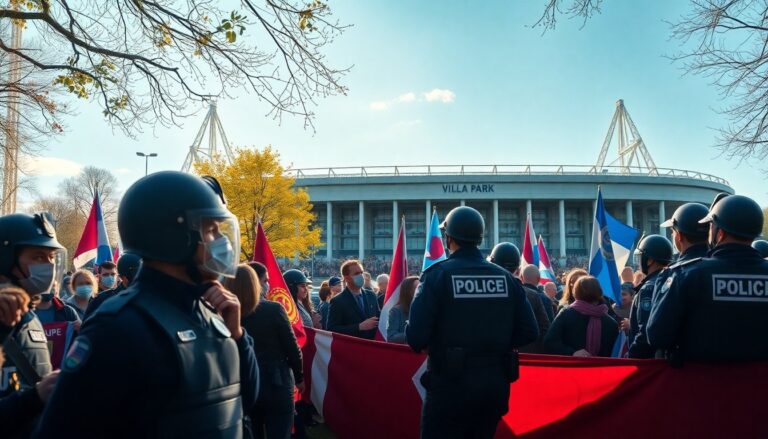
The Europa League match between Aston Villa and Maccabi Tel Aviv faced significant unrest in Birmingham. As the match date approached, the city prepared for potential disturbances, leading to a heavy police presence and multiple protests outside Villa Park stadium.
More than 700 officers were deployed, creating a tense atmosphere as demonstrators expressed their views on the political ramifications of the game.
Concerns for public safety prompted West Midlands Police to prohibit away supporters from Maccabi Tel Aviv. This decision followed a previous encounter between the two teams that resulted in violent incidents and several arrests.
With tensions rising, the police categorized the match as high risk, enforcing strict measures to maintain order.
Protests and arrests in Birmingham
On match day, around 200 protesters gathered at Villa Park, particularly near the Trinity Road Stand. Many participants were associated with the Palestine Solidarity Campaign, advocating for Israel’s exclusion from international football.
The area was adorned with pro-Palestinian banners and flags, while chants demanded action against perceived injustices.
During the protests, police made several arrests for various offenses. Among those detained was a 21-year-old charged for not complying with orders to remove a face mask. Another arrest involved a 17-year-old who disobeyed a dispersal order. Additionally, three individuals were arrested for racially aggravated public order offenses, indicating the volatile environment surrounding the event.
Police measures and Section 60 powers
To address the situation, West Midlands Police activated Section 60 powers, allowing officers to stop and search individuals without requiring reasonable grounds. This approach was deemed necessary to prevent potential violence during the match. The extended powers remained in effect until early the following morning, reflecting the seriousness with which the police approached the event.
As the match commenced, messages opposing antisemitism were displayed on electronic billboards on flatbed vehicles, highlighting the complex social dynamics involved. One message, featuring a Star of David, stated, “Ban hatred not fans,” while a quote from football legend Thierry Henry emphasized the unifying nature of the sport. These messages aimed to promote peace amid the unrest.
Reactions from supporters and officials
Amid the protests, approximately 40 counter-demonstrators gathered, some carrying an Israeli flag while others held signs calling for an end to antisemitism in football. Speakers included notable figures who expressed concern over the exclusion of Maccabi’s fans, viewing it as a troubling precedent for future international matches.
Revd Tim Gutmann, founder of Christian Action Against Antisemitism, characterized the protest as a stand against “ancient hate.” He urged solidarity against such divisive ideologies, emphasizing the importance of inclusion in sports. He stated, “We cannot have no-go zones for Israeli football fans,” underscoring the need for unity.
Government and community response
The government, including Prime Minister Sir Keir Starmer, publicly condemned the decision to ban Maccabi fans, calling it a mistake. Starmer’s statements reflected a broader sentiment that excluding any fans undermines the spirit of football and community. Despite this backlash, Maccabi announced it would not accept any away tickets for the match, citing safety concerns.
As the match concluded, the effects of the protests and police actions reverberated through the community. The events surrounding the fixture sparked discussions about balancing public order with the right to protest, a dilemma increasingly relevant in contemporary sports.
