

Resilience of Gaza's Residents: A Testament to Strength Amidst Adversity and Global Inaction
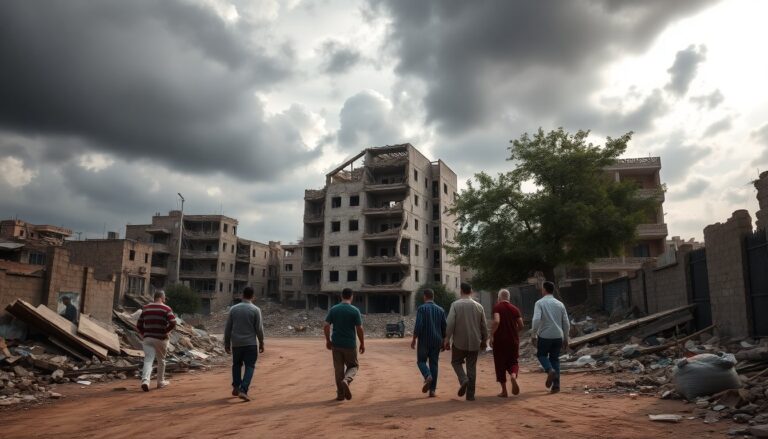
The recent discussions in Doha during the Second World Summit for Social Development (WSSD) aimed to reaffirm global commitments to social equity and support for vulnerable populations. However, the situation in Gaza starkly contrasts these high-level declarations. Amid the ruins of two years of relentless conflict, residents like Yassir Shaheen are confronting both physical destruction and the emotional toll of their harsh reality.
Shaheen, a Gaza resident, describes sleepless nights filled with fear and uncertainty: “Many nights, we lay awake, our lips dry, our hearts pounding in fear, feeling as though the sky itself was collapsing on us.” The destruction in Gaza is profound, with a shattered economy, devastated infrastructure, and a population struggling under a fragile ceasefire brokered by the United States.
The human toll of conflict
The conflict has claimed the lives of over 68,000 Palestinians, with approximately 10,000 still unaccounted for, buried beneath the rubble of their former homes. The Gaza Health Ministry reports a dire humanitarian crisis, where basic necessities are often out of reach.
“Even bread can feel out of reach,” Shaheen lamented, highlighting the immense struggle for survival faced by many.
Despite a slight decrease in prices compared to the conflict’s peak, essential goods remain prohibitively expensive, costing six to ten times more than before hostilities began. On a recent day, the Gaza Government Media Office reported that only 4,453 trucks had been allowed into the territory, a mere fraction of the flow promised by the ceasefire agreement that took effect on October 10.
Destruction of infrastructure
The infrastructure in Gaza has been almost entirely leveled. Shaheen described a landscape that once thrived with schools, clinics, and shops, now reduced to dust and debris. The United Nations estimates that 92% of residential buildings have suffered damage or destruction since the outbreak of hostilities, leaving behind an astonishing 55 to 60 million tonnes of rubble.
At the WSSD, global leaders renewed their vows to eradicate poverty and ensure access to education and healthcare for the most vulnerable populations. However, advocates like Rohan Talbot from the UK-based organization Medical Aid for Palestinians argue that such declarations ring hollow against the backdrop of Gaza’s devastation. “Despite the ceasefire, the health sector remains catastrophic, with severe shortages of medical supplies and personnel,” he noted.
The disconnect between promises and reality
Aziz Hafiz, head of Humanity First UK, emphasized that no eloquent declaration could replace the fundamental rights of freedom and security. “Development cannot flourish in isolation from justice and peace,” he stated, underlining the necessity for actions that prioritize human dignity now. He argued that even small initiatives, such as vocational training and community support programs, serve as acts of resistance against despair.
Talbot further stressed that for any prospect of meaningful progress, the international community must pressure the Israeli government to adhere to humanitarian law and uphold the ceasefire. “Aid must flow unrestricted into Gaza to support the thousands of injured and displaced individuals,” he insisted.
Hope amidst despair
The residents of Gaza, after enduring two years of violence, long for the opportunity to rebuild their lives. Shaheen articulated a common sentiment: “What we desire most is to rebuild our homes with our own hands and regain a semblance of normalcy.” Currently, many find themselves in displacement camps, living under dire conditions with inadequate shelter.
“Most people have no real shelter, only thin, flimsy tents that barely stand against the wind,” he explained. As the weather changes, residents face additional challenges, lacking both space and comfort. However, the prospect of recovery poses painful questions: “How long will it take just to remove the rubble? We hear it could take years,” Shaheen reflected, expressing concern over the timeline for rebuilding.
Shaheen, a Gaza resident, describes sleepless nights filled with fear and uncertainty: “Many nights, we lay awake, our lips dry, our hearts pounding in fear, feeling as though the sky itself was collapsing on us.” The destruction in Gaza is profound, with a shattered economy, devastated infrastructure, and a population struggling under a fragile ceasefire brokered by the United States.0
Shaheen, a Gaza resident, describes sleepless nights filled with fear and uncertainty: “Many nights, we lay awake, our lips dry, our hearts pounding in fear, feeling as though the sky itself was collapsing on us.” The destruction in Gaza is profound, with a shattered economy, devastated infrastructure, and a population struggling under a fragile ceasefire brokered by the United States.1
