

Catherine Connolly's Inauguration: Diverse Reactions from Unionist Leaders
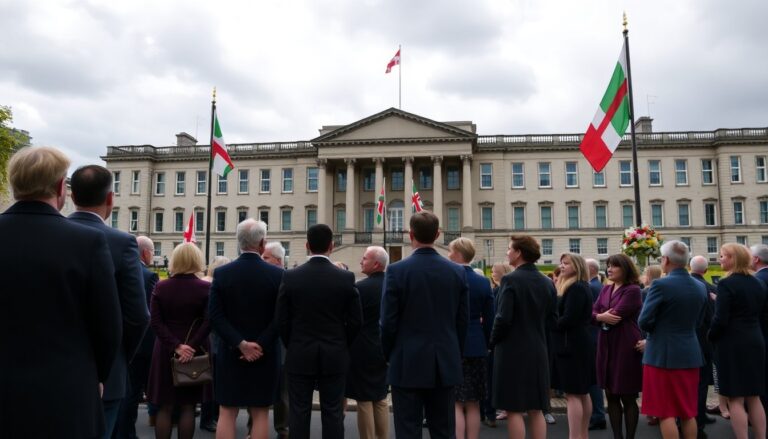
political shifts in northern ireland ahead of presidential inauguration
The political landscape in Northern Ireland is undergoing significant changes as Steve Aiken, former leader of the Ulster Unionist Party, has announced his intention to attend the inauguration of president-elect Catherine Connolly.
Aiken stated he feels “absolutely no qualms” about participating in the ceremony.
This announcement arrives amid important political maneuvers. Deputy First Minister Emma Little-Pengelly has chosen not to attend the inauguration, scheduled at Dublin Castle. She cited a full schedule, underlining her commitment to other significant engagements in Belfast and Windsor on the same day.
Emma Little-Pengelly’s prior engagements
Emma Little-Pengelly announced that she received an invitation to the presidential inauguration but cannot attend due to prior commitments. She highlighted that the event falls on Remembrance Day, a date of great significance for many.
Her schedule includes attending a service and taking part in an Act of Remembrance at Parliament Buildings. Additionally, she will join a special reception at Windsor Castle hosted by Their Majesties, the King and Queen, marking the 80th anniversary of VJ Day and honoring World War II veterans. Little-Pengelly extended her best wishes to Connolly, recognizing the personal importance of the occasion for the president-elect.
The significance of attendance
Little-Pengelly’s decision is particularly notable as it marks the first time a First or Deputy First Minister has not attended a presidential inauguration. Historically, leaders such as former DUP head Peter Robinson have participated in these events. For example, Robinson attended Michael D. Higgins’ inauguration in 2011, establishing a precedent that has generally been followed, despite changes in political circumstances affecting attendance.
In contrast, Aiken has confirmed his presence at the inauguration. He noted that he accepted the invitation after current UUP leader Mike Nesbitt declined due to the demands of his role as Stormont’s health minister and ongoing budget discussions. Aiken highlighted the challenging days ahead for Nesbitt, reflecting the busy political climate.
Aiken discusses his attendance at the inauguration
John Aiken, a representative for South Antrim and a member of the British-Irish Parliamentary Assembly, shared his views on the upcoming inauguration in Dublin. He emphasized his frequent visits to the city, demonstrating a proactive stance in strengthening relations between Northern Ireland and the Republic of Ireland. Aiken stated, “It’s up to the deputy first minister and her party whether she goes or not – I’m going and I’ve absolutely no qualms about it.” This comment reflects his commitment to fostering positive ties with the Republic.
Aiken highlighted that attending the inauguration represents respect for the office of the President of Ireland and acknowledges the invitation from a neighboring state. He noted that the Ulster Unionist Party (UUP) has consistently advocated for robust relationships across the north-south and east-west divides, showcasing confidence in such diplomatic engagements.
Opposing views from unionist leaders
TUV leader Jim Allister has called on unionists to boycott the inauguration, citing what he perceives as “nationalist pressure.” He criticized Connolly, arguing that she shows a lack of respect for the constitutional status of Northern Ireland. Allister noted that her prominence was marred by sectarian tensions during an election, which he described as characterized by overt sectarian attacks against a Protestant candidate.
Allister expressed further concerns about Connolly’s political agenda, labeling it as far-left. He warned that it could alienate traditional Western allies of the Irish Republic. He emphasized that it would be inappropriate for any unionist representative to lend legitimacy to what he considers a problematic presidency by attending the inauguration, underscoring a significant divide among unionist factions.
As the inauguration date nears, the reactions from various political figures highlight the complexities of Northern Ireland’s political landscape, where participation in such events can lead to varying interpretations and implications.
