

North Korea's Defense Minister Issues Stern Warning on Military Actions Against US and South Korea Threats In a recent statement, North Korea's Defense Minister has issued a strong warning regarding potential military responses to what the nation perceives as threats from the United States and South Korea. This declaration underscores the escalating tensions in the region and highlights North Korea's commitment to maintaining its sovereignty and national security. The minister's remarks...
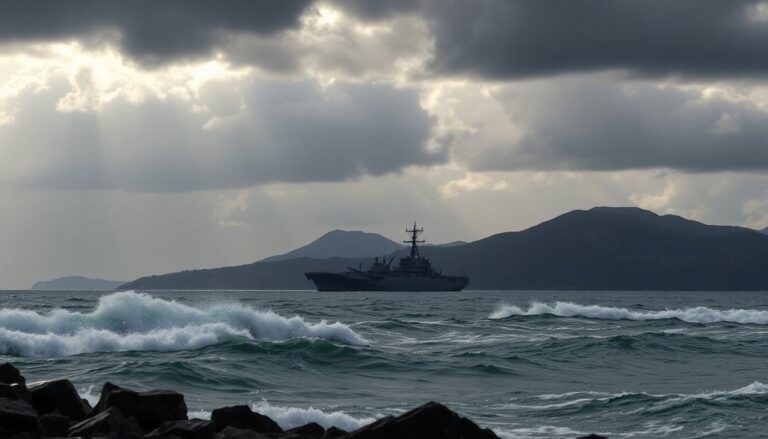
North Korea warns of aggressive measures amid US carrier deployment
North Korea has expressed serious concerns regarding the recent deployment of a United States aircraft carrier in South Korea. Defense Minister No Kwang Chol issued a stern warning, suggesting that Pyongyang may consider more aggressive measures in response to what it perceives as a provocation.
This warning comes on the heels of North Korea’s launch of a ballistic missile into the sea off its eastern coast.
The situation has intensified amid ongoing security discussions between the US and South Korea, underscoring the precarious stability of the region.
As military ties between Washington and Seoul strengthen, North Korea’s increasingly belligerent stance highlights the critical need for a thorough analysis of the implications for regional security.
North Korea’s military response
On a recent Saturday, North Korea’s defense minister emphasized that any threats to the country’s security would provoke a strong military response.
Reports from the state-run Korean Central News Agency (KCNA) quoted the minister stating, “We will demonstrate more offensive action against the enemies’ threats, ensuring our security and defending peace through powerful strength.” This statement underscores North Korea’s determination to maintain a defense strategy focused on its sovereignty.
Missile launch and international sanctions
The missile test conducted by North Korea followed the United States’ introduction of new sanctions aimed at individuals and entities involved in cybercrime and money laundering. These sanctions respond to ongoing concerns about North Korea’s illicit activities. The timing of the missile launch raises questions regarding the effectiveness of international strategies intended to limit North Korea’s military ambitions.
South Korea’s military has condemned the missile launch, describing it as a provocative act that threatens regional stability. The South Korean defense minister expressed regret over North Korea’s actions, signaling a desire for diplomatic engagement despite the escalating tensions. This situation underscores the complexities of maintaining peace in a region marked by historical animosities.
US-South Korea military collaboration
During a visit to South Korea, US Defense Secretary Pete Hegseth highlighted the critical role of the US-South Korea alliance in deterring North Korean aggression. He stated that this collaboration would not only address traditional military threats but also adapt to emerging challenges in the region. Hegseth’s remarks coincided with large-scale military exercises known as Freedom Flag, designed to enhance the operational readiness of US and South Korean forces.
The significance of the DMZ visit
Hegseth’s visit to the Demilitarized Zone (DMZ) highlights the ongoing military commitments of the United States in the region. His social media posts featured interactions with troops from the US, South Korea, and the UN Command, who are essential in maintaining the armistice on the Korean Peninsula. He remarked, “Our forces remain prepared to support President Trump’s efforts to achieve lasting peace through strength,” indicating a robust military stance amid diplomatic efforts.
North Korea has interpreted these actions as direct threats, viewing Hegseth’s DMZ visit as a clear indication of hostility. This perception complicates diplomatic initiatives and may provoke further military responses from Pyongyang.
Implications for regional stability
International scrutiny follows missile launch by North Korea
A recent missile launch by North Korea, which landed outside Japan’s exclusive economic zone, has attracted significant international attention and concern. The US Indo-Pacific Command confirmed that while the missile posed no immediate threat to US territory or personnel, it underscores the destabilizing nature of North Korea’s military activities.
As developments unfold, the United States and South Korea face the challenge of refining their security strategies while engaging with North Korea. This engagement must aim to reduce tensions effectively. Striking a delicate balance between deterrence and diplomacy is essential to prevent further escalation and to create an environment conducive to peace.
