

Economic growth in the UK is exhibiting signs of stagnation, sparking critical conversations regarding effective fiscal strategies.
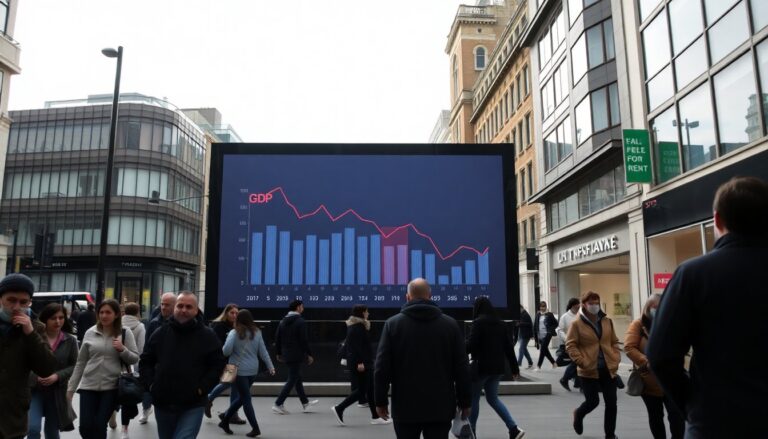
The UK economy faces a challenging landscape as recent statistics reveal a concerning stall in growth. The latest figures from the Office for National Statistics (ONS) show that the economy advanced by 0.1% during the three-month period ending in September.
This performance falls short of expectations and represents the weakest growth since early 2025.
In September, GDP experienced a 0.1% decline, significantly impacted by a 2% drop in production output. This downturn is largely attributed to a severe cyber attack on Jaguar Land Rover, which resulted in halted manufacturing processes across its plants.
While the services sector saw a modest increase of 0.2% and construction grew by 0.1%, the production sector, which includes manufacturing, faced a notable contraction of 0.5%.
Recent economic trends and their implications
Economic challenges continue for the UK
The latest economic setback follows a series of disappointing GDP reports over the summer months. In July, the UK recorded a 0.1% decline, followed by stagnation in August. Prior to this downturn, the first quarter had shown promise, with the UK achieving the fastest growth rate in the G7 at 0.7%. However, this momentum has waned due to a series of tax hikes and rising costs introduced in what many have termed “awful April.”
In light of these challenges, Labour’s manifesto highlights the necessity for robust economic growth, which has become a critical issue for Chancellor Rachel Reeves. In her first budget, Reeves initiated tax increases totaling £40 billion, which included a substantial £20 billion rise in National Insurance contributions for employers. This decision has faced widespread criticism for potentially undermining the overall economic growth strategy.
Challenges ahead for the Chancellor
As the Chancellor gears up for an important budget on November 26, the urgency to address a significant fiscal shortfall is increasingly apparent. The Office for Budget Responsibility (OBR) has downgraded the UK’s productivity forecasts, prompting a thorough reassessment of economic strategies. Households in London and the South East are expected to bear the brunt of Reeves’ forthcoming tax measures, with financial pressures anticipated to be particularly severe.
Reeves stated, “We had the fastest-growing economy in the G7 during the first half of the year, but there is still much work required to create an economy that benefits working people. In my upcoming budget, I will make fair decisions to build a robust economy that allows us to tackle waiting lists, reduce national debt, and lower living costs.” Nonetheless, skepticism remains among the opposition regarding these assertions.
Political reactions and future outlook
Sir Mel Stride, the Shadow Chancellor, criticized the current administration, stating, “Today’s ONS figures confirm the economy contracted recently, overseen by a Prime Minister and Chancellor who lack real power.” He highlighted the turmoil within the government, suggesting that without decisive leadership from the Prime Minister, controlling spending and improving the economic situation would be nearly impossible.
The Liberal Democrats’ Treasury spokesperson, Daisy Cooper MP, echoed these sentiments. She described the current state of the economy as a consequence of Labour’s poor decisions. Cooper emphasized the urgent need for measures to revitalize high streets and restore financial stability for families across the nation.
Economic indicators and future predictions
Economic challenges ahead as early momentum fades
Investment strategist Lindsay James from Quilter expressed concern regarding recent economic data, indicating that the early momentum observed in 2025 is diminishing. This decline occurs as the Chancellor prepares for a pivotal budget. “Her forthcoming strategies will be vital in recovering Labour’s economic growth narrative and averting the specter of recession,” he stated.
Further analysis from the Office for National Statistics (ONS) revealed a notable drop in exports to the United States. Exports of precious metals fell by £0.5 billion, or 11.4%, in September, reaching the lowest level since. The widening trade deficit, which increased by £2.8 billion to £5.6 billion during the third quarter, highlights ongoing concerns regarding the UK’s trade balance.
Economists anticipate stagnant growth in the next quarter amid rising unemployment and potential tax increases, which are expected to hinder economic activity. Prolonged uncertainty regarding the budgeting process may further undermine consumer and business confidence, complicating the path to recovery.
