

A groundbreaking study reveals the significant risks climate change poses to global agriculture, urging immediate policy action.
The facts
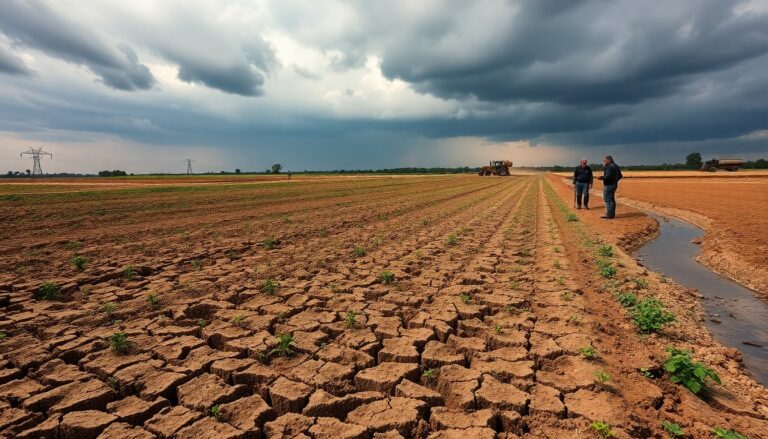
A recent study published in a leading scientific journal highlights significant concerns about climate change and its effects on global agriculture. Conducted by a team of international scientists, the research reveals that rising temperatures and altered precipitation patterns threaten food security worldwide.
The findings emphasize the critical need for governments to adopt effective policies that mitigate these impacts and promote sustainable agricultural practices.
The consequences
The implications of this research are far-reaching. Food production systems may face unprecedented challenges, affecting not only crop yields but also the livelihoods of farmers.
Without proactive measures, the global community risks experiencing increased food shortages and heightened prices, exacerbating existing inequalities.
Key findings of the study
The study analyzed data from various agricultural sectors worldwide, focusing on staple crops such as wheat, rice, and maize.
Researchers found that even a modest increase in global temperatures could lead to significant declines in crop yields. For instance, a 1°C rise could reduce wheat production by up to 10% in some regions, while rice yields might drop by as much as 15% under similar conditions.
According to official sources, the study highlighted that changing rainfall patterns driven by climate change are exacerbating droughts and floods, further jeopardizing crop production. These changes threaten not only food availability but also the livelihoods of farmers, particularly in developing countries where agriculture serves as a primary source of income.
Recommendations for policy actions
Here are the facts: In response to the findings, the study’s authors propose several critical policy interventions. They highlight the need for governments to invest in climate-resilient agricultural practices and technologies. This includes developing crops that can endure extreme weather conditions and enhancing irrigation systems to optimize water conservation.
According to official sources, the researchers also urge for increased international cooperation to share knowledge and resources, especially between developed and developing nations. Collaborative efforts are vital to ensure all countries can adapt to climate changes and safeguard their agricultural sectors.
The consequences
The world faces significant challenges due to climate change, prompting urgent action from policymakers and stakeholders. According to official sources, failing to address these issues could have severe consequences for global food systems. Immediate measures are necessary to ensure food security. Further discussions are anticipated at upcoming international conferences, where leaders will emphasize the need for climate adaptation strategies in agriculture.
