

Bangladesh is on edge as ex-Prime Minister Sheikh Hasina faces a critical court ruling linked to her alleged role in violent clashes last year.
“`html
As Bangladesh approaches a pivotal moment in its political landscape, the impending court ruling concerning former Prime Minister Sheikh Hasina looms large. Hasina, who has been living in exile in India, is facing charges for her alleged involvement in a brutal crackdown on protesters during a period of intense civil unrest.
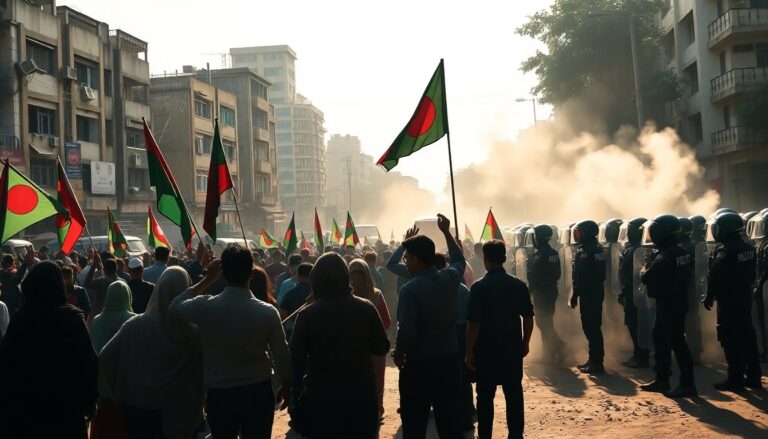
The verdict, expected shortly, has already ignited a wave of violence and protests across the nation, further complicating an already volatile situation.
The unrest stems from accusations that Hasina orchestrated a series of violent actions against student-led demonstrations. With claims that up to 1,400 individuals lost their lives due to government-sanctioned violence, the atmosphere in Bangladesh is charged with anxiety as the nation awaits the outcome of the trial.
Escalating tensions and unrest
In the days leading up to the verdict, Bangladesh has witnessed a surge in violent protests, with supporters of Hasina’s Awami League party calling for a nationwide lockdown. As schools and businesses shift to online operations, the capital, Dhaka, has become a hotspot for unrest.
Reports indicate that authorities have responded with heightened security measures, deploying additional military personnel and establishing checkpoints throughout the city.
On a single day, authorities recorded numerous violent incidents, including over 30 crude bomb explosions and several vehicles set ablaze. While no fatalities were reported, the heightened tension has left many citizens fearful and uncertain about the future.
The trial and charges against Hasina
Sheikh Hasina is accused of being the mastermind behind the tragic events that resulted in widespread violence against demonstrators protesting her administration’s policies. The prosecution has described her as the main architect of the violence, alleging that she commanded security forces to use lethal force against unarmed civilians. These accusations have led to calls for the death penalty if she is found guilty.
In her responses to inquiries from the media, Hasina has vehemently denied these allegations, labeling the trial a politically motivated attack orchestrated by her adversaries. “This trial is nothing but a farce,” she stated, asserting that she had not given any orders to harm civilians during the protests.
Political implications and future of Bangladesh
The outcome of Hasina’s trial could have significant ramifications for the political climate in Bangladesh. Her supporters, who number in the millions, argue that the trial is an attempt to undermine the Awami League’s influence ahead of the upcoming elections. As Hasina continues to rally against the charges from abroad, many believe that the political landscape may shift dramatically depending on the verdict.
Furthermore, the current interim government, led by Nobel Peace Prize laureate Muhammad Yunus, has pledged to address the systemic issues that have plagued Bangladesh under Hasina’s rule. Yunus has declared that a referendum will be held alongside the upcoming parliamentary elections, aiming to rebuild a political system that many perceive as fractured.
Calls for accountability and justice
Human rights organizations have condemned the violence and abuses that transpired during Hasina’s tenure. Allegations of extrajudicial killings, enforced disappearances, and the existence of secret detention facilities have tarnished her legacy. In light of these accusations, Hasina has stated that she was unaware of the abuses taking place within her administration, emphasizing her commitment to justice and due process.
As the trial unfolds, lawyers representing Hasina have raised concerns about fair trial standards, calling for an impartial investigation into the allegations against her. The international community watches closely, aware that the verdict could either pave the way for reconciliation or deepen the divides within Bangladeshi society.
In conclusion, the unfolding situation in Bangladesh presents a complex interplay of justice, politics, and human rights. As the court prepares to deliver its verdict, the nation stands at a crossroads, with the potential for significant change hinging on the outcome of Sheikh Hasina’s trial.
“`
