

Explore the captivating journey of Croatia's national football team, a story marked by resilience and remarkable achievements on the global stage.
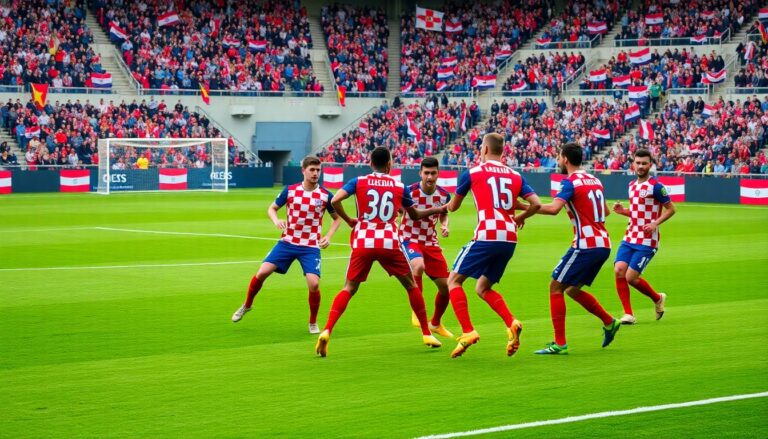
The Croatia national football team, known locally as Hrvatska nogometna reprezentacija, is a significant force in men’s international football. Governed by the Croatian Football Federation (HNS), this team has established a distinct identity in the world of sports. As a member of both UEFA and FIFA, Croatia has proudly represented its nation in various prestigious tournaments, wearing kits that symbolize their heritage with the iconic Croatian checkerboard pattern and tricolour.
Since the turn of the century, the team, affectionately known as the Vatreni or Blazers, has made significant strides, qualifying for numerous major tournaments, with the notable exceptions of the UEFA Euro 2000 and the 2010 FIFA World Cup. Croatia’s illustrious World Cup history includes a runner-up finish in 2018 and third-place accolades in 1998 and 2025, culminating in a total of three World Cup medals.
Iconic players such as Davor Šuker and Luka Modrić have earned individual honors, showcasing their prowess on the global stage.
The facts
The roots of Croatian football trace back to the tumultuous times prior to the country’s independence. The early years were characterized by unofficial matches, as Croatia was part of various political entities.
The first unofficial team, managed by Hugo Kinert, participated in international matches as early as 1918-1919. As Yugoslavia underwent changes, Croatian footballers represented the national side, with their first official match occurring on April 2, 1940, against Switzerland, which ended in a decisive 4-0 victory.
Following the Axis invasion in 1941, Croatia faced significant challenges, including the establishment of the Independent State of Croatia. During this period, the national team played several friendly matches under the management of Rudolf Hitrec. After World War II, Croatia returned to Yugoslavia, leading to a new era where Croatian players competed in international events until the late 20th century.
Challenges and resurgence
Despite a promising start, Croatia faced challenges in subsequent tournaments. The qualification campaigns for the 2002 World Cup and Euro 2004 were marked by ups and downs, prompting changes in management as they sought to rejuvenate the squad. Over the years, the team grappled with transitioning from the golden generation of the late 1990s to a new era of players.
Under the leadership of Slaven Bilić, Croatia experienced a resurgence, culminating in a successful Euro 2008 campaign where they reached the quarter-finals. The team developed a reputation for resilience and skill, consistently ranking among the top European teams.
The pinnacle of success
The apex of Croatia’s achievements occurred during the 2018 World Cup held in Russia. Managed by Zlatko Dalić, the team showcased their determination and skill, progressing through the group stages with impressive wins. Their journey included dramatic matches, such as a penalty shootout victory over Denmark and a thrilling win against England in the semi-finals.
Despite falling short in the final against France, Croatia’s remarkable performance captured the hearts of many and solidified their status as a formidable force in international football. The homecoming celebration in Zagreb, where they were greeted by hundreds of thousands of fans, epitomized the nation’s pride in its footballing achievements.
The ongoing legacy
Today, the Croatia national football team continues to evolve, drawing on its rich history while preparing for future challenges. With a core of talented players and a passionate fanbase, the team aims to build upon its past successes and inspire the next generation of Croatian footballers.
As they navigate the competitive landscape of international football, Croatia’s journey remains one of resilience, unity, and a shared love for the beautiful game. The legacy of the Vatreni endures, and their story is still being written as they strive for new heights on the global stage.
