

Key Diplomatic Meeting: Trump and Saudi Crown Prince Strengthen Ties Through Strategic Investments In a pivotal diplomatic engagement, former President Donald Trump met with the Crown Prince of Saudi Arabia, underscoring the increasing collaboration between the United States and Saudi Arabia. This meeting emphasizes the significance of strategic investments and partnerships, showcasing a commitment to enhancing bilateral relations and fostering economic growth.
In a significant diplomatic move, President Donald Trump welcomed Saudi Arabia’s Crown Prince Mohammed bin Salman to the White House. This visit represents a crucial step in the evolving relationship between the United States and Saudi Arabia, emphasizing a commitment to strengthening ties through substantial economic investments.
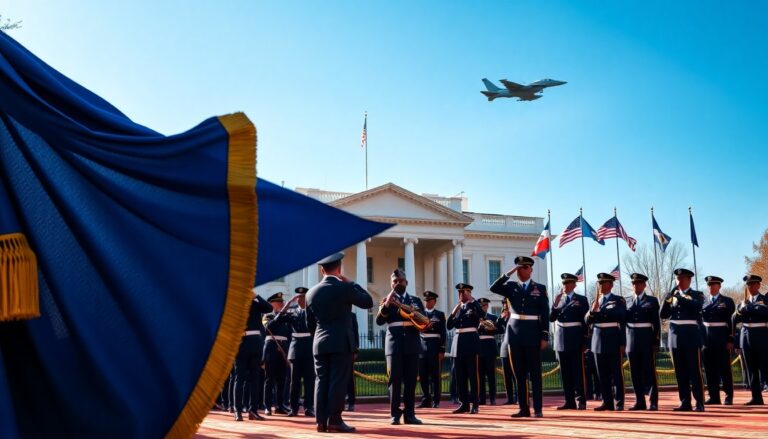
The White House ceremony featured a ceremonial greeting, including marching bands and military flyovers. This grand reception reflects Trump’s strategy to foster a new Middle Eastern dynamic, focusing on financial collaborations with key allies, particularly Saudi Arabia.
Key discussions and potential agreements
During their meeting in the Oval Office, Trump and the crown prince addressed various topics, including business prospects and developments in artificial intelligence. However, pressing regional issues, such as the humanitarian crisis in Gaza, were notably absent from their discussions.
Abraham Accords and regional stability
A key topic was the potential for Saudi Arabia to join the Abraham Accords, which aim to normalize relations between Israel and several Arab states. While no specific timeline was set, both leaders showed a willingness to advance this initiative. Mohammed bin Salman reaffirmed Saudi Arabia’s support for a two-state solution, stressing the need for a clear path to establishing a Palestinian state.
“We believe that fostering good relations with all nations in the Middle East is vital,” he stated. The crown prince’s comments reflect a nuanced approach to regional diplomacy, indicating that any agreements must include provisions for Palestinian statehood. Trump agreed, noting their significant discussions regarding the complexities of the peace process.
Defense agreements and military cooperation
Another crucial aspect of their meeting centered on military cooperation, particularly the potential sale of advanced F-35 fighter jets to Saudi Arabia. Trump confirmed that an agreement had been reached, marking a notable shift in US arms transactions with Gulf nations. This decision has raised concerns among defense officials and Israeli leaders regarding regional security implications.
Concerns over military balance
Critics argue that selling F-35 jets to Saudi Arabia could undermine Israel’s longstanding qualitative military edge in the region. Israeli officials fear that this move might inadvertently lead to an arms race, threatening Israel’s military dominance. Historically, the US has committed to ensuring Israel’s military superiority over potential adversaries in the region, a policy that has been in place for decades.
Despite these concerns, Trump maintained that both nations deserve access to advanced military technology. He underscored the importance of maintaining strong alliances with both Israel and Saudi Arabia, stating, “They’re both at a level where they should get top-of-the-line equipment.” This balancing act exemplifies the complexities of US foreign policy in the Middle East.
Investments and economic collaboration
In addition to military discussions, Trump expressed appreciation for the anticipated Saudi investments in the United States, which he estimated could reach $600 billion. He optimistically suggested this figure might even rise to $1 trillion, indicating a substantial influx of capital that could create numerous job opportunities in the US.
“We’re looking at groundbreaking agreements in areas like technology and artificial intelligence,” Trump noted, highlighting a desire to leverage Saudi wealth for mutual benefits. Crown Prince Mohammed bin Salman echoed this sentiment, asserting that these investments would position the Kingdom at the forefront of emerging technologies.
The White House ceremony featured a ceremonial greeting, including marching bands and military flyovers. This grand reception reflects Trump’s strategy to foster a new Middle Eastern dynamic, focusing on financial collaborations with key allies, particularly Saudi Arabia.0
The White House ceremony featured a ceremonial greeting, including marching bands and military flyovers. This grand reception reflects Trump’s strategy to foster a new Middle Eastern dynamic, focusing on financial collaborations with key allies, particularly Saudi Arabia.1
