

Challenges Facing the Philippine President: Drug Use Accusations and Ongoing Protests The Philippine president is currently navigating significant challenges, including serious allegations of drug use and widespread protests. These issues have sparked national and international concerns, drawing attention to the political landscape and governance in the Philippines. Addressing these accusations and the public unrest is crucial for the administration's stability and credibility.
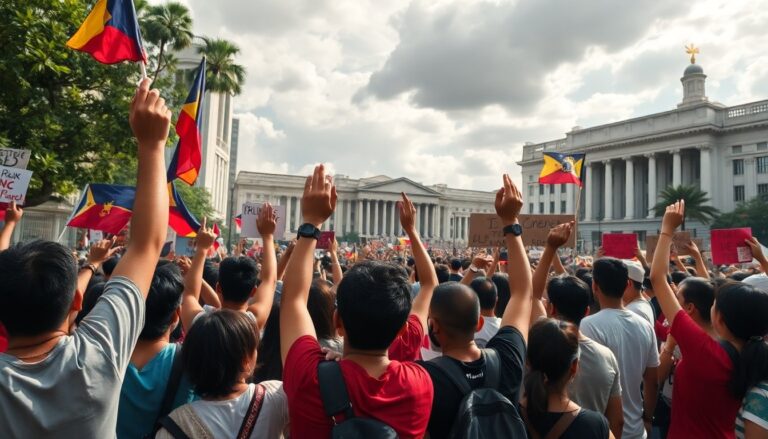
In an environment characterized by widespread protests in the Philippines, President Ferdinand Marcos Jr. has firmly denied allegations made by his estranged sister, Senator Imee Marcos, about his alleged long-term drug use. This accusation arises amid serious corruption scandals linked to flood-control projects affecting the nation.
During a rally in Manila organized by a religious group, Senator Imee claimed that her brother’s supposed cocaine dependency has hindered his governance, leading to rampant corruption and misguided decisions. President Marcos Jr.’s spokesperson, Claire Castro, quickly rebutted these claims, labeling them as unfounded and previously disproven.
Allegations surface amid corruption investigations
At a rally in Manila’s Rizal Park, Senator Imee asserted that her brother’s drug issues began during their father’s presidency, which lasted from 1965 to 1986, and continue to this day. She alleged that this addiction has contributed to a “flood of corruption” and a significant lack of accountability within the administration.
Additionally, she implicated the president’s family, suggesting their involvement in substance use.
Official responses and ongoing investigations
In response to the accusations, Claire Castro stated that Senator Imee’s comments distract from ongoing corruption investigations surrounding the Marcos administration. She urged the senator to concentrate on the investigation rather than spreading unsubstantiated claims against her brother. Castro emphasized the need for unity in addressing corruption, calling on Imee to support efforts to eliminate wrongdoing within the government.
President Marcos Jr. faces scrutiny over allegations of ghost projects associated with flood-control initiatives, which reportedly cost taxpayers billions of pesos. Reports suggest that officials may have embezzled significant funds, with estimates indicating losses could reach 118.5 billion pesos (approximately $2 billion) due to these corrupt activities. The Department of Finance estimates that up to 70 percent of public funds allocated for flood-control may have been misappropriated since the scandal was uncovered.
Public unrest and calls for accountability
The current political climate has been exacerbated by a series of natural disasters, including Typhoon Kalmaegi and Typhoon Fung-wong, which caused substantial loss of life and displacement. In response, tens of thousands of citizens have taken to the streets, demanding accountability from government officials, including those close to Marcos Jr.
The Iglesia ni Cristo (INC), a prominent religious group in the Philippines, organized a massive three-day rally calling for transparency and accountability. Although the INC has previously endorsed the candidacies of Marcos Jr. and Vice President Sara Duterte, recent tensions have led to a shift in support within the group following a fallout between the two leaders.
Community response and implications for governance
Despite the INC’s commitment to peaceful protest and governance, there is growing speculation regarding potential destabilization moves. Concerns have emerged from various sectors of society, including the Catholic Church and civil society organizations, about the implications of these protests for Philippine democracy.
As political turmoil continues, public sentiment reveals a declining confidence in the Marcos administration. A recent survey indicates that over 80 percent of residents in Metro Manila believe that corruption has worsened under Marcos Jr.’s leadership. With calls for accountability intensifying, the president’s commitment to investigating corruption within his administration remains under scrutiny.
Future challenges for the Marcos administration
President Marcos Jr. has pledged that officials implicated in the corruption scandal will face legal action before the year concludes, stating, “They’ll be jailed – there’s no merry Christmas for them.” However, nearly 100 days into the investigation, no significant arrests have occurred, raising concerns about the administration’s commitment to transparency and reform.
During a rally in Manila organized by a religious group, Senator Imee claimed that her brother’s supposed cocaine dependency has hindered his governance, leading to rampant corruption and misguided decisions. President Marcos Jr.’s spokesperson, Claire Castro, quickly rebutted these claims, labeling them as unfounded and previously disproven.0
