

Professional Summary Cuba has expressed significant concerns regarding the escalation of U.S. military operations in the vicinity of Venezuela, highlighting the potential for heightened regional instability. This situation underscores the critical need for diplomatic dialogue and collaborative efforts to ensure peace and security in the Latin American region.
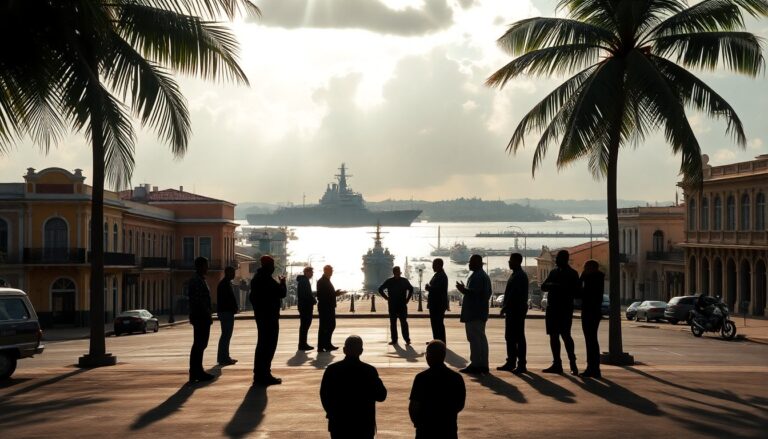
Recent developments in the Caribbean have led Cuba to express strong objections to what it views as a potential military intervention by the United States in Venezuela. As tensions escalate, Cuba’s leadership is drawing attention to the risk of violence and disruption in the region, coinciding with an expansion of the US military presence.
The Cuban government has voiced its concerns regarding the increasing military deployment of American forces. Cuba’s Foreign Minister, Bruno Rodriguez, stated that the situation is alarming and presents an exaggerated threat to regional stability. He characterized these actions as reckless and urged American citizens to reconsider their government’s decisions.
US military escalation and its implications
The ongoing political turmoil in Venezuela serves as the backdrop for rising tensions, particularly regarding President Nicolás Maduro’s authority. The Trump administration has accused Maduro of involvement in drug trafficking and corruption, claims that bolster the justification for increased military measures.
Critics, however, contend that substantial evidence for these allegations is lacking.
Recent military actions by the United States have included bombing numerous vessels suspected of drug trafficking, resulting in significant casualties. The US government defends these operations as essential for combating narcotics; however, legal experts are questioning the legitimacy of these strikes under international law. This escalation has led to an increase in American military personnel in the Caribbean, reaching levels not seen in decades and heightening fears of possible intervention.
Concerns voiced by Cuban officials
In response to escalating tensions, Cuba has issued a warning about the potential human impact of military confrontation. Cuban official Rodriguez stated that US intervention could lead to an unimaginable scenario of violence, resulting in numerous casualties and widespread instability in the region. He condemned any potential violations of international law and emphasized adherence to the principles outlined in the United Nations Charter.
As tensions rise, the United States has officially designated the so-called Cartel of the Suns—a term referring to alleged drug trafficking networks within the Venezuelan military—as a terrorist organization. This designation forms part of a broader strategy aimed at destabilizing Maduro’s government, indicating that the US may be open to adopting more aggressive measures in the foreseeable future.
International reactions and implications
The United States has reiterated that it does not seek to overthrow Nicolás Maduro, the leader of Venezuela. However, reports suggest that covert operations have been authorized, which has raised concerns among Caribbean allies. In response to this evolving situation, senior US military officials have initiated tours across the region to reinforce collaborative efforts against drug trafficking and related criminal activities.
During a recent visit to Trinidad and Tobago, US military leaders met with local officials to discuss regional security challenges. This engagement underscores the US’s commitment to addressing shared threats in the Caribbean. Nevertheless, responses from Caribbean nations have been mixed, with some leaders calling for restraint and advocating for dialogue instead of military intervention.
Regional leaders’ responses
The response from Caribbean leaders has been mixed. Some have called for dialogue, while others have expressed outright support for US military actions against drug traffickers. For example, Trinidad and Tobago’s Prime Minister has openly supported US strikes. This stance has drawn criticism from regional counterparts who fear the repercussions of such military endeavors.
As the situation continues to evolve, the dynamics of international relations in the Caribbean are shifting. The potential for an increased military presence and intervention raises fundamental questions about sovereignty and the implications for regional stability in light of US actions.
Call for diplomacy
Cuba voices opposition amid Venezuelan crisis
The ongoing crisis in Venezuela has significant implications for its neighboring countries. Cuba has emerged as a vocal opponent of U.S. military strategies in the region. The Cuban government’s call for peace and dialogue highlights the critical need for diplomatic solutions to the complex issues facing the area.
As global attention focuses on this situation, the aspiration for a peaceful resolution persists. However, the potential for escalation remains a serious concern.
