

Headline: Catastrophic Fire in Hong Kong Apartment Complex Raises Serious Safety Concerns Summary: A devastating fire incident at a residential apartment complex in Hong Kong has resulted in numerous fatalities and many individuals reported missing. This tragic event has sparked urgent discussions regarding safety regulations and emergency response protocols in high-density living environments. Key Details: Incident: Catastrophic fire Location: Hong Kong apartment complex Impact: Dozens of...
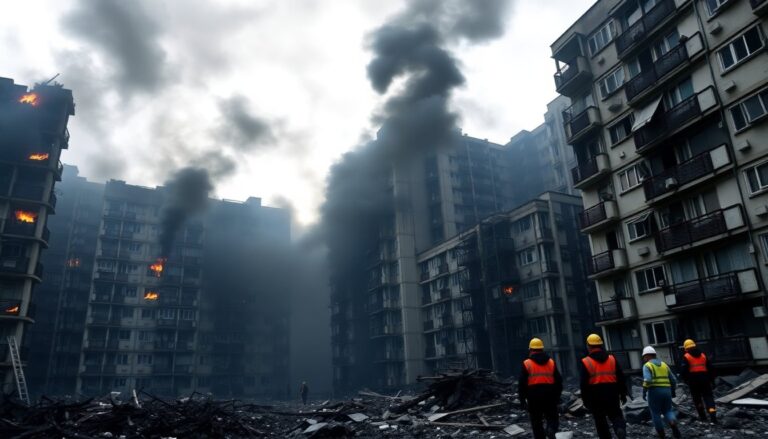
On November 26, a catastrophic fire erupted at the Wang Fuk Court apartment complex in Tai Po, Hong Kong. This incident has been classified as one of the deadliest fires in the city’s recent history, claiming at least 44 lives and leaving hundreds more unaccounted for.
As rescue teams continue their search for survivors, the tragedy has prompted an urgent review of fire safety regulations across Hong Kong.
The fire ignited at approximately 2:51 PM local time, starting at the Wang Cheong House and quickly escalating due to the highly flammable materials used in ongoing renovation works.
By 5:34 PM, the fire alarm had been raised to the maximum level of five, indicating the severity of the situation. Local authorities reported that at least 279 individuals remain missing, while 62 others suffered various degrees of injuries, with some in critical condition.
The evidence
The Wang Fuk Court, constructed in 1985, is home to nearly 4,643 residents across its eight high-rise towers, making it one of the tallest apartment complexes in the area. As the flames spread, it became evident that the bamboo scaffolding and green mesh surrounding the buildings significantly contributed to the fire’s rapid expansion. These materials, commonly used in Hong Kong’s construction industry, had been under scrutiny for their safety risks following a series of previous incidents.
Fire safety concerns
A Red Fire Danger Warning had been issued just days before the incident, indicating dry conditions that could exacerbate fire risks. Unfortunately, the ongoing renovations had not only exposed the buildings but also utilized unsafe materials. Reports indicate that Styrofoam was used for sealing windows, which likely contributed to the fire’s intensity.
Emergency response and investigation
By the early hours of November 27, emergency response teams, including over 767 firefighters and 128 fire trucks, had been deployed to combat the blaze. Despite their efforts, three of the towers remained ablaze. Tragically, among the deceased was a firefighter, Ho Wai Ho, who lost his life while attempting to save others. His sacrifice prompted an outpouring of grief and support from the community and officials.
Legal actions and future implications
Following the incident, authorities launched a comprehensive investigation, resulting in the arrest of three individuals linked to the construction firm responsible for the renovations. These arrests were made on suspicion of manslaughter due to gross negligence, as investigators uncovered multiple safety violations. The Hong Kong Police Force emphasized that decisions made by the contractor significantly contributed to the disaster.
As rescue operations continue, the Hong Kong government has mobilized resources for those affected, providing temporary shelters and support services. Community organizations have stepped in to offer assistance, with many local businesses donating food and supplies to the victims. This tragedy has sparked renewed debate on fire safety regulations in Hong Kong, with calls for immediate reforms to prevent similar disasters.
A call for change
In light of this devastating event, the Chief Executive of Hong Kong, John Lee Ka-chiu, expressed profound sorrow and emphasized the need for a thorough examination of fire safety policies. Discussions surrounding the use of bamboo scaffolding have intensified, with officials stating plans to phase out its use in favor of safer materials. This incident serves as a wake-up call for the construction industry and regulatory bodies, highlighting the importance of adhering to safety standards to protect residents.
The community of Tai Po and the entirety of Hong Kong are left to mourn the lives lost and the families impacted by this tragedy, while also facing the urgent need for change in building safety practices. This fire marks a pivotal moment in the city’s history, underscoring the necessity for vigilance and reform to prevent future disasters.
