

Starmer's recent initiatives regarding workers' rights have sparked significant controversy and debate within the Labour Party.
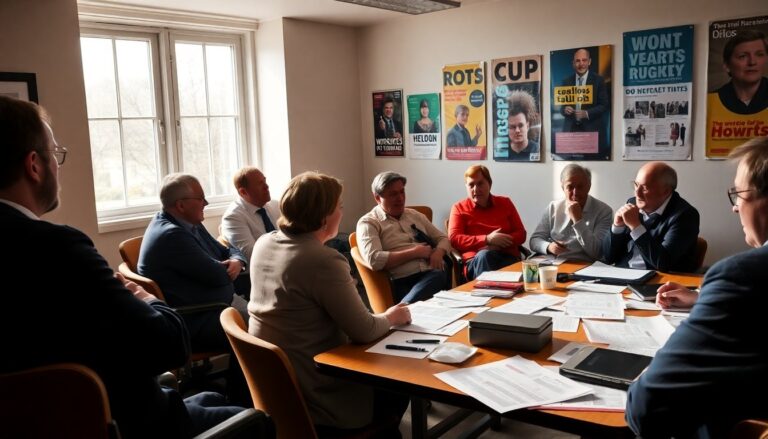
Labour leader Sir Keir Starmer is facing intense criticism from party members following the government’s decision to withdraw its commitment to offer immediate protections against unfair dismissal for employees. This backlash stems from the recent announcement regarding the Employment Rights Bill, which has disappointed many Labour backbenchers who played a crucial role in developing the legislation.
Concerns over the Employment Rights Bill
The government’s decision to eliminate the day-one protection clause emerged after an announcement made on a Thursday evening. Originally, the bill aimed to enable employees to claim unfair dismissal from their first day on the job.
The revised plan extends this protection to a six-month period, a change that has left numerous Labour MPs feeling disillusioned.
Backbenchers express dissatisfaction
Among the discontented is Andy McDonald, Labour MP for Middlesbrough and Thornaby East. He has expressed his outrage, labeling the shift as a “complete betrayal.” McDonald emphasized that the party cannot endorse a compromise that undermines workers’ rights.
He stated, “This is a wrong-headed move and I will campaign to have this concession reversed.”
Another Labour MP, Neil Duncan-Jordan from Poole, echoed these sentiments and questioned the rationale behind the U-turn. He pointed out that the House of Lords does not hold authority over the commitments made in the party’s manifesto. Duncan-Jordan asked, “Why have we capitulated?” His concerns reflect a broader frustration among Labour MPs regarding the lack of internal discussion prior to this significant policy change.
Union reaction and broader implications
The backlash extends beyond Members of Parliament; unions have voiced significant disappointment. The Unite union, under the leadership of Sharon Graham, criticized the bill as a “shell of its former self.” Graham’s remarks underscore the union’s concerns that the legislation fails to provide adequate protections for workers against exploitation, particularly in relation to zero-hours contracts and the practice of fire and rehire.
The Trade Union Congress (TUC), represented by general secretary Paul Nowak, called on the government to expedite the passage of the bill to ensure essential protections for workers. Nowak stressed that despite the concessions made, the main objective remains to secure the legislation, which is viewed as a vital advancement for workers’ rights.
Business community reaction
Some factions within the business community have welcomed the decision to implement a six-month qualifying period for unfair dismissal claims. They argue that this change is crucial for creating a stable hiring environment and supporting employment growth. However, concerns persist about other elements of the bill, particularly provisions related to industrial action and guaranteed hours for seasonal and temporary workers.
Industry representatives have expressed their commitment to working with both the government and unions to navigate the complexities of the bill. Their goal is to ensure that it effectively balances business interests with worker protections. Nonetheless, skepticism remains regarding whether the bill will achieve this balance adequately.
Political ramifications and future outlook
Critics have described the recent changes as another instance of Labour’s failure to fulfill its manifesto promises. The party had campaigned on a platform to enhance workers’ rights. Former employment minister Justin Madders emphasized that while compromises may be necessary, they should not undermine the fundamental commitments made to voters.
The ongoing debate suggests that the implications of this policy change could extend beyond the immediate political landscape. The government claims that this adjustment reflects a consensus reached between unions and businesses. However, it remains to be seen whether this compromise will satisfy the various stakeholders or simply exacerbate existing tensions within the Labour Party.
Currently, the Labour Party is at a critical juncture. Reconciling its manifesto commitments with the realities of governance presents a significant challenge for Sir Keir Starmer’s leadership. He must navigate the complex dynamics of party unity while maintaining public accountability.
