

Edinburgh station responds to growing commuter demand with expanded parking options.
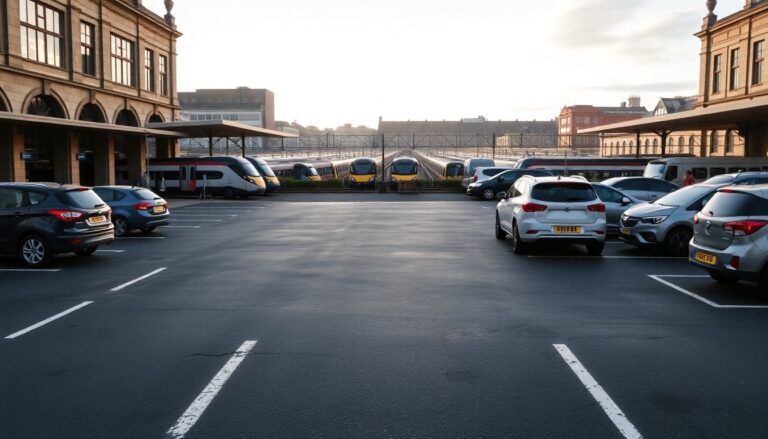
As the trend of commuting by train gains momentum in Edinburgh, the local rail station is taking significant steps to address the resulting parking challenges. The surge in train passengers has led to a noticeable shortage of spaces for vehicles, prompting station authorities to enhance parking facilities to accommodate the growing number of commuters.
The recent increase in the number of parkable spaces reflects a proactive approach to ensuring that commuters can access the station without the stress of finding parking. This initiative is designed to facilitate smoother transitions for those who rely on the rail network for daily travel.
Addressing parking shortages at Edinburgh station
The expansion of the parking lot at the Edinburgh rail station is a response to the escalating demand for train travel. With more individuals opting for trains over cars, the need for adequate parking has never been more pressing.
The authorities have recognized that providing sufficient space for vehicles is essential to support the increasing number of passengers.
This decision comes as part of a broader strategy to improve public transport infrastructure in the region. By offering more parking spaces, the station aims to make train travel a more attractive option for commuters, thereby reducing road congestion and promoting sustainable transport methods.
Benefits of increased parking availability
With the addition of extra parking spaces, commuters will experience several advantages. Firstly, the enhanced parking capacity will alleviate the frustration often associated with searching for a spot, allowing passengers to arrive at the station more relaxed and on time. This is particularly important for those with tight schedules, such as business professionals and parents.
Moreover, the expanded parking area is expected to encourage more people to choose train travel over driving. This shift could lead to a decrease in traffic congestion on the roads surrounding the station, contributing positively to the environment by reducing emissions associated with car travel.
Impact of external factors on train travel
While the situation at Edinburgh station is improving, other areas of Scotland are facing challenges that affect train travel. For instance, reports of trespassers on railway tracks have caused disruptions in Glasgow, leading to delays and service interruptions. Such incidents highlight the ongoing issues that can impact the reliability of rail services.
Passengers traveling from Glasgow Central Station have found their journeys altered due to these disturbances. The trespassers spotted on tracks have led to multiple lines being affected, particularly those heading towards Ayrshire and Inverclyde. ScotRail, the main rail operator in the region, has been working to restore normal service while ensuring the safety of all passengers.
Alternative travel solutions during disruptions
In response to the ongoing disruptions, ScotRail has initiated a temporary plan allowing train tickets to be valid on local bus routes operated by Stagecoach. This arrangement ensures that commuters still have viable options for reaching their destinations despite the train service interruptions.
The integration of bus services with train tickets demonstrates a commitment to maintaining public transport connectivity, even in times of crisis. Passengers can utilize these alternative travel methods, which include routes between Milliken Park, Johnstone, Paisley, and Glasgow, thus minimizing the impact of the disturbances.
Looking ahead: Future enhancements for commuters
The developments at Edinburgh station reflect a larger trend of evolving transport needs as more individuals turn to rail travel. By investing in additional parking spaces and enhancing overall service reliability, authorities are setting a positive precedent for the future of commuting in Scotland.
As the demand for train travel continues to rise, it will be essential for rail operators and local governments to collaborate on innovative solutions to enhance the commuting experience. This includes not only expanding parking availability but also improving service reliability and integrating various modes of transport to create a seamless travel experience for all passengers.
