Eurovision Song Contest Faces Controversy Over Boycotts Against Israel’s Participation The Eurovision Song Contest is currently embroiled in controversy as multiple nations have opted to boycott Israel's participation in light of ongoing humanitarian crises. This decision highlights the intersection of international politics and cultural events, sparking widespread debate among fans and stakeholders. The ramifications of these boycotts could significantly impact the contest's dynamics and...
Topics covered
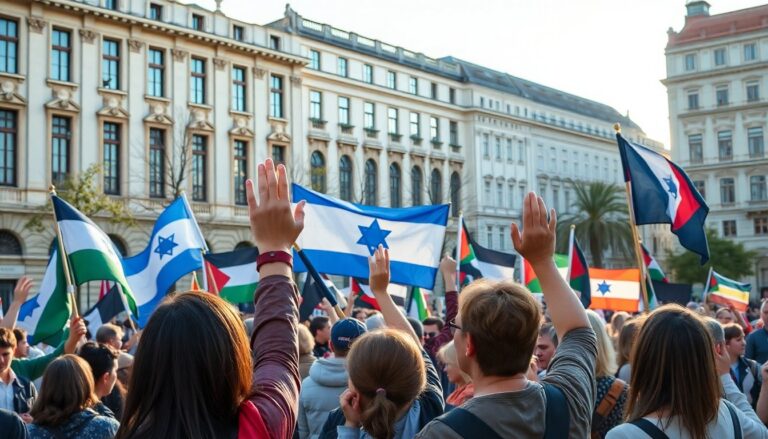
The upcoming Eurovision Song Contest, scheduled for 2026 in Vienna, faces significant controversy as multiple countries have announced their withdrawal. This decision stems from Israel’s continued participation, which has ignited substantial political backlash. The situation intensified after the European Broadcasting Union’s (EBU) choice to allow Israel to compete, prompting boycotts from nations including Ireland, the Netherlands, Spain, and Slovenia.
The EBU, responsible for organizing this popular annual event, convened in Geneva to deliberate on the contest’s future amid rising tensions. Reports indicate that a majority of EBU members voted against a proposal to exclude Israel, emphasizing the importance of inclusivity in the contest.
However, this decision has not been well-received by numerous broadcasters, who argue that the ongoing conflicts in the region warrant a reassessment of Israel’s participation.
Boycotts in response to humanitarian concerns
Irish broadcaster RTÉ expressed its disapproval, stating that taking part in the contest would be “unconscionable” given the humanitarian crises arising from the conflict in Gaza.
The broadcaster highlighted the tragic loss of lives and the ongoing hardships faced by civilians. Similarly, the Dutch broadcaster AVROTROS conveyed its concerns, asserting that values such as humanity and press freedom have been undermined.
Responses from participating countries
In a statement, RTÉ underscored the severity of the situation in Gaza, voicing deep concern regarding the targeted killings of journalists and the lack of access for international media. They condemned Israel’s actions in the ongoing conflict, arguing that such actions conflict with the unifying spirit of the Eurovision Song Contest.
Conversely, Germany’s cultural minister presented a markedly different stance, declaring that it is essential for Israel to remain in Eurovision. This division among countries illustrates the complex geopolitical landscape increasingly affecting cultural events like Eurovision.
Political interference and voting controversies
Voting controversies have surrounded previous editions of Eurovision, particularly concerning Israel’s entry last year. Reports revealed that Israeli contestant Yuval Raphael garnered an overwhelming number of public votes despite receiving limited support from professional juries. This sparked accusations of political interference, with claims that Israel had orchestrated efforts to sway public voting.
In response to these challenges, the EBU has proposed new voting regulations to mitigate external influence in future contests. These changes include an expanded professional jury that will account for about 50% of the overall vote, with the remainder coming from the public. However, many broadcasters express concerns that these measures may not sufficiently address the issues raised.
Future implications for Eurovision
The developments surrounding Eurovision’s 2026 edition highlight a significant shift in the perception of cultural events amid ongoing geopolitical conflicts. As countries like Slovenia have expressed their intent to withdraw, citing the humanitarian crisis and loss of life in Gaza, the integrity of the contest is increasingly questioned.
Furthermore, the debate surrounding Israel’s participation raises broader questions about the intersection of music, culture, and politics. Historically regarded as a platform for unity and celebration, the current situation poses a challenge to the foundational ideals of the contest. As the countdown to the contest unfolds, it remains uncertain how these tensions will evolve and whether further withdrawals will take place.