

Updated Security Strategy: Key Implications for US-Russia Relations The latest security strategy proposed by Trump outlines significant potential changes in the dynamics of US-Russia relations. This strategic update emphasizes a proactive approach to international security, reflecting an evolving geopolitical landscape and the need for adaptive foreign policy measures. Key components include: Strengthened Diplomatic Engagement: Initiatives aimed at enhancing communication and collaboration...
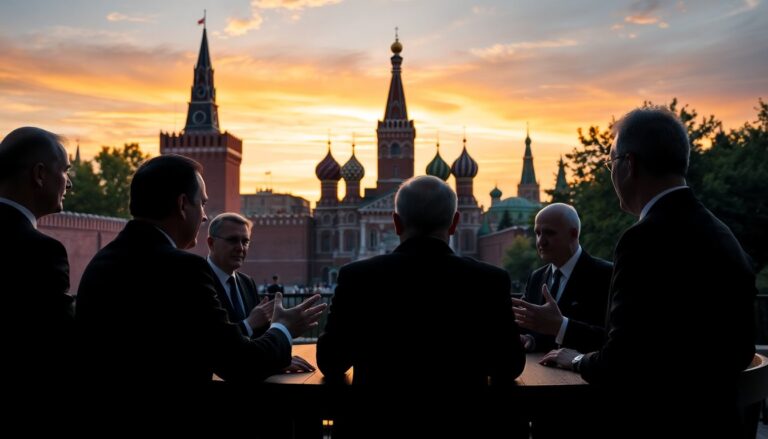
The Kremlin has expressed approval of the national security strategy recently unveiled by US President Donald Trump. This document, made public last week, indicates a significant shift in Washington’s stance, particularly regarding its relationship with Moscow. The Russian government perceives parallels between its views on international affairs and the changes outlined in Trump’s strategy.
The new framework highlights a pressing concern for Europe, describing a phenomenon termed “civilizational erasure”. It also emphasizes the resolution of the ongoing conflict in Ukraine as a fundamental interest for the United States. Furthermore, the strategy aims to restore what the US refers to as strategic stability with Russia, potentially paving the way for new diplomatic engagements.
Key elements of Trump’s revised security strategy
Kremlin spokesperson Dmitry Peskov stated that the alterations in the security document resonate with Russian perspectives. Notably, Peskov highlighted the strategy’s acknowledgment of the need to change the perception of NATO as a continuously expanding military alliance, which has long been a concern for Russia.
The Kremlin has consistently voiced apprehensions regarding NATO’s enlargement, arguing it poses security threats to its borders.
Challenges within the US political landscape
Despite the apparent alignment, Peskov warned that views within the US government may not be uniform. He referenced what he termed the “deep state”, a phrase used by Trump to describe those he believes undermine his policy objectives. This internal divergence could complicate the implementation of the new strategy, even as it marks a departure from previous US policies that characterized Russia as a destabilizing influence in the post-Cold War landscape.
Since the annexation of Crimea in 2014 and the escalation of hostilities in Ukraine in, US responses have typically framed Russia as a threat. However, under Trump’s administration, there appears to be a notable shift in tone, particularly following public disagreements with Ukrainian President Volodymyr Zelenskyy. Trump’s past remarks referring to Russian President Vladimir Putin as a “friend” further illustrate this evolving dynamic.
Diplomatic efforts amid ongoing conflict
As the Trump administration seeks to negotiate a resolution to the ongoing war in Ukraine, Zelenskyy is set to engage in critical discussions with European leaders, including UK Prime Minister Keir Starmer, French President Emmanuel Macron, and German Chancellor Friedrich Merz. These talks, scheduled to take place in London, will focus on the latest developments in US-led negotiations aimed at ending the conflict.
Support from European allies
Italian Prime Minister Giorgia Meloni has reaffirmed her country’s commitment to supporting Ukraine during a recent conversation with President Zelenskyy. This support includes the provision of emergency supplies and humanitarian aid to bolster Ukraine’s energy infrastructure, particularly as Russian attacks continue to target civilian areas.
As tensions persist, there are rising calls from European leaders for a more assertive response to Russian aerial incursions into NATO airspace. Czech President Petr Pavel has indicated that NATO may need to consider stronger measures, potentially including the downing of Russian aircraft that violate airspace, signaling a readiness to defend member nations.
Strategic implications for US foreign policy
Trump’s updated national security strategy places considerable emphasis on the Indo-Pacific region, framing it as a vital area for both economic and geopolitical competition, particularly concerning relations with China. The strategy outlines plans to bolster US military presence in the region to deter potential conflicts involving Taiwan, further complicating the international landscape.
In this context, the Kremlin’s strengthening ties with China, particularly in light of Western sanctions, indicates a potential shift in global alliances. Trump himself has commented on the historical significance of preventing a close alliance between Russia and China, suggesting that the US may need to navigate these relationships carefully.
The new framework highlights a pressing concern for Europe, describing a phenomenon termed “civilizational erasure”. It also emphasizes the resolution of the ongoing conflict in Ukraine as a fundamental interest for the United States. Furthermore, the strategy aims to restore what the US refers to as strategic stability with Russia, potentially paving the way for new diplomatic engagements.0
