

Waymo's Expansion in Autonomous Vehicles: Navigating Safety Challenges and Competitive Landscape as San Francisco Embraces Innovation.
The facts
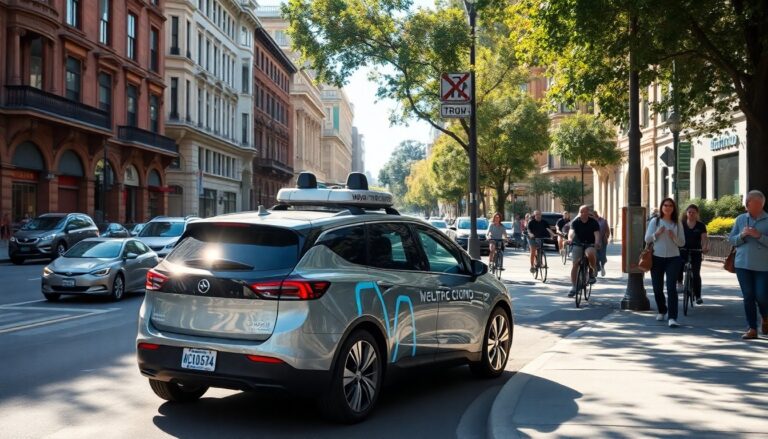
In San Francisco, self-driving cars are increasingly visible on city streets. However, their presence has sparked controversy. Waymo, a prominent player in the autonomous vehicle sector and a subsidiary of Alphabet, is notably expanding its services. This expansion has raised important discussions about safety and regulatory measures.
Recent incidents
Recent accidents involving pets have heightened scrutiny from local residents. These incidents underscore the challenges of integrating advanced technology into established urban settings. The situation has prompted urgent calls for clearer safety regulations and oversight as the city adapts to this evolving landscape.
Waymo’s expansion and community response
Waymo’s venture into autonomous vehicles started with impressive safety metrics. The company claimed its driverless cars experienced 91% fewer accidents than traditional vehicles, while pedestrian injuries dropped by 92%. Despite these favorable statistics, public sentiment has shifted.
Following incidents where a local cat and a dog were killed by Waymo vehicles, community reactions became increasingly negative. Memorials appeared at the accident sites, highlighting the emotional toll these events have taken on residents.
Community concerns and calls for regulation
Following recent accidents, local activists have raised significant concerns regarding the operation of autonomous vehicles. A petition initiated by Jackie Fielder, a member of the San Francisco Board of Supervisors, urges local authorities to take a more active role in regulating these technologies. Currently, oversight is primarily managed by state agencies, including the California Public Utilities Commission (CPUC) and the Department of Motor Vehicles (DMV). Some local leaders contend that this level of oversight is inadequate to ensure public safety.
The competitive landscape for autonomous vehicles
Waymo is expanding into new markets, facing competition from emerging players such as Amazon’s Zoox. Zoox has introduced a unique vehicle design that departs from traditional formats, aiming to provide an innovative experience for riders. This competitive environment increases pressure on Waymo to uphold its safety and performance standards while adapting to new urban landscapes. The arrival of various autonomous vehicle models raises important questions about how well these technologies can adapt to diverse city settings.
Technological challenges and urban adaptability
Experts in autonomous vehicle technology emphasize the complexities of ensuring self-driving cars accurately perceive their surroundings. Scott Moura from the University of California, Berkeley, points to incidents involving a Kit Kat and an unleashed dog as examples of significant challenges in perception and prediction capabilities of these systems. Autonomous vehicles must recognize obstacles and also anticipate unpredictable scenarios, like a pet suddenly running into the street.
The implications for urban mobility
As self-driving technology advances, its impact on urban mobility is significant. Advocates for sustainable transportation, including Claire Amable from the San Francisco Bicycle Coalition, warn that the rapid deployment of autonomous vehicles could worsen existing challenges in the city. With public transportation systems facing underfunding and difficulties, the surge of robotaxis may divert essential resources and attention from necessary improvements in public transport.
San Francisco’s decision to allow autonomous vehicles on Market Street, a key commercial area, has ignited discussions among community members regarding the future of urban transport. The introduction of self-driving cars, while innovative, must consider the needs of pedestrians, cyclists, and public transit users to establish a balanced transportation ecosystem.
The future of self-driving cars: navigating challenges
The future of self-driving cars is increasingly complex as urban mobility evolves. Experts anticipate that advancements in artificial intelligence and sensor technology will improve vehicle capabilities. This progress could lead to broader adoption, although concerns remain regarding safety and regulatory measures.
Waymo’s recent expansion into cities such as Dallas, Houston, and Miami underscores its goal to lead the self-driving market. However, rising public skepticism presents a challenge. The company faces a need to balance innovation with responsibility, addressing community expectations while navigating regulatory hurdles and competition. Building trust in autonomous vehicles will be crucial for future success.
