

Trump's Pennsylvania Rally: Emphasizing Affordability in Challenging Economic Times During his recent rally in Pennsylvania, former President Donald Trump spotlighted his commitment to addressing affordability issues as the nation grapples with significant economic challenges. By prioritizing cost-effective solutions, Trump aims to resonate with voters concerned about rising living expenses and economic stability. This rally serves as a pivotal moment in his campaign, reinforcing his...
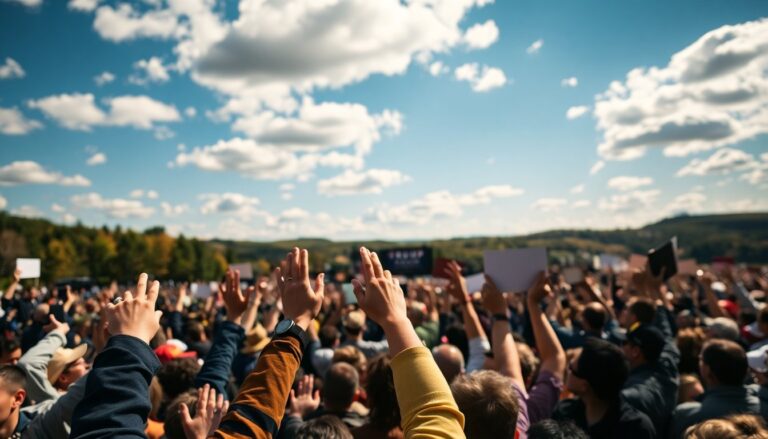
In a significant rally in Mount Pocono, Pennsylvania, President Donald Trump aimed to reinforce his narrative on affordability and the U.S. economy. As living costs rise, Trump claimed that his administration is effectively addressing these economic challenges, despite increasing public skepticism.
With inflation a pressing concern, Trump positioned himself as the solution to these financial issues. His remarks follow disappointing outcomes for the Republican Party in recent elections, prompting a renewed focus on economic messaging ahead of the midterm elections.
Shifting perceptions of economic leadership
Polling data shows a decline in public confidence regarding Trump’s economic management. Following a series of losses for Republicans in the prior month’s elections, the administration seeks to restore voter faith in economic recovery. Trump often blames inflation on his Democratic predecessor, Joe Biden, asserting that his policies are fostering economic improvement.
In recent statements, Trump declared, “We are significantly reducing prices. Whether you call it ‘affordability’ or something else, the Democrats are responsible for the affordability crisis, and we are the ones rectifying it.” This rhetoric is crucial as he aims to regain the trust of voters in regions like Monroe County, which previously supported him.
Understanding the local economic landscape
Monroe County, known for its scenic Pocono Mountains, relies heavily on tourism-related employment. Its proximity to New York City makes it attractive for those seeking affordable housing. The county’s demographic and political shifts underscore its importance in the upcoming midterm races.
At the rally, Trump sought to connect with the local populace by emphasizing his administration’s commitment to addressing affordability, particularly in a district currently represented by a vulnerable Republican. Maintaining support in swing areas like Monroe County is critical for the GOP’s strategy.
Trump’s economic strategies under scrutiny
While Trump promotes relief measures, such as relaxing fuel efficiency standards and negotiating drug prices, critics argue that these actions may not adequately address the root causes of rising prices. His push for cuts to the Federal Reserve’s interest rate has sparked debate, with some experts warning it could worsen inflation.
Moreover, despite signs of resilience in the U.S. economy, such as a rising stock market, many individuals face escalating costs for essentials like housing, food, and utilities. The administration anticipates that investments in sectors like artificial intelligence and manufacturing will eventually help alleviate these pressures.
Political implications and party dynamics
The political landscape is complicated by internal Republican tensions regarding affordability messaging. Some party members have voiced concerns about Trump’s dismissal of inflation as a “hoax.” Critics, including former allies, argue that addressing the affordability crisis is crucial for the party’s success in upcoming elections.
As the Trump administration gears up for the midterms, it faces increasing pressure to present a coherent strategy that resonates with voters. Democrats, having recently capitalized on affordability issues during elections, are prepared to challenge the Republican narrative, making it essential for Trump and his allies to refine their messaging.
With inflation a pressing concern, Trump positioned himself as the solution to these financial issues. His remarks follow disappointing outcomes for the Republican Party in recent elections, prompting a renewed focus on economic messaging ahead of the midterm elections.0
