

U.S. House Passes Historic Military Budget to Strengthen National Security Priorities
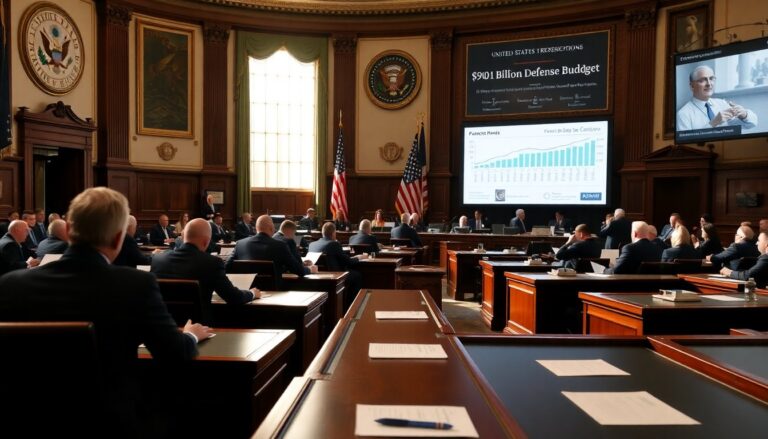
In a significant move for national security, the U.S. House of Representatives has approved an important defense spending bill, allocating a remarkable $901 billion for the military. This legislation, known as the National Defense Authorization Act (NDAA), represents a crucial development in the ongoing discussions about military funding and international relations.
Key features of the defense spending bill
In a voting session held on a Wednesday, the NDAA received substantial support, garnering 312 votes in favor and 112 against. The bill now moves to the Senate, where it is expected to receive swift approval.
This budget allocation exceeds President Donald Trump’s previous request by $8 billion, indicating a growing consensus on the importance of strong defense funding.
Provisions aimed at troop welfare
The comprehensive 3,086-page document addresses not only military expansion but also the welfare of service members.
The NDAA includes a proposed 4% pay increase for troops and aims to improve living conditions on military bases. These initiatives reflect a commitment to prioritizing the well-being of military personnel alongside defense capabilities.
International commitments and challenges
In response to ongoing global tensions, especially concerning Russia‘s actions in Ukraine, the National Defense Authorization Act (NDAA) underscores Washington’s commitment to enhancing European defense. The legislation allocates $400 million in military aid to Ukraine over the next two years to support efforts against Russian aggression. Furthermore, it requires the Pentagon to retain a minimum of 76,000 troops in Europe, highlighting the significance of collaboration with NATO allies.
Controversies and criticisms
Although the National Defense Authorization Act (NDAA) has garnered bipartisan support, it remains a subject of contention. Provisions that President Trump vocally opposed were eliminated from the bill, including approximately $1.6 billion earmarked for initiatives addressing diversity, equity, and climate change. These reductions underscore the ongoing tensions between the Trump administration and Congress, particularly regarding military management strategies.
Additionally, the NDAA encompasses measures that question the transparency of the Department of Defense, especially concerning military operations against suspected drug trafficking vessels in the Caribbean and the Pacific. This demand for enhanced accountability reflects the continued scrutiny of U.S. military engagements.
Broader implications for U.S. foreign policy
The recent passage of the National Defense Authorization Act (NDAA) coincides with the release of the White House’s National Security Strategy (NSS). This strategy adopts an America First stance, signaling a potential shift in U.S. engagement with global partners. The NSS calls for a reassessment of longstanding commitments, particularly in Europe, suggesting that the U.S. may be moving away from its role as the world’s primary stabilizer.
Internationally, the NSS has elicited mixed reactions. In contrast, the NDAA demonstrates Congress’s commitment to reinforcing military alliances and obligations abroad. This divergence highlights an ongoing debate about the future of U.S. foreign policy, especially concerning threats from countries such as China and Russia.
Looking ahead: A critical juncture
The coming weeks are crucial as the Senate deliberates on the National Defense Authorization Act (NDAA). Since its inception in 1961, the NDAA has enjoyed bipartisan support and is anticipated to pass despite current political complexities. Once it reaches the President’s desk, it is likely to be signed into law, marking a new phase for U.S. military strategy and international relations.
The approval of this significant defense budget not only reflects a strong commitment to national security but also prompts essential questions about the future trajectory of U.S. military and foreign policy. As the global landscape evolves, the implications of this legislation will extend far beyond American borders.
