

Andrea Egan: Leading Unison into a New Era of Collaboration with Labour As Andrea Egan steps into her leadership role at Unison, she is committed to transforming the union's engagement with the Labour Party. Her vision focuses on fostering stronger partnerships and advocating for the interests of union members.
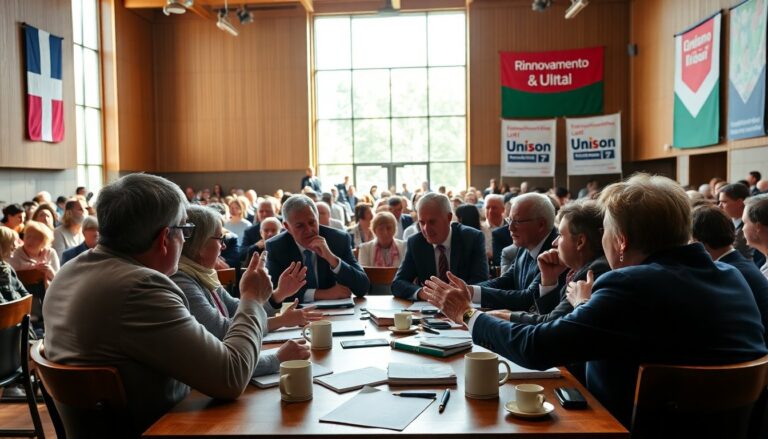
Unison elects new general secretary
The landscape of the UK’s largest trade union has shifted significantly with the election of Andrea Egan as its new general secretary. This development raises questions about the future direction of Unison, particularly in relation to its historical ties with the Labour Party.
Egan, who was expelled from the Labour Party in 2025, won her position decisively, receiving 58,579 votes compared to Christina McAnea’s 39,353 votes.
Leadership transition and its implications
With a turnout estimated at around 7%, Egan’s election marks a significant shift for Unison and the broader Labour movement.
As a social worker advocating for progressive policies, Egan plans to guide the union toward a more independent direction, moving away from its traditional alignment with Labour leadership. She has publicly stated her intention to reevaluate Unison’s ties with the Labour Party, highlighting the importance of accountability and ensuring value for money.
Reevaluating the relationship with Labour
In her campaign, Egan emphasized the need for Unison to move beyond its “subservience” to Labour. She advocates for a union that genuinely reflects the interests of its members. This review of the relationship is not merely administrative; it serves as a rallying cry for ordinary members to take charge of their union’s future. Egan’s position resonates with many who believe that the union’s priorities have diverged from the grassroots needs of workers.
Responses from political figures and unions
The election of Egan has generated significant political reactions. Keir Starmer, the Prime Minister and leader of the Labour Party, congratulated Egan, emphasizing her crucial role in addressing upcoming challenges. He acknowledged McAnea for her significant contributions during her tenure, particularly in championing the Employment Rights Bill, which seeks to strengthen workers’ rights nationwide.
Future challenges and opportunities
As Egan assumes her new position, she must unify the union’s members around common objectives. This is particularly critical in an environment where public sector workers are confronting issues such as low pay and underfunding. Feedback from various factions within the union indicates a collective desire for improved compensation and working conditions. Although the challenges are considerable, a focus on unity may lead to significant changes.
Additionally, organizations like Mainstream, which backs Labour Mayor Andy Burnham, have expressed concerns that many in the Labour Party feel alienated from the current government. The message is clear: to regain its momentum, Labour must reconnect with its progressive roots and collaborate more closely with the trade union movement.
The future for Unison members
The election of Andrea Egan signifies a pivotal change in Unison’s approach to advocacy and member representation. Egan’s pledge to empower members indicates a future where the union emphasizes the voices and needs of those in public service. She remarked, “This result means ordinary Unison members are at long last taking charge of our union.” This statement fosters a sense of optimism and determination moving forward.
The leadership transition at Unison may represent the onset of a new era, potentially redefining the union’s role in advocating for public sector workers. With an emphasis on accountability, empowerment, and a thorough reassessment of connections with Labour, Andrea Egan’s election serves as a call to action for all union members to actively participate in shaping their collective future.
