

Research Focus: Impact of the Buncefield Explosion on Safety Regulations and Environmental Recovery Efforts in the UK Conducted an in-depth analysis of the Buncefield explosion, examining its ramifications on UK safety regulations. Evaluated the effectiveness of revised safety protocols implemented post-explosion. Investigated the environmental recovery measures adopted following the incident, assessing their impact on local ecosystems. Collaborated with regulatory bodies and environmental...
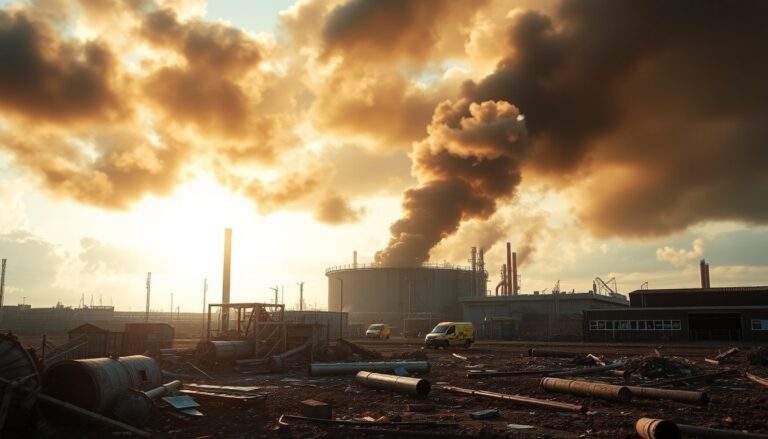
In the early morning hours of December 11, 2005, an unexpected incident at the Buncefield fuel depot near Hemel Hempstead resulted in one of the most significant industrial explosions in recent European history. A storage tank was overfilled, leading to a catastrophic release of fuel vapors that ignited, causing a massive explosion heard across the continent.
This event not only devastated the depot and surrounding properties but also revealed serious deficiencies in safety protocols within the industrial sector. Over 40 individuals sustained injuries, and the incident inflicted damages estimated at more than £1 billion, marking it as the costliest industrial accident in the UK.
Immediate response and investigation
The Environment Agency played a crucial role in the aftermath of the explosion. As part of the Control of Major Accident Hazards (COMAH) Competent Authority, it collaborated closely with the Health and Safety Executive (HSE) to assess the environmental repercussions and investigate the circumstances surrounding the incident.
Teams were dispatched to collect evidence and analyze samples from the affected site and nearby areas. The investigation uncovered numerous technical and managerial shortcomings within the responsible companies. Ultimately, five firms were found guilty of various offenses, resulting in a total of £9.5 million in penalties, which included a record £1.3 million in fines specifically related to pollution violations.
Long-term implications for safety practices
The lessons learned from the Buncefield disaster prompted significant changes in safety regulations. Following the incident, the Environment Agency, in collaboration with industry stakeholders, developed the Safety and Environmental Standards for Fuel Storage Sites report. This document established new benchmarks for safety across the fuel storage sector, aimed at preventing future occurrences.
In the years that followed, a remarkable improvement in safety standards was achieved. Notably, there have been no serious accidents at COMAH sites resulting in off-site environmental impacts since the Buncefield incident, reflecting the positive outcomes of the regulatory changes.
Ongoing remediation efforts
Efforts to manage the aftermath of the Buncefield explosion remain ongoing. The Environment Agency has been working closely with the site operators to ensure that the guidelines established after the incident, known as the Process Safety Leadership Group (PSLG) guidance, are effectively implemented.
A comprehensive plan for the remediation of soil and groundwater has been established. This includes advanced techniques such as pump-and-treat systems and the use of activated carbon to extract pollutants, including residual fuel and firefighting foam. Additionally, contaminated soils and compromised structures have been systematically removed and disposed of properly.
Addressing long-term contamination challenges
The clean-up process, which has incurred costs in the tens of millions of pounds, faces ongoing challenges, particularly concerning Per- and polyfluoroalkyl substances (PFAS). The firefighting foam used during the incident contained these substances, known for their persistence in the environment.
As understanding of PFAS continues to evolve, the Environment Agency remains committed to monitoring the situation and managing the associated risks. Currently, the Environment Agency and HSE are working on a proposal to restrict the use of PFAS in firefighting foams under UK REACH legislation, reflecting a proactive approach to environmental protection.
This event not only devastated the depot and surrounding properties but also revealed serious deficiencies in safety protocols within the industrial sector. Over 40 individuals sustained injuries, and the incident inflicted damages estimated at more than £1 billion, marking it as the costliest industrial accident in the UK.0
