

Summary of Recent Legislative Action: Major Defense Bill Passed by the Senate The United States Senate has successfully passed a significant defense bill that underscores bipartisan priorities for military action and oversight. This legislation represents a collaborative effort to address national security needs and ensure effective management of military resources. Key highlights include provisions aimed at enhancing military readiness, improving oversight mechanisms, and fostering...
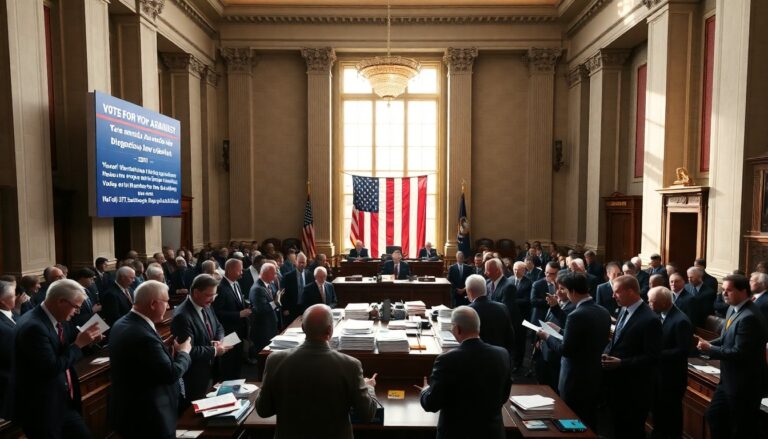
In a decisive move, the United States Senate has approved a substantial defense bill amounting to $901 billion for the fiscal year 2026. This legislation not only upholds military priorities endorsed by the previous administration under President Trump but also incorporates new measures aimed at enhancing congressional oversight of military operations.
The National Defense Authorization Act (NDAA) was ratified with a vote of 77-20, subsequently advancing to the President for final approval.
This comprehensive legislation demonstrates lawmakers’ continued commitment to maintaining a robust military presence abroad. Among its key components, the NDAA mandates that the Pentagon sustain at least 76,000 U.S.
troops in Europe. This stipulation ensures consultation with NATO allies before any troop reductions are made. Historically, the U.S. has stationed around 80,000 to 100,000 soldiers across Europe, reflecting a long-standing military strategy aimed at reinforcing alliances.
Key provisions of the NDAA
Several provisions within the NDAA reveal a concerted effort by members of both parties to reinforce America’s military commitments, particularly in Europe and Asia. For instance, the legislation allocates $800 million for the Ukraine Security Assistance Initiative, with $400 million designated for each of the next two years. This financial support signals a firm commitment from Congress to aid Ukraine amidst ongoing geopolitical tensions, underscoring the importance of European security.
Military presence and support for allies
Moreover, the NDAA lends continued support to Israel, authorizing $600 million for security assistance, which includes funding for joint missile defense initiatives such as the Iron Dome. This provision has enjoyed broad bipartisan approval, reflecting a shared commitment to bolstering Israel’s defense capabilities.
As part of its strategic focus, the NDAA designates $1 billion for the Taiwan Security Cooperation Initiative, underlining the U.S. intent to enhance defense ties with Taiwan in response to growing military exertion from China. This allocation emphasizes the Asia-Pacific region’s critical significance to U.S. foreign policy, especially in the context of increasing tensions with Beijing.
Oversight and accountability
Another important aspect of the NDAA is its increased emphasis on accountability regarding military operations. The bill requires the Department of Defense to provide more comprehensive reports to Congress, particularly concerning military strikes aimed at suspected illicit activities in regions such as the Caribbean. Following a controversial strike in September that resulted in civilian casualties, lawmakers have called for enhanced transparency and oversight to prevent similar incidents in the future.
Repeal of outdated authorizations
In a significant move towards legislative clarity, the NDAA also repeals the 2003 authorization for the U.S. invasion of Iraq and the 1991 authorization for the Gulf War. By eliminating these outdated authorizations, Congress aims to reduce the risk of future military actions being conducted without explicit legislative approval, reinforcing the principle of civilian oversight in military matters.
Controversial cuts and priorities
While the NDAA has received considerable support, it is not without contention. The legislation proposes the elimination of diversity, equity, and inclusion offices within the Department of Defense, a move that some critics argue undermines progress in these areas. Proponents assert that this change could yield savings of approximately $40 million.
Additionally, the bill reduces funding related to climate change initiatives, a point that has raised concerns among those who advocate for recognizing the military’s vulnerabilities to climate-related challenges. The Trump administration and some Republican leaders maintain that military spending should prioritize immediate operational capabilities over long-term environmental considerations.
The NDAA, as it heads to the President for his signature, embodies a blend of priorities that reflect both bipartisan cooperation and differing views on the future of U.S. military engagement. The legislation aims to balance defense spending with accountability measures, ultimately shaping the landscape of American military policy for years to come.
