

Stay informed about the ongoing conflict and Italy's diplomatic actions.
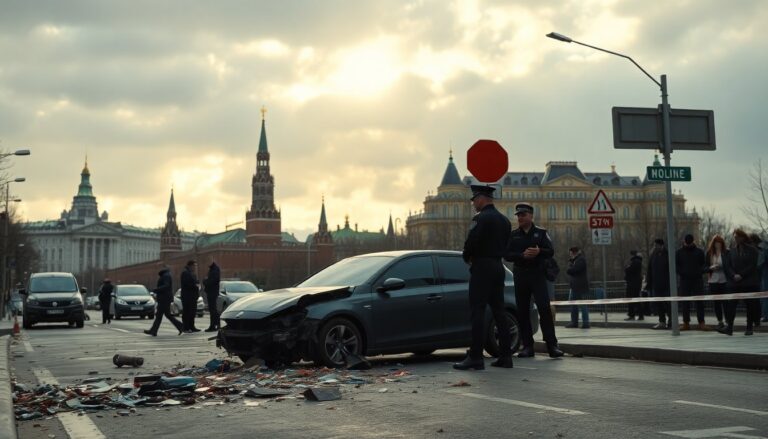
The ongoing conflict between Russia and Ukraine has reached significant milestones, with day 1,400 revealing critical events that shape the current geopolitical landscape. Concurrently, Italy’s legislative measures concerning arms export control are under scrutiny as the nation navigates its role in global diplomacy.
Ukraine’s war developments
On December 25, a car explosion in Moscow resulted in the tragic deaths of three individuals, including two police officers. This incident adds to the growing list of violent occurrences within Russia, raising questions about the effectiveness of the Kremlin’s security measures.
The explosion occurred just days after the assassination of a high-ranking military officer, Lieutenant General Fanil Sarvarov, in a separate car bombing. These attacks reflect a troubling pattern of violence that threatens to undermine the Russian government’s image.
Implications for peace negotiations
In the midst of these developments, Ukrainian President Volodymyr Zelenskyy has been actively engaging in negotiations with international partners, including the United States. A newly revised 20-point peace plan has been put forward, aiming to establish a framework for resolution and long-term stability in the region. Zelenskyy emphasized the importance of international support in reinforcing Ukraine’s military and political stance against Russian aggression.
Despite ongoing efforts to negotiate peace, the Kremlin’s reaction remains dismissive, signaling a reluctance to accept the proposed terms. The Russian government has reiterated its longstanding positions, indicating that any security guarantees involving foreign troops are unacceptable. This suggests a stalemate in discussions, as both sides grapple with their demands and strategic interests.
Italy’s arms export control reform
Italy has long been recognized for its pioneering stance on arms export legislation, having enacted Law No. 185 in 1990. However, despite ratifying the Arms Trade Treaty (ATT) in, Italy has yet to implement substantial changes to align its national laws with international obligations. In August, a proposal for amendments to Law 185 was presented to the Senate, aiming to address inconsistencies with the ATT. Yet, notably absent from the reform is any direct reference to the treaty itself, raising concerns about the motives behind these legislative changes.
Italy’s engagement in international conflicts
Throughout, Italy’s government has actively responded to the ongoing violence in the Middle East, particularly the conflict involving Hamas and Israel. Italy has adopted a balanced approach, condemning violence from all parties while advocating for humanitarian access to affected regions. Moreover, Italy has reiterated its support for a two-state solution as the most viable path to peace.
As the Russia-Ukraine conflict continues to dominate Italy’s foreign policy discussions, the government has faced scrutiny regarding its military support for Ukraine. Debates have centered around the extent of assistance provided and the conditions required for future peace agreements. Furthermore, the International Criminal Court (ICC) has issued arrest warrants concerning high-profile individuals linked to ongoing conflicts, prompting Italy to reassess its cooperative stance with international judicial bodies.
Migration policy and international relations
Italy’s approach to migration has also been a focal point of contention, with the government claiming success in its policies while facing criticism from opposition parties and human rights organizations. The concept of externalization has been a guiding principle in Italy’s migration management, referring to practices that aim to control migration beyond national borders. This approach has generated significant legal and ethical debates regarding the treatment of migrants.
Additionally, Italy’s diplomatic strategies have been linked to its investment initiatives in Africa, notably the Piano Mattei. This plan emphasizes the right of individuals to remain in their home countries, promoting development to alleviate the need for migration. Prime Minister Giorgia Meloni has underscored this vision during international addresses, seeking to reshape Italy’s image as a proactive partner in global development.
In summary, the intertwining narratives of the Russia-Ukraine conflict and Italy’s foreign policy highlight the complexities of modern diplomacy. As both situations evolve, the international community continues to watch closely, aware that the outcomes will have far-reaching implications.
