

Poland's defense forces remain vigilant as they intercept a Russian aircraft near their airspace while monitoring smuggling threats.
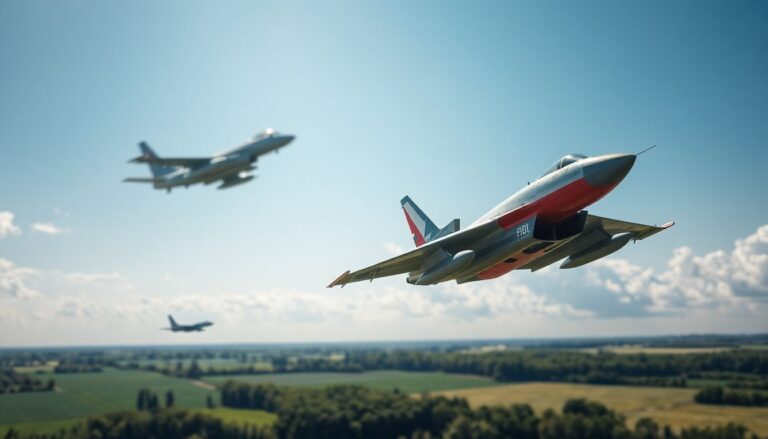
In a significant display of military readiness, the Polish air force recently intercepted a Russian reconnaissance aircraft that was maneuvering close to its airspace. This event unfolded just hours after Polish defense systems tracked what were suspected to be smuggling balloons drifting from neighboring Belarus.
The occurrences underscore the heightened state of alert in the region, particularly given the backdrop of ongoing tensions linked to Russia’s actions in Ukraine.
On Thursday morning, the Operational Command of the Polish Armed Forces reported that Polish fighter jets had visually verified and subsequently escorted the Russian aircraft away from the border.
This operation took place over the international waters of the Baltic Sea, highlighting the proactive measures taken by Poland to ensure its airspace remains secure.
Tracking unidentified objects
During the same night, Polish radar systems detected several unidentified objects approaching from Belarus, prompting a swift response from the authorities.
As a precautionary measure, Warsaw temporarily closed its civilian airspace in the northeastern region of the country. Following a thorough analysis, military officials deduced that these objects were likely smuggling balloons carried along by the wind, intended to facilitate illegal activities.
The exact number or size of the balloons was not disclosed in the reports, but the incident further emphasizes the ongoing concerns regarding smuggling operations that have plagued the region. Recently, such balloons have posed significant disruptions to air traffic in neighboring Lithuania, leading to multiple airport closures. Lithuanian authorities attribute these incidents to smugglers, accusing Belarus—an ally of Russia—of orchestrating a hybrid attack by sending these balloons across borders. However, officials in Belarus have denied any involvement in the operations.
Government reassurance and military vigilance
In light of these incidents, Poland’s Defense Minister, Wladyslaw Kosiniak-Kamysz, took to social media to reassure the public about the nation’s security. He emphasized that the recent events did not pose an immediate threat to Poland’s safety, expressing gratitude towards the nearly 20,000 soldiers who are diligently protecting the nation during the holiday season. His statement on X highlighted the effectiveness of the military in managing provocations near the Baltic Sea and the border with Belarus.
“All provocations over the Baltic Sea and near the border with Belarus were under the full control of the Polish Army,” Kosiniak-Kamysz stated. His remarks reflect a broader commitment to maintaining vigilance and readiness against potential threats.
Historical context of airspace violations
This latest episode follows a series of significant airspace incursions that have raised alarms in Poland. Just a few months prior, between September 9 and 10, NATO forces collaborated with Polish military units to intercept and down over a dozen Russian drones that had entered Polish airspace. This marked one of the most substantial incursions since the onset of the conflict in Ukraine, illustrating a pattern of escalating tensions in the area.
In response to these incursions, Poland convened an emergency meeting at the United Nations Security Council to address what it termed a blatant violation of international norms and the principles outlined in the UN Charter. Polish Foreign Minister Radoslaw Sikorski remarked that such actions by Russia seemed to be a test of NATO’s responsiveness to threats in the region.
Conclusion
The recent activities of the Polish air force exemplify the nation’s commitment to safeguarding its airspace from both traditional military threats and unconventional methods such as smuggling operations. As regional tensions remain high, Poland’s military vigilance serves as a crucial element in maintaining national security amidst the complexities of modern geopolitical challenges.
