

Northern Ireland: Pioneering Sustainability in Construction for a Net-Zero Future Northern Ireland is at the forefront of transforming the construction industry through innovative sustainable practices. Our commitment to achieving a net-zero future is driving us to redefine industry standards and implement eco-friendly solutions. By integrating advanced technologies and sustainable materials, we are paving the way for a greener, more sustainable built environment. Join us in our mission to...
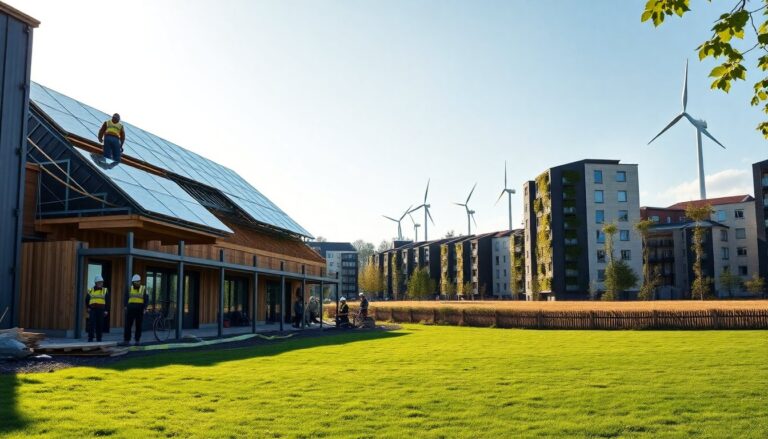
Efforts to achieve net-zero emissions in Northern Ireland are gaining traction, with industry leaders advocating for sustainable practices to secure a resilient future for local communities. However, significant challenges persist on the road to sustainability.
The construction and built environment sectors are major contributors to environmental issues, accounting for nearly 40% of global carbon emissions and consuming an equivalent percentage of the world’s raw materials.
Therefore, enhancing sustainability within this sector is essential for combating climate change.
The current landscape of sustainability in construction
Recent findings from the Royal Institution of Chartered Surveyors (RICS) reveal stagnation in global demand for sustainable buildings, a concerning trend amid the ongoing climate crisis.
The 2025 global sustainability report from RICS highlights a troubling reality: there is a significant lack of progress in accurately measuring carbon emissions across construction projects.
Barriers to sustainable building practices
Several factors impede the widespread adoption of sustainable practices in the UK construction industry.
The high initial costs related to implementing green building technologies and materials are a primary deterrent for investors. Additionally, the absence of clear evidence demonstrating the return on investment for sustainable buildings contributes to investor hesitance. Furthermore, a substantial knowledge gap exists regarding green real estate among potential stakeholders, complicating the landscape.
In response to these challenges, RICS Northern Ireland is promoting strategies such as retrofitting, whole-life carbon assessments, and the enhancement of sustainability skills. Much of the existing building stock is aged and carbon-intensive, making these initiatives crucial for advancing a more sustainable construction environment.
Success stories in local sustainability initiatives
Encouragingly, some developers in Northern Ireland are successfully embedding sustainability into their projects, demonstrating that when sustainability is prioritized alongside measurable performance metrics, there is genuine market demand for such initiatives. These developers illustrate that sustainable practices can lead to lower operating costs and tangible benefits for consumers.
Value proposition of sustainability
In these cases, sustainability is not perceived as a limitation; it becomes a key element of the overall value proposition. As public sector entities begin to adopt RICS’ whole-life carbon assessment and structured retrofit strategies, there is optimism that these standards will also be embraced by the private sector.
Despite these positive developments, the broader market’s adoption of sustainable practices remains inconsistent. Advocating for the implementation of these guidelines across the construction landscape is essential, as Northern Ireland has the potential to lead in this field.
Future directions for sustainable construction
The opportunity for Northern Ireland is clear: when standards, skills, and value signals align, demand for sustainable construction practices can thrive. The challenge lies in expanding these successful models beyond early adopters and exemplary projects to foster a widespread culture of sustainability within the industry.
While significant strides have been made toward integrating sustainability into Northern Ireland’s construction practices, the journey is far from complete. By overcoming existing barriers, investing in education, and showcasing the tangible benefits of sustainability, stakeholders can collaboratively work towards a greener, more sustainable future for generations to come.
