

Experience the art of Italian pasta making through its rich traditions and techniques.
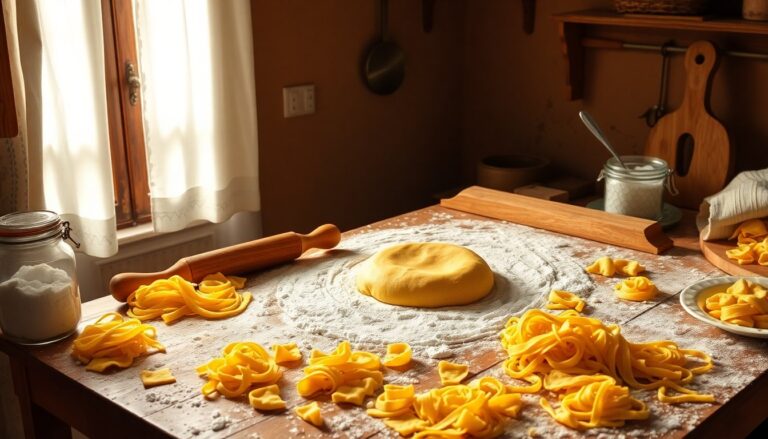
The art of pasta making: a journey through tradition and flavor
As you enter an Italian kitchen, the warmth envelops you, accompanied by the enticing aroma of flour mingling with the subtle scent of eggs. Making pasta transcends mere cooking; it is a ritual rich in history, tradition, and a profound connection to the land.
Picture yourself rolling out the dough, observing its transformation under your hands. Each shape, from fettuccine to orecchiette, embodies a unique story. The journey of Italian pasta making underscores the belief that the palate never lies—it consistently seeks authenticity and flavor.
The history and significance of pasta in Italian culture
Pasta has been a cornerstone of Italian cuisine for centuries, woven into the fabric of daily life. Its origins are often debated; however, many historians suggest that it was introduced to Italy by Arab traders in the 8th century.
The first documented reference to pasta appears in a 13th-century text by a Sicilian poet. Over time, every region in Italy has embraced pasta, tailoring it to local ingredients and tastes, thus creating a rich tapestry of flavors and shapes.
This culinary staple signifies more than mere sustenance. It represents family gatherings, celebrations, and the essence of Italian living. Behind every plate of pasta lies a narrative of shared meals, laughter, and tradition. From the simplicity of spaghetti aglio e olio to the comforting layers of lasagna della nonna, pasta serves as a canvas for creativity and personal expression.
Pasta making techniques: a guide for home cooks
The process of making pasta is a blend of tradition and technique, requiring both patience and practice. The fundamental ingredients—flour and eggs—may seem straightforward, yet the method can differ significantly. The choice of flour is paramount; for example, ’00’ flour, renowned for its fine texture, is ideal for crafting silky pasta, while semolina flour offers a sturdier consistency.
To begin, create a mound of flour on a clean surface, forming a well in the center to hold the eggs. Gradually use your fingers to mix the flour into the eggs, bringing the mixture together until it forms a cohesive dough. Kneading the dough is essential, as it develops gluten, which provides the necessary structure. The dough should be worked until smooth and elastic, creating a tactile connection to the culinary traditions of the past.
After resting, the dough can be rolled out and shaped into a variety of forms. Whether preparing tagliatelle or ravioli, each shape has distinct cooking times and sauce pairings. As a chef, I learned that understanding the science of cooking—such as how pasta’s starches absorb sauce—can transform a simple dish into an extraordinary experience.
The regional connections and sustainable practices in pasta making
Pasta is a true reflection of Italy’s regional diversity, with each area offering unique dishes. For example, southern Italy is known for orecchiette paired with broccoli rabe, while northern regions prefer tagliatelle al ragù served with richer sauces. This variety showcases the terroir of Italy, shaped by local ingredients and traditions that define its culinary landscape.
Recently, there has been an increased focus on sustainability within the culinary world. Chefs and home cooks alike are rediscovering traditional methods, emphasizing the use of locally sourced ingredients. The movement towards filiera corta, or short supply chains, promotes fresh, seasonal produce and bolsters support for local farmers.
Each bite of handmade pasta encapsulates a commitment to preserving these culinary traditions and embracing sustainability. Behind every dish lies the story of the people, the land, and the passion that drives its creation.
As you embark on your own pasta-making adventure, consider that every strand and shape embodies the essence of Italy. The next time you savor a plate of pasta, take a moment to appreciate not only the flavors but also the rich history and stories that accompany each bite. The palate never lies; it reveals the intricate tapestry of Italian cuisine and its deep-rooted traditions.
