

Mamady Doumbouya: A Transformative Leader in Guinea's Governance Mamady Doumbouya's ascent to the presidency marks a pivotal transformation in Guinea's political landscape, indicating a departure from longstanding military dominance. His leadership symbolizes a renewed commitment to democratic principles and governance reforms, aiming to foster stability and progress in the nation.
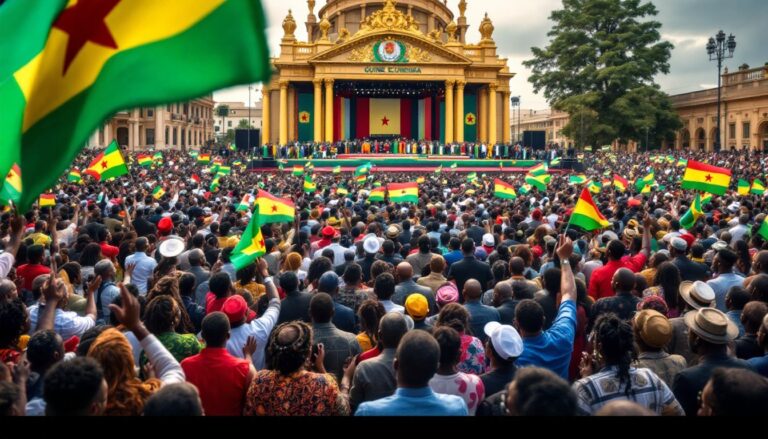
In a historic ceremony attended by thousands, General Mamady Doumbouya was officially inaugurated as the president of Guinea on January 18, 2026. This event is particularly notable as it follows the country’s first election since Doumbouya’s military coup in 2021, which ousted then-President Alpha Conde.
The ceremony saw various heads of state from across Africa in attendance, underscoring the regional implications of Guinea’s political changes.
Doumbouya’s victory in the recent election was announced after he secured an overwhelming 86.7 percent of the votes cast, despite significant opposition calls for a boycott.
Many of his most formidable rivals remained in exile, illustrating the tense political climate in the country.
The context of Doumbouya’s rise
The backdrop of Doumbouya’s presidency is steeped in controversy. His initial promise was to restore democracy after the military’s dissolution of state institutions and the suspension of the constitution.
However, his administration has faced criticism for cracking down on civil liberties, including the prohibition of protests and targeting political dissenters. These actions have raised concerns about the future of Guinea’s democratic processes under his leadership.
Changes in constitutional law
A key element that facilitated Doumbouya’s ascension was the recent alteration of the Guinean constitution. This amendment, approved by the public in September, allows military leaders to participate in elections, a move that has sparked debate about the military’s role in political governance. Furthermore, the new constitution has extended presidential terms from five to seven years, establishing a two-term limit for future presidents.
International and regional reactions
The inauguration ceremony, held at the General Lansana Conte Stadium in Conakry, attracted international attention, with dignitaries from countries such as Rwanda, Senegal, and China present. This gathering highlighted the geopolitical significance of Guinea amidst a backdrop of military-led governance in West Africa.
Economic challenges and promises
Despite the tumultuous political landscape, Doumbouya has made promises to leverage Guinea’s abundant natural resources, including its vast deposits of iron ore and the world’s largest reserves of bauxite. With about 52 percent of the population living in poverty, there is a pressing need to translate these resources into tangible economic benefits for the people. His administration’s ability to address these issues will be closely monitored by both local and international observers.
The military coup that brought Doumbouya to power was justified by claims of corruption and mismanagement under Conde’s government, which had been the first freely elected administration since Guinea’s independence in 1958. As Doumbouya embarks on his presidency, the eyes of the nation and the world will be focused on how he navigates the challenges of governance, economic reform, and the restoration of civil liberties.
Doumbouya’s presidency signifies a new chapter in Guinea’s political history, one that presents both opportunities and challenges. The effectiveness of his leadership in fostering a stable and democratic environment will determine the future trajectory of Guinea and its people.
