

Activist Advocate for Change in Brazil's Femicide Epidemic Join the movement as dedicated activists leverage social media platforms to raise awareness about Brazil's alarming femicide epidemic and drive impactful change. Our efforts focus on educating the public, mobilizing communities, and advocating for policy reform to combat violence against women.
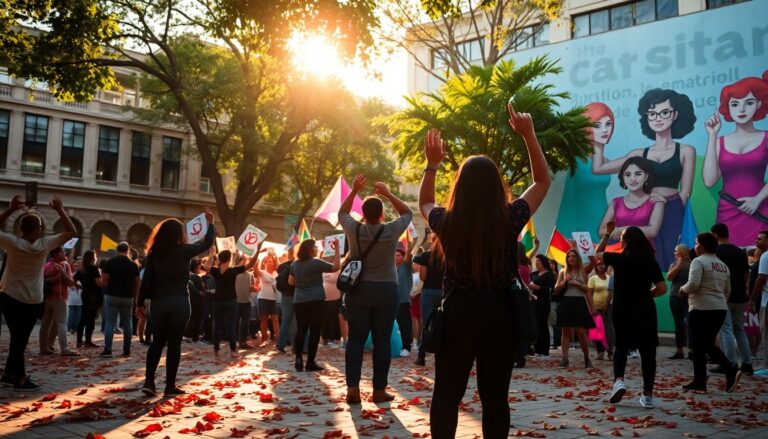
In Brazil, a troubling trend highlights the escalating crisis of femicide and gender-based violence. Activists are utilizing social media as a formidable platform for raising awareness, mobilizing support, and demanding justice. The digital landscape has transformed into a battleground, amplifying voices of resistance and placing the fight against misogyny at the forefront.
The alarming statistics behind femicide in Brazil
Brazil faces alarming rates of femicide, ranking among the highest globally. Recent statistics reveal that an average of 12 women are murdered daily, frequently by intimate partners or family members. This grim reality is exacerbated by societal norms that perpetuate misogyny and silence victims.
These statistics not only tell a chilling story but also serve as a clarion call for those unwilling to remain passive.
Understanding the roots of gender-based violence
The roots of gender-based violence in Brazil are deeply intertwined with cultural attitudes that devalue women’s lives.
The nation’s history of patriarchy and systemic inequality has fostered an environment where violence against women is frequently normalized. Activists emphasize that addressing these underlying issues is essential for achieving meaningful change. Through targeted campaigns on social media, they aim to challenge harmful stereotypes while promoting a culture of respect and equality.
The power of social media in activism
Social media platforms have become essential for advocacy and raising awareness. Activists leverage tools like Twitter, Instagram, and Facebook to disseminate information, educate the public, and galvanize support. Viral hashtags such as #EleNão (Not Him) and #MeuAmigoNãoÉUmViolador (My Friend Is Not a Rapist) exemplify this trend, bringing individuals together in solidarity against violence. These movements demand accountability from society and authorities, amplifying the voices of those affected by gender-based violence.
Case studies of successful campaigns
Numerous campaigns have effectively utilized social media to highlight individual cases of femicide, drawing national attention and sparking widespread outrage. One notable example is the tragic murder of Marielle Franco, a black activist and councilwoman. Her death galvanized a movement that amplified calls for justice and reform. Franco’s story, shared extensively across social media, has become a symbol of the fight against both racism and misogyny in Brazil.
The future of activism in Brazil
As activists continue to navigate the complexities of the ongoing crisis, the future of the movement seems closely tied to the evolution of digital activism. The potential for social media to facilitate grassroots organizing and foster impactful dialogue is significant. However, challenges such as online harassment and censorship persist, necessitating that activists confront these obstacles to ensure their messages reach a wider audience.
The active participation of young people, especially women, in these discussions is vital. By harnessing technology, they can create pathways toward equity and justice, paving the way for a future where women’s lives are recognized and safeguarded. As more voices join this dialogue, the momentum grows, indicating that change is not merely a possibility but an impending reality.
Social media serves as both a powerful tool and a protective barrier in Brazil’s battle against femicide. It amplifies voices, builds community, and fosters transformation. Awareness on digital platforms is gradually altering societal narratives and stimulating crucial conversations surrounding gender violence. The path ahead may be extensive, but through persistent advocacy and unity, Brazil can aspire to a safer and more equitable future for all its citizens.
