

A historic ceasefire has been reached in Syria, signaling potential changes in control and governance.
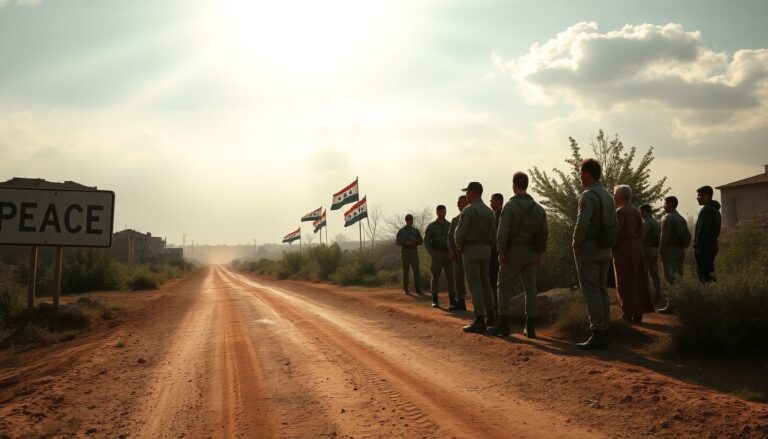
In a significant development for Syria, the government and the Kurdish-led Syrian Democratic Forces (SDF) have reached a ceasefire agreement following intense clashes. President Ahmed al-Sharaa announced the ceasefire, which aims to restore stability in the northeastern regions governed by the SDF.
This agreement comes after weeks of escalating violence that disrupted the fragile peace in the country.
The ceasefire is expected to facilitate discussions between President al-Sharaa and SDF commander Mazloum Abdi, who had to postpone their meeting due to adverse weather conditions.
This dialogue is crucial for defining the terms of integration of the SDF into the Syrian military and governance structures, marking a potential end to their status as an independent armed faction.
Details of the ceasefire agreement
The ceasefire agreement, as outlined by both parties, includes several key components aimed at solidifying control for the Syrian government in the northeastern provinces of Hasakah, Deir Ezzor, and Raqqa.
President al-Sharaa emphasized that the understanding will enable the government to reclaim administrative and military authority in these strategic areas.
Integration of SDF into the Syrian military
One of the most critical aspects of this ceasefire is the proposed integration of the SDF forces into the Syrian Army. This will involve merging SDF personnel into the country’s defense and internal security ministries, contingent upon a verification process. By doing so, the government aims to streamline military operations and enhance its control over the region.
Moreover, the agreement stipulates that the Syrian government will assume management of prisons and detention centers previously run by the SDF, which house numerous foreign ISIS fighters and their families. This transfer of responsibility underscores the government’s commitment to tackling terrorism while ensuring proper management of security concerns.
Cultural and linguistic recognition for the Kurds
In a move that acknowledges the Kurdish population’s presence in Syria, the government has committed to recognizing the Kurds’ cultural and linguistic rights. The agreement states that Kurdish will be recognized as an official language alongside Arabic, and the celebration of Nowruz, the Kurdish New Year, will be designated as a national holiday. This gesture aims to foster a sense of inclusion and respect for the Kurdish identity within the broader Syrian state.
Historical context of Kurdish autonomy in Syria
The Kurds, who constitute approximately ten percent of Syria’s population, have historically sought greater autonomy. Since the onset of the Syrian civil war in, they managed to seize control over a significant portion of northeastern Syria, referred to as Rojava. This region has operated under a de facto autonomous government and military force, which allowed them to establish a distinct identity and governance model.
However, the ongoing negotiations for the SDF’s integration into the Syrian state faced challenges, primarily due to Kurdish concerns over losing political autonomy in exchange for security guarantees. The recent ceasefire could represent a turning point in addressing these issues and fostering a more stable governance structure.
Potential implications for the region
The ceasefire agreement is poised to reshape the political landscape in Syria significantly. With the Syrian government regaining control over key provinces, it could lead to a more unified state structure. This development may also influence relations with foreign powers involved in the region, including the United States, which has historically supported the SDF.
Furthermore, the integration of Kurdish forces into the Syrian military could reduce tensions between different ethnic groups and factions within the country, potentially paving the way for a more inclusive political dialogue. However, achieving lasting peace will require sustained commitment from all parties involved to uphold the terms of the agreement and address the underlying grievances.
