

AFCON Final Experience: Senegal's Historic Victory Witness the thrilling climax of the AFCON final, where Senegal triumphed in a dramatic showdown, overcoming controversy and chaos to secure their championship title.
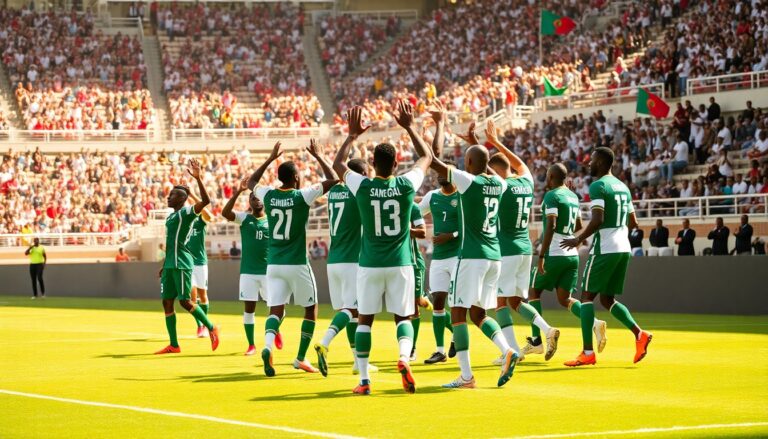
In a thrilling encounter that captivated football fans, Senegal emerged victorious against host nation Morocco in the final of the Africa Cup of Nations (AFCON) held on January 18. The match, played at the Prince Moulay Abdellah Stadium, was marked by a controversial penalty decision and a stunning goal in extra time.
Senegal’s victory marks their second AFCON title in three tournaments, reinforcing their status as a powerhouse in African football. The match not only showcased their skill but also highlighted the intense pressure on Morocco, which sought to claim its first title since 1976 on home soil.
The buildup to the final
The anticipation leading up to the final was palpable, with fans from both nations filling the stadium in Rabat. Morocco, buoyed by home advantage, faced a resilient Senegalese team that had performed well throughout the tournament.
As the match kicked off, both teams demonstrated their determination to leave everything on the pitch.
Controversial moments
As the game entered its final minutes, tensions escalated. A pivotal moment arose when Moroccan player Brahim Diaz was awarded a penalty after a VAR review ruled he had been fouled in the box. This decision sparked outrage among Senegalese players and fans, leading to chaotic scenes on and off the pitch. Many Senegalese supporters expressed their anger, and several players briefly left the field in protest.
Despite the tumult, Senegalese goalkeeper Édouard Mendy rose to the occasion, saving Diaz’s weak penalty attempt, which was executed as a Panenka shot. This critical moment shifted the momentum back to Senegal and instilled a renewed sense of determination among the players.
Decisive moments in extra time
With the score still tied at 0-0, the match progressed to extra time, where Senegal found their rhythm. In the fourth minute of extra time, a well-coordinated play saw Sadio Mané regain possession in midfield, quickly distributing the ball to Idrissa Gana Gueye. He set up Pape Gueye, who unleashed an exquisite shot that soared into the top corner, giving Senegal a crucial lead.
This goal sent shockwaves through the Moroccan camp and the stadium as jubilant Senegalese fans erupted in celebration. Morocco, still reeling from the penalty miss, fought hard to equalize, with Nayef Aguerd nearly finding the net with a header that rattled the crossbar.
A bittersweet ending for Morocco
As the final whistle blew, Senegal’s players celebrated their hard-earned victory, while Moroccan supporters were left heartbroken. The loss was particularly painful for Morocco, which had hoped to lift the trophy in front of their home crowd, ending a 50-year wait for the title.
Reflecting on the match, Senegal’s match-winner, Pape Gueye, emphasized the feeling of injustice that fueled their determination. He stated, “We felt we were wronged by the referee. When Sadio urged us to return to the pitch, we rallied our spirits. After the penalty save, we regained focus and clinched the victory.”
Meanwhile, Moroccan coach Walid Regragui expressed his disappointment, acknowledging the unsightly scenes that unfolded. He stated, “The image we portrayed to the world was not ideal. It is essential for us to learn from this experience and return stronger next time.”
Looking ahead
Senegal’s victory marks their second AFCON title in three tournaments, reinforcing their status as a powerhouse in African football. The match not only showcased their skill but also highlighted the intense pressure on Morocco, which sought to claim its first title since 1976 on home soil.0
Senegal’s victory marks their second AFCON title in three tournaments, reinforcing their status as a powerhouse in African football. The match not only showcased their skill but also highlighted the intense pressure on Morocco, which sought to claim its first title since 1976 on home soil.1
